Mark Hoipkemier in The Hedgehog Review:
In ordinary times, the common good is like liberalism’s cranky old uncle: You wouldn’t deny his existence outright, though you don’t usually mention him and his foibles in polite company. But on occasion the common good, like Uncle Orlo, has a role to play in our liberal societies, and the current coronavirus pandemic is such a time. It certainly forces citizens to consider dimensions of our common life that we normally prefer to ignore. While the common good is on center stage, we might profitably reflect on its ongoing relevance for less turbulent times as well.
To be sure, the concept of the common good is a slippery one, subject to contestation and interpretation from all points of the political spectrum. This is a feature, not a bug. That said, most of the contending views draw on a core meaning articulated most clearly by Aristotle and the tradition of thinkers follow him. On this view, the good that members of a community share consists of the flourishing of that community—whether it is a nation, a town, a school, a religious body, or even a family. Irreducibly social goods of this kind are necessary for the flourishing of the “political animal,” yet totally inaccessible apart from the communities with which those goods are bound up. You cannot enjoy the goods of quarterbacking without a football team, nor those of higher education apart from a university system. These communities flourish when their members justly share in the benefits and burdens of pursuing common ends together. When common ends such as knowledge or gridiron glory are achieved with justice, the irreducibly social excellence of the community is a common good in which the members share. The main point of the “common good” is to name this shared flourishing and use it as a way to evaluate the use of political authority.
At present, away from the crowded wards of busy hospitals and a few mostly urban global hotspots, what we are facing is not the COVID-19 virus itself but the vast social anticipation of its spread, coordinated with varying degrees of competence by the directives of political authorities at different levels of government. Broad compliance with their mandates, it is worth noting, is itself evidence that contemporary society has not become as atomized or individualistic as some critics of liberal democracy claim.
More here.

 Isabella Weber in Global Perspectives:
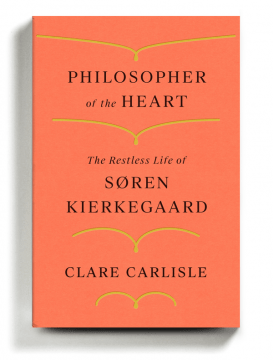 Kierkegaard commonly complained that he was misunderstood (he also complained that he was not misunderstood in the right ways). But few philosophers have wanted so keenly to be of use, according to a new biography, “Philosopher of the Heart,” by Clare Carlisle. Not for Kierkegaard the abstractions of philosophy — he saw the discipline as performing the painful, prosaic work of becoming human: “We must work out who we are, and how to live, right in the middle of life itself, with an open future ahead of us,” Carlisle summarizes his approach. “Just as we cannot step off the train while it is moving, so we cannot step away from life to reflect on its meaning.” There are famous challenges to telling the life of Kierkegaard. He died at 42, in Copenhagen, seemingly exhausted after an extraordinary burst of productivity that gave us a flotilla of philosophical texts masquerading as sermons, dialogues, found documents, book reviews.
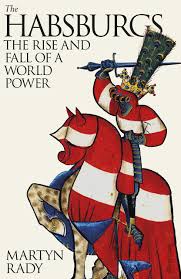 The House of Habsburg has a plausible claim to having been the most successful ruling dynasty in world history. For a thousand years, from the dynasty’s emergence as feudal warlords in northern Switzerland in the 10th century to their ousting as emperors of Austria in the early 20th, they reigned at one time or another in most European countries (including, briefly, England and Ireland), and over colonial possessions that reached across the globe, from Peru to the Philippines (the one nation that still bears the name of a Habsburg king).
 “IT’S LIKE WE’RE AT THE CENTER
 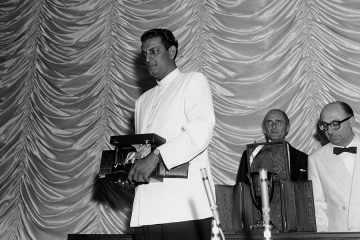 Of the films of the great Indian director Satyajit Ray, the Japanese master Akira Kurosawa once said that not having seen them “is like never having seen the sun or the moon.” I completely agree. For me, Ray is perhaps the finest of all film artists. The humanism of his vision, and the lyricism he brings to it, is overwhelming. No other director has so consistently expressed what it means to be alive. No other filmmaker, male or female, has explored with such profound grace and understanding the inner lives of women. I had the honor in the fall of 2008 to be invited to Kolkata, India, to lecture to local students and film societies about his work. As a white Westerner, I was wary of coming across like some sort of postcolonial know-it-all. I needn’t have worried. Our shared love for Ray dissolved any barriers. I was accompanied by a member of the Academy of Motion Picture Arts and Sciences who was instrumental in the ongoing restoration of Ray’s films, many of which were in a state of disrepair. (Ray was awarded an honorary Oscar in 1992, shortly before his death.)
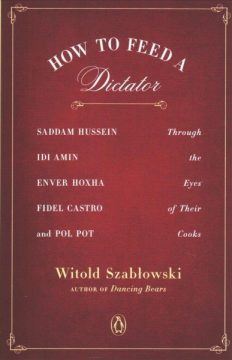 In the new book How to Feed a Dictator, journalist Witold Szablowski tracks down the chefs who served these five men, to paint intimate portraits of how they were at home and at the table.
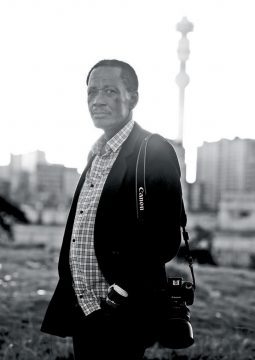 THERE IS A CERTAIN PROFUNDITY—a profundity that can only be qualified and quantified as tautology—a deep profundity in Santu Mofokeng’s work, which thrusts the viewers, if they are willing to listen to the images carefully, into a space of timelessness. A timelessness that speaks of the elasticity of time beyond time, beyond geography. A deep time. Not in the geological, Huttonian sense of deep time, but as in time’s transience and transcendentality. A time beyond the temporality of the lived imagination. I have found myself in this time-space often when looking at and listening to Santu’s photographic series, particularly “Landscapes,” 1988–2010; “Poisoned Landscapes,” 2008; “Townships,” 1985–87; “Child-Headed Households,” 2007; “Train Church,” 1986; “Landscapes of Trauma,” 1997–2004; “Chasing Shadows,” 1996–2006; and “Ishmael,” 1984–2005.
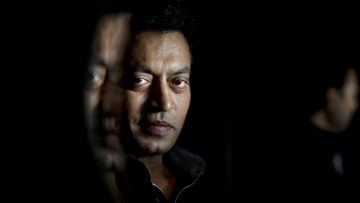 In 1986, when the director Mira Nair was scouting for her film Salaam Bombay! at the National School of Drama in New Delhi, she fixed her gaze on a young man from Jaipur. “I noticed his focus, his intensity, his very remarkable look—his hooded eyes,” she
 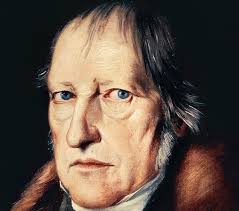 Although the nineteenth-century philosopher G.W.F. Hegel is known as a defender of bourgeois society and so of what came to be known after him as capitalism, I think the evidence suggests that his answer to these questions is far more negative than is widely recognized, and this in a distinctive sense that remains relevant today. I want to try to explain this counterintuitive claim. Hegel, of course, writing in Germany in the early nineteenth century, had no idea of the full scope of the industrial capitalism to come, but he certainly saw that a largely agricultural and artisanal/craft/predominantly homebound economy was changing into a wage-labor economy, and his worries about that alone are apposite. What makes him especially worth returning to in our present circumstances, however, is that while material inequalities and the resulting systematic unfairness were important to him, Hegel’s principal focus was on the experiences of ourselves and others inherent in the ordinary life required by such a productive system. These issues are often misleadingly marginalized as “psychological,” but as recent events have shown, they are crucial to the possibility of the social bonds without which no society can survive.
 The ongoing coronavirus disease 2019 (COVID-19) pandemic has renewed academic and clinical interest in an old vaccine,
 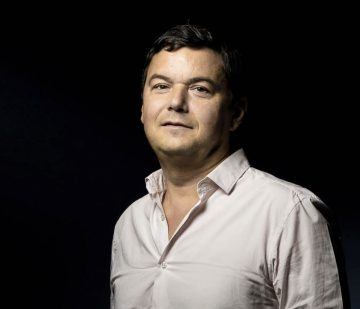 Piketty’s 753-page book Capital in the Twenty-First Century, published in 2013, sold 2.5 million copies worldwide and helped put inequality on the global agenda. But his latest, the even thicker Capital and Ideology, may prove still more influential. The book is nothing less than a global history of inequality and the stories that societies tell to justify it, from premodern India to Donald Trump’s US. It arrives just as anger about inequality (some of it generated by Piketty’s work) approaches a boiling point, and was channeled by a contender for the White House, Bernie Sanders.
 The world will never know what has happened—what a light has gone out,” the belletrist Lytton Strachey, a member of London’s Bloomsbury literary set, wrote to a friend on January 19, 1930. Frank Ramsey, a lecturer in mathematics at Cambridge University, had died that day at the age of twenty-six, probably from a liver infection that he may have picked up during a swim in the River Cam. “There was something of Newton about him,” Strachey continued. “The ease and majesty of the thought—the gentleness of the temperament.”