
—The territory now covered by Erving was settled about 1801, by Col.
Asaph White, of Heath, who built a log house in the wilderness.
The Territory Now Covered
A granite nothing, a name only, a scratched-up pile
of planet, tarped with old snow.
Every track it seemed
was days old, glassed by the sun and useless, though
there was no sun today.
Any movement
would have cracked something, a leaf, a pane of ice—thrown
out some flare,
some sound, but I heard
nothing.
My mind
was a gully of rock
sluiced with rock. It was a field of weeds overgrown now
with weeds. The deer
seemed simply to exist in another world.
I followed lines which came together
and split apart in trunks
and trails, I followed lines which were at every moment
the best way through the world. I begged
for notice, I paced the edge of a sea.
Dark piles under hemlocks
where snow was thin. Hoof-scrapes
for the infants of oak.
I sat on a fallen tree to take my meal of salt bread, unlacing
my boot to find the foot
that had been bothering the stone
by David Troupes
from The Ecotheo Review
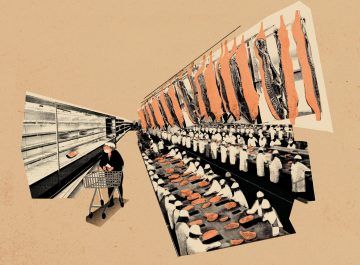 “Only when the tide goes out,” Warren Buffett observed, “do you discover who’s been swimming naked.” For our society, the Covid-19 pandemic represents an ebb tide of historic proportions, one that is laying bare vulnerabilities and inequities that in normal times have gone undiscovered. Nowhere is this more evident than in the American food system. A series of shocks has exposed weak links in our food chain that threaten to leave grocery shelves as patchy and unpredictable as those in the former Soviet bloc. The very system that made possible the bounty of the American supermarket—its vaunted efficiency and ability to “pile it high and sell it cheap”—suddenly seems questionable, if not misguided. But the problems the novel coronavirus has revealed are not limited to the way we produce and distribute food. They also show up on our plates, since the diet on offer at the end of the industrial food chain is linked to precisely the types of chronic disease that render us more vulnerable to Covid-19.
 Humans build machines, in part, to relieve themselves from the burden of work on difficult, repetitive tasks. And yet, despite the fact that machines are everywhere, most of us are still working pretty hard. But maybe that’s about to change. Futurists like John Danaher believe that society is finally on the brink of making a transition to a world in which work would be optional, rather than mandatory — and he thinks that’s a very good thing. It will take some adjusting, personally as well as economically, but he envisions a future in which human creativity and artistic impulse can flourish in a world free of the demands of working for a living. We talk about what that would entail, whether it’s realistic, and what comes next.
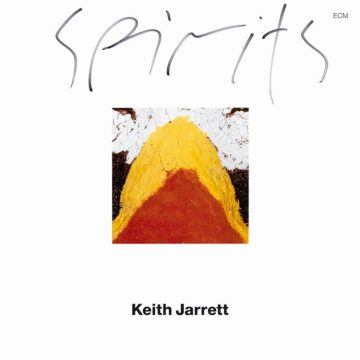 On July 7, 2013, Keith Jarrett bracingly took to the stage at the Umbria Jazz Festival in Perugia, Italy. The momentousness of the occasion was not lost on anyone: just six years earlier, Jarrett had become the first artist to ever be banned from the festival by director Carlo Pagnotta, for delivering a profanity-ridden condemnation of photographers in the audience. Seeking to avoid a similar incident this time around, Pagnotta issued a preemptive plea to the crowd to put their cameras away and to greet Jarrett with a standing ovation.
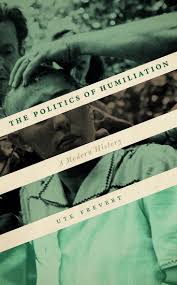 No emotion stands nearer to the foundational myths of the human social order than shame. In the beginning, Adam and Eve stood together ‘both naked, the man and his wife, and were not ashamed’. And then they ate of the tree of knowledge; their eyes opened; they knew they were naked; they covered themselves with fig leaves. Their shame was what told God they had fallen and become humans of our sort. Protagoras tells Socrates that after Prometheus had distinguished humans from other animals by giving them fire, Zeus gave them both shame and justice so that they could live together in harmony.
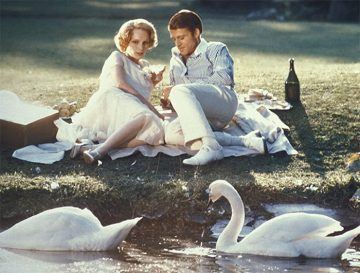 IN A TELEGRAM SENT
 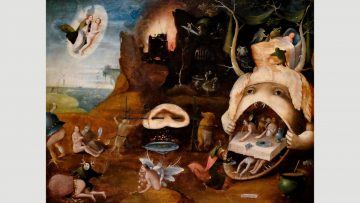 Dreams have fascinated philosophers and artists for centuries. They have been seen as divine messages, a way of unleashing creativity and, since the advent of psychoanalysis in the 19th Century, the key to understanding our unconscious. As so many of us have been experiencing unusually vivid dreams in recent weeks, it seems an opportune moment to explore the way in which they have been understood and depicted throughout the centuries. In doing so we may even find some intriguing parallels with our own experiences. But why are we dreaming so vividly now? “We’re in a new situation so there’s new emotions to process,” says psychotherapist Philippa Perry, who was inundated with replies when she recently asked her followers to send her their dreams on Twitter. We make up narratives to make sense of those feelings that in dream manifest themselves “not straightforwardly but in metaphors”, she explains.
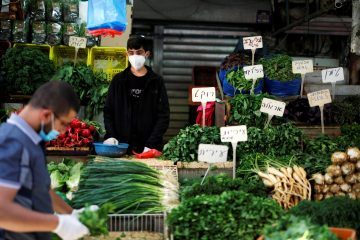 If we cannot resume economic activity without causing a resurgence of Covid-19 infections, we face a grim, unpredictable future of opening and closing schools and businesses.
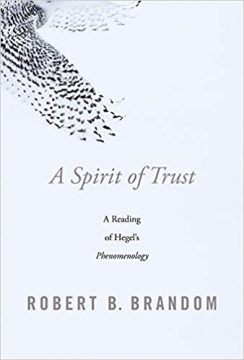 ROBERT BRANDOM IS one of the few living philosophers who can, without exaggeration, be compared to the philosophical giants who once bestrode the earth, or at least loomed large in the study, from the 17th through the 19th centuries: Spinoza, Leibniz, Hume, Kant, Hegel — system-builders who intended to explain all of reality, and ourselves, to ourselves, insofar as we and it were explicable (a matter about which they disagreed). Brandom’s long-awaited book A Spirit of Trust is an achievement in that classical vein, and quite a surprising one in this period of punctilious specialists.
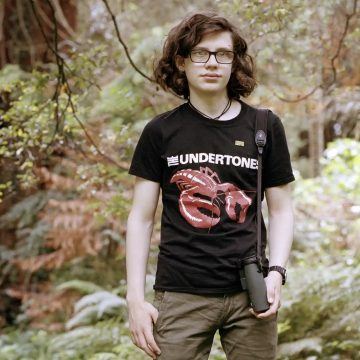 It is a challenging time to be 16 and, like his peers, Dara McAnulty must currently endure a form of house arrest that means no seeing friends, no GCSEs. Unlike other locked-down teens, McAnulty is also dealing with the harsh mischance of having his first book, Diary of a Young Naturalist, published during the coronavirus crisis. He was supposed to be touring festivals but every date is cancelled. “I feel like my being is suffering from a slow puncture,” McAnulty tweeted in March. “I honestly feel like my world is falling apart right now.”