
Category: Recommended Reading
Ben Katchor’s ‘The Dairy Restaurant’
J Hoberman at Bookforum:
 Beginning thousands of years before the first dairy restaurant appeared, Katchor’s book attempts to explicate the laws of kashruth—the separation of milk and meat—and other dietary notions and origin myths. (The mixture of causal logic and total irrationality recalls Katchor’s musical-theater piece The Slug Bearers of Kayrol Island, in which exploited workers transport tiny lead weights to place inside and give heft to small appliances.) Coffeehouse culture stimulates the Enlightenment. Radical puritans imagine a prelapsarian Hebrew vegetarian diet while, having internalized certain liberal values advanced by the French Revolution, eighteenth-century Parisians invent the “restaurant” and the “menu,” consecrated to individual rights and freedom of choice.
Soon after, health-minded central Europeans brought forth the ostentatiously sanitary glazed-tile Milchhalle (milk bar), which, according to Katchor, attracted intellectuals and fugitive revolutionaries: “If the saloon was a place for workingmen to fall into an alcoholic stupor, and the cafes of Paris, coffeehouses in London, and tearooms of Russia were caffeinated hotbeds of radical thought and action, the mleczarnia, or dairy cafe, was a place of ferocious rumination.”
more here.
On Romare Bearden
Kevin Brown at Salmagundi:
 What is it you see, asks Rachael Z. DeLue, in Romare Bearden’s artwork? Why is it you just can’t stop looking? How is it they remain, decades after his death, sources of what Wallace Stevens calls “imperishable bliss”?
A fitting complement to Schmidt-Campbell’s An American Odyssey: The Life and Work of Romare Bearden (2018), Robert G. O’Meally’s Romare Bearden Reader gathers nearly three dozen previously uncollected pieces, eight of them artist’s statements, book chapters, essays, journal entries, art reviews and speeches by Bearden himself dating from the mid-1930s to 1993. As a source of information about and insight into Bearden’s various periods, styles and media, The Romare Bearden Reader builds on foundations laid by Henri Ghent and Calvin Tomkins.
more here.
Thursday, May 14, 2020
A mother’s vanishing: A secret that haunted my family for generations, hiding in plain sight
Elizabeth Kadetsky in Salon:
 When I was a kid, I adored going over to my grandmother’s house and exploring her art room. To reach it, I wound past my grandmother’s collections of things in the living room and hall, most in service of her art projects. There was always a collage or bead curtain in the making, often butting up against fruits, vegetables and flowers arranged before still life canvases in progress.
She was a wonderful painter, and her many still lives and urban landscapes with her signature, Solange, adorned the room and the house. Inspired by her and having supposedly “inherited” her talent, I attended art classes at the Art Students League of New York and at the School of Visual Arts when I was in middle and high school, and declared art as my major when I got to college.
I suppose many grandchildren believe that they are the favorite of a particular grandparent. But in my family, my maternal grandmother’s legacy to me had long been established. She was an artist, and I was an artist. But, around the time of my mother’s death from Alzheimer’s disease, I discovered a family secret involving my grandmother that put a new spin on issues of legacy in my family.
More here.
What John von Neumann really did for modern computing
Ashutosh Jogalekar in The Curious Wavefunction:
 That John von Neumann was one of the supreme intellects humanity has produced should be a statement beyond dispute. Both the lightning fast speed of his mind and the astonishing range of fields he made seminal contributions to made him a legend in his own lifetime. When he died in 1957 at the young age of 56 it was a huge loss; the loss of a great mathematician, a great polymath and to many, a great patriotic American who had done much to improve his country’s advantage in cutting-edge weaponry.
Starting with pure mathematics – set and measure theory, rings of operators, foundations of mathematics in the 1920s and early 30s – von Neumann moved to other mathematical topics like ergodic theory, Hilbert spaces and the foundations of quantum mechanics that were closer to physics. He then moved into economics, writing “The Theory of Games and Economic Behavior” with Oskar Morgenstern which laid the foundations of game theory (a first edition in good condition now sells for $12,500). Von Neumann contributed to many other fields in major and minor ways. During and after the war he turned his powerful mind to defense-related research. He played a key role in developing the idea of implosion used in the plutonium bomb during the Manhattan Project and made valuable contributions to consulting on ballistics and shock waves. After the war von Neumann turned completely to applied mathematics. Perhaps the major reason for this transformation was his introduction to computing during a consulting stint in England during the war in 1943. Even as nuclear weapons promised to completely change politics, science and international relations, he was writing in a letter to a friend at the end of the war, “I am thinking about something much more important than bombs; I am thinking about computers.”
More here.
“Tribal People” Try Donuts For The First Time
Apartheid in Fancy Dress: Against India’s arranged marriage regime
Suraj Yengde in The Baffler:
 INDIAN CINEMA LOVES LOVE. It celebrates love between the poor and the rich; love across the lines of religion, region, and language; love that upends conventional notions of gender and sexuality. A foreign viewer of such films would be forgiven for concluding that India is a loving society. But nothing could be further from the truth. For what Bollywood does not honestly discuss is the brutal social reality that sits uncomfortably at the center of all romantic and marital relations in India: caste.
Consider, for example, the popular Bollywood genre known as “family movies.” They cater to the moneyed middle class but the audience is wider—I spent movie days at our neighbors because we couldn’t afford a cable connection and our black-and-white television set offered little pleasure. These films, which can go on for three hours, usually culminate in a marriage. But before getting there, the viewer is introduced to a wide cast of characters, usually the extended families of the romantic couple. Then there are seemingly endless subplots—each family’s business problems, bickering over inheritance, a scheming elder brother, celebration of Hindu festivals (usually accompanied by music)—which might threaten or aid the budding romance. Inevitably, by the end, bride and bridegroom are united in happiness.
It all seems innocuous on the surface. But look closer and you’ll see that the elaborate family subplots are just a way to hide, or at least sanitize or soften, the fact that this is an arranged marriage the film is tacitly endorsing.
More here.
A Song by Joseph Brodsky
Dreams of America Behind the Iron Curtain
Joseph Brodsky at Lithub:
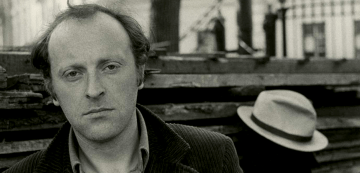 If anybody profited from the war, it was us: its children. Apart from having survived it, we were richly provided with stuff to romanticize or to fantasize about. In addition to the usual childhood diet of Dumas and Jules Verne, we had military paraphernalia, which always goes well with boys. With us, it went exceptionally well, since it was our country that won the war.
Curiously enough, though, it was the military hardware of the other side that attracted us most, not that of our own victorious Red Army. Names of German airplanes—Junkers, Stukas, Messerschmidts, Focke-Wulfs—were constantly on our lips. So were Schmeisser automatic rifles, Tiger tanks, ersatz rations. Guns were made by Krupp, bombs were courtesy of I. G. Farben-Industrie. A child’s ear is always sensitive to a strange, irregular sound.
more here.
The Improbability of Genuine Thinking Machines
Tim Crane at the TLS:

Brian Cantwell Smith’s new book is a provocative expression of scepticism about these recent claims on behalf of AI, from a distinguished practitioner in the field. His overall argument is based on a distinction between what he calls “reckoning” and “judgment”. Reckoning is understood here in its original etymological sense: as calculation, like addition and subtraction. Judgment, by contrast, is something more. It is described by Smith as “an overarching, systemic capacity or commitment, involving the whole commitment of the whole system to the whole world”. Our thinking involves not just some kind of simple on-off representation of things around us, but an entire emotional and value-laden involvement with the world itself. Computers have none of this. As the philosopher John Haugeland (a major influence on Smith) used to say, “computers don’t give a damn”. Giving a damn is a precondition of “judgment” in Smith’s sense, and anything that amounted to a real AGI would need to exercise judgment, and not simply calculate.
more here.
opposition to vaccines is small but far-reaching — and growing
Philip Ball in Nature:
 As scientists work to create a vaccine against COVID-19, a small but fervent anti-vaccination movement is marshalling against it. Campaigners are seeding outlandish narratives: they falsely say that coronavirus vaccines will be used to implant microchips into people, for instance, and falsely claim that a woman who took part in a UK vaccine trial died. In April, some carried placards with anti-vaccine slogans at rallies in California to protest against the lockdown. Last week, a now-deleted YouTube video promoting wild conspiracy theories about the pandemic and asserting (without evidence) that vaccines would “kill millions” received more than 8 million views.
It’s not known how many people would actually refuse a COVID-19 vaccine — and general support for vaccines remains high. But some researchers studying vaccine-opposition movements say they’re concerned that the messages could undermine efforts to establish herd immunity to the new coronavirus. Online opposition to vaccines has rapidly pivoted to talk of the pandemic, says Neil Johnson, a physicist at George Washington University in Washington DC, who is studying the campaigners’ tactics. “For a lot of these groups, it’s all about COVID now,” he says.
More here.
The Man Who Delayed D-Day
John Steele in Nautilus:
 When Dwight D. Eisenhower was planning the invasion of Normandy, he made sure to check with Walter Munk and his colleagues first. Munk had come to the United States from Austria-Hungary to work as a banker before switching to oceanography, eventually making major advances in the science of tidal and wave forecasting. He was a defense researcher at the Scripps Institution of Oceanography in 1944 when his team calculated that the seas on June 5 of that year would be so rough that a delay was in order. The invasion would happen on the following day.
It was just one highlight among many in Munk’s career. From explaining why we always see the same side of the moon to sending a sound signal halfway around the world, Munk, who passed away in February 2019, was the very definition of the enterprising scientist. When I spoke to him at a workshop of the Pontifical Academy of Sciences at the Vatican, he spoke with an energy and enthusiasm that belied his 96 years.
More here.
Thursday Poem
On Calling the Cops
It took us this long to slow our dying
down to a languid and sensible pace
wherein the sugar might claim each our limbs
but never in one fell and vicious swoop
how irony does when the voice you use
to summon a state-hired cavalry
is also the one used to beg of them
to not create a Calvary where you stand
and make you a Christ begat from gun-smoke
so rules the nation’s practice of mishap
which reads the skin like a type of license
before any righteous explanation
just as the weapon gives its sovereign word
puckers its steel mouth to decide your name
by Rasheed Copeland
from Split This Rock
Wednesday, May 13, 2020
The Confessions of Marcus Hutchins, the Hacker Who Saved the Internet
Andy Greenberg in Wired:
 Hutchins was coming off of an epic, exhausting week at Defcon, one of the world’s largest hacker conferences, where he had been celebrated as a hero. Less than three months earlier, Hutchins had saved the internet from what was, at the time, the worst cyberattack in history: a piece of malware called WannaCry. Just as that self-propagating software had begun exploding across the planet, destroying data on hundreds of thousands of computers, it was Hutchins who had found and triggered the secret kill switch contained in its code, neutering WannaCry’s global threat immediately.
This legendary feat of whitehat hacking had essentially earned Hutchins free drinks for life among the Defcon crowd. He and his entourage had been invited to every VIP hacker party on the strip, taken out to dinner by journalists, and accosted by fans seeking selfies. The story, after all, was irresistible: Hutchins was the shy geek who had single-handedly slain a monster threatening the entire digital world, all while sitting in front of a keyboard in a bedroom in his parents’ house in remote western England.
Still reeling from the whirlwind of adulation, Hutchins was in no state to dwell on concerns about the FBI, even after he emerged from the mansion a few hours later and once again saw the same black SUV parked across the street.
More here.
America’s meat shortage is more serious than your missing hamburgers
Adam Clark Estes in Vox:
 If you go to Wendy’s this week, there’s a good chance you won’t be able to get a hamburger. Go to the supermarket and you’ll probably see some empty shelves in the meat section. You may also be restricted to buying one or two packs of whatever’s available. Try not to look at the prices. They’re almost definitely higher than what you’re used to.
This is the new reality: an America where beef, chicken, and pork are not quite as abundant or affordable as they were even a month ago. The coronavirus pandemic has hit the meatpacking industry hard, as some of the worst virus outbreaks in the United States have occurred in the tight, chilly confines of meat processing plants. Standing elbow-to-elbow, workers there — many of them immigrants, in already dangerous roles and making minimum wage — are facing some of the highest infection rates in the nation.
Sick workers mean meatpacking plants are shutting down, and these closures are contributing to a deeply disruptive breakdown in the meat supply chain.
More here.
Eqbal Ahmad – Selected Excerpts from Talks and Programmes 1970s to 1990s
This Philosopher Is Challenging All of Evolutionary Psychology
Ryan F. Mandelbaum at Gizmodo:
 It’s not often that a paper attempts to take down an entire field. Yet, this past January, that’s precisely what University of New Hampshire assistant philosophy professor Subrena Smith’s paper tried to do. “Is Evolutionary Psychology Possible?” describes a major issue with evolutionary psychology, called the matching problem.
The field of evolutionary psychology is no stranger to critiques, given its central idea: that human behaviors can be explained in evolutionary terms and that the core units governing our actions haven’t changed since the Stone Age. But Smith’s paper garnered a particularly strong response after science journalist Adam Rutherford discussed it on Twitter and PZ Myers discussed it in his Pharyngula blog.
We at Gizmodo have long rolled our eyes at the often-nonsensical conclusions that some people come to when employing evolutionary psychology theory, so we were excited to chat with Smith about her work.
More here.
Jordi Savall: Lachrimae Caravaggio (Hespèrion XXI)
Heading West for The Cure
Lyra Kilston at Cabinet:
 In Southern California, early health seekers embraced the sunshine, fresh air, and opportunity to sleep outdoors. To reap the benefits of particular microclimates, they often lived somewhat nomadically, circulating between various hotels, boarding houses, or crudely erected tent cities. Some traveled by horse-drawn house wagon, wandering the desert to take air and sun baths. A family in Pasadena pitched a carpet over tree branches and lived beneath the peaked shelter for six weeks. An ill Massachusetts man roamed the bucolic Ojai Valley with a cow, subsisting only on its raw milk until he claimed a miraculous recovery.
Such makeshift regimens, reliant on climatic cures, were also practiced in the warmer parts of Europe. But a more formalized health infrastructure was being developed in Europe’s colder climes, blending the efficiency of a hospital with the comforts of a hotel.
more here.
The Delicate Paintings of Edo Japan
Tamar Avishai at the NYRB:
 You will have seen art from the Edo Period—its most recognizable images are the ukiyo-e prints: mass-produced woodblock scenes of popular entertainment and Japanese landscapes, the most world-famous of which is Katushika Hokusai’s The Great Wave off Kanagawa from 1829. These prints were ubiquitous, disseminated through the city’s pleasure quarters, and sold, it’s colloquially said, as cheaply as a second helping of noodles. And before Edo Japan opened up to the world and these inexpensive prints were splashed all over Europe, they were bought almost exclusively as souvenirs by a growing Japanese middle class, a pictorial keepsake of insular pride. The Great Wave is itself an amalgam of some of Japan’s most distinctive characteristics, illustrating its relationship with the spiritual anchor of Mount Fuji, and with the sea itself, which is embodied in both the quotidian economics of the fishing industry, and in the Buddhist philosophy of a wave’s impermanence.
more here.