
 Rajan Roy in Margins:
The thing is, money has expectations. At an individual level, most of us have become accustomed to bank savings accounts effectively returning zero. That wasn’t enough for us though. Our money felt antsy, so it found index funds and other passive funds, to once again, find a bit of yield. They are certainly riskier than a bank savings account (where your only risk is the bank going under), but hey, no one has ever really lost in a Wealthfront account. Money swims towards yield.
That same, tiny behavioral shift takes place at every level of the risk curve, from your savings account to the trillions of dollars managed by large pension funds. That’s exactly how it’s supposed to work; rather than that money sitting in your 0.01% savings account, you put it to work somewhere else. For a pension fund, they might even have a prescribed expectation of yield (to match expected liabilities), meaning, to maintain a consistent return, they have to move up the risk curve.
So all these dollar-organisms all start swimming towards riskier waters. Treasury investors shift to corporate debt. Public equity hedge funds shift to late-stage private equity. Late-stage private equity shifts to mid-stage, mid-stage to early stage. Seed rounds become bigger. Angel investors become a thing. Unicorns, unicorns, and more unicorns. Ashton Kutcher.
And that’s how we end up where we are. In the past, if somewhat risky corporate debt got you 10%. It now gets you 7% (I’m making up numbers here) so you start taking meetings with late-stage growth companies.
More here.
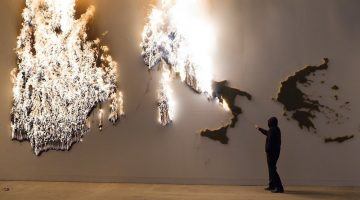 Hal Foster in Lit Hub
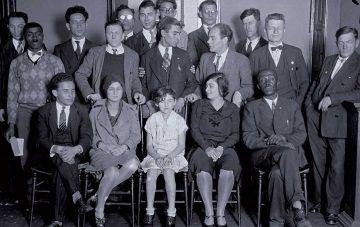 Corey Robin in The Nation:
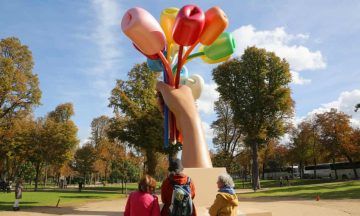 If oppositional art can neither parody nor demystify the operation of power, what glimpses of the future can it provide? Whereas Foster’s previous books surveyed the art scene by identifying a small number of key trends, his approach here is more scattergun: we get 18 telegraphic essays on as many artists, whose work is used to illustrate competing forces in the culture industry. This kaleidoscopic perspective has its pitfalls. Breadth of analysis is often privileged over depth of insight. Sculptors, painters, conceptual artists and cultural theorists all make cameo appearances, yet the links between their work go unelaborated. Even so, the rapid pace of Foster’s prose captures the frenzied historical moment he is exploring; and his reluctance to offer simple answers acknowledges that multiple possibilities for reshaping our culture are currently ranged against each other.
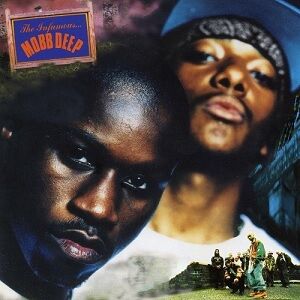 IN THE FALL of 1994, American radio and club DJs began receiving a promotional single in the mail: “Shook Ones, Pt. II,” by the Queens rap duo Mobb Deep. Those early promos came with little fanfare — no cover art, no liner notes, just a plain center sticker with the group’s name, song title, and record label logo. The reaction to “Shook Ones, Pt. II” was as spectacular as its arrival was understated. Its dark, discordant track and violent braggadocio powered the single onto hip-hop mix shows, and the song sparked fights in rowdier nightclubs whenever it rumbled over the speakers. Eminem’s hit 2002 film 8 Mile paid “Shook Ones, Pt. II” the ultimate homage by using it in the film’s cold open, a shot of auditory adrenaline jabbed into the heart of B-Rabbit as he prepares for an MC battle.
 IF THE TRUMP ADMINISTRATION
  Over the past month, Jennifer Leiferman, a researcher at the Colorado School of Public Health, has documented a tidal wave of depressive symptoms in the U.S. “The rates we’re seeing are just so much higher than normal,” she says. Leiferman’s team recently
  For those doubtful about the fascism analogy for Trumpism—and I count myself as one of them—the point is to appreciate both continuity and novelty better than the comparison allows. Abnormalizing Trump disguises that he is quintessentially American, the expression of enduring and indigenous syndromes. A response to what he represents hardly requires a restoration of “normalcy” but a questioning of the status quo ante Trump that produced him. Comparison to Nazism and fascism imminently threatening to topple democracy distracts us from how we made Trump over decades, and implies that the coexistence of our democracy with long histories of killing, subjugation, and terror—including its most recent, if somewhat sanitized, forms of mass incarceration and rising inequality at home, and its tenuous empire and regular war-making abroad—was somehow less worth the alarm and opprobrium. Selective outrage after 2016 says more about the outraged than the outrageous.
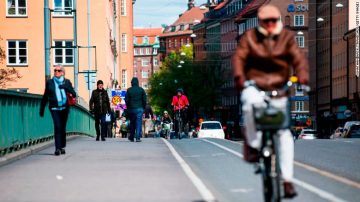 Sweden has revealed
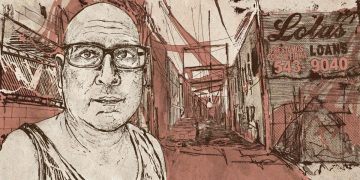 For a heroin addict, Ciudad Juárez is Mecca. It’s cheap, drug possession charges result in just a couple of nights in jail, and the ability to earn U.S. currency by begging or doing odd jobs in El Paso significantly increases a person’s buying power in Mexico. These are things Comar learned after he abandoned his trucker job and moved from New York to Juárez in 1998. It’s also what several U.S. citizens who suffer from long-term addiction have told me makes Juárez the perfect place to live. And there’s no reason why they’d ever want to go back.
 “Michael Kohlhaas,” which was recently reissued by New Directions in a sparkling new translation from Michael Hofmann, makes for a fine entry point into Kleist’s passionate, grotesque, hysterical, and deeply strange body of work. It begins, as it ends, in bureaucratic entanglement. Kohlhaas, en route to a Leipzig marketplace, is stopped by a castellan in the employ of the knight Wenzel von Tronka, who demands to see a travel permit. Lacking the necessary visa, Kohlhaas is coerced into leaving two of his finest horses as collateral, along with his trusty groom to watch over them. While passing through Dresden, he learns from a government notary that the permit is in fact a fairy tale. As so often occurs in “Michael Kohlhaas,” the law is invoked only to be disfigured by human cupidity. The castellan is merely an avatar, the first of several figures whose knowledge of the law allows them to shape or pervert it for private aims. Kleist introduces the self-serving technocratic interpreter to modern literature.
 In our time of social distancing, the desire for physical contact has never been so intense. And yet we are untouchable. This experience has had its more conspicuous consequences, such as the government scientist
 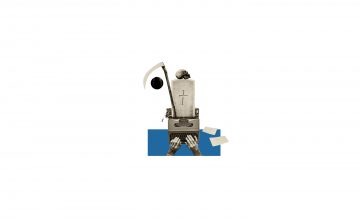 Casual readers of obituaries or listeners to eulogies often instinctively focus on the odder bits. Life, after all, is elemental, quicksilver, strange; it isn’t found in a solemn list of doings and accomplishments, lists of schools attended or prizes won. People like to know about the quirks of the individual who has gone – the jam-jar collection, the clashing clothes, the unwise taste for speed. They want to laugh in the face of death and rejoice in the richness of life. At the same time death, being surrounded by grief, lays on its cold hand and demands respect. How, then, to memorialise the departed?