
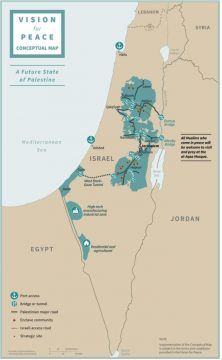
 Moshe Behar in Contending Modernities:
“Game changer” is a concept that involves individuals, tactics, strategies, and more. As such, it saturates the mind of every losing player, team, and/or party; a player who is winning a game, let alone decisively, is rarely interested in a game changer. In the hazardous Israel/Palestine playing-field, the issue may well be more complex or counterintuitive. That is so not because the losing collectivity is somehow uninterested in a game changer (Palestinians are interested); it is because the leadership of the winning Israeli collectivity has convinced itself, perhaps paranoidly, that the “game” is not yet over and that it still needs to settle on what the endgame is. I wish to suggest here that annexation-cum-apartheid may not be this endgame.
A significant development—possibly even a game changer—has been three years in the making, and is led by a group of American-Israeli policy makers linked to Israel’s “Block of the Faithful” settler movement. The development reached an important point in Washington, D.C. in January 2020 when Donald Trump’s administration introduced a 181 page plan entitled “Peace to Prosperity”—colloquially referred to as “the Trump Peace Deal” or “the deal of the century.”
More here.
 Adam Shatz in the LRB: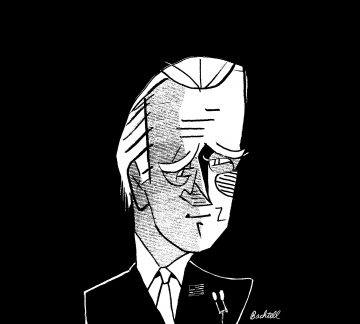
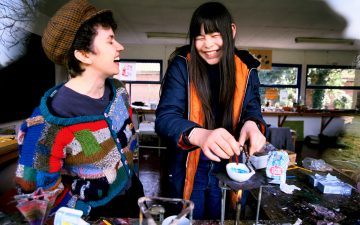 James Brooke-Smith in Aeon:
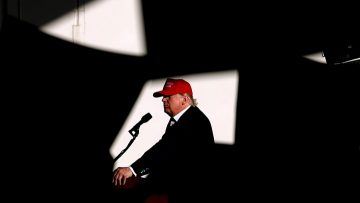 One person who’s unlikely to fall ill at Donald Trump’s Tulsa rally is Donald Trump. When jubilant supporters peel off their masks and whoop their approval as he torches Joe Biden, rest assured that the president will be a safe distance from any pathogens spat into the air. It’s the crowd that’s at the most risk. Trump’s arrival at the BOK Center on Saturday plunks him into the safest of spaces. Security measures will minimize his exposure to the coronavirus. Adoring crowds will gratify a craving for recognition. Attention paid to his first rally in three months could give his flagging campaign a needed jolt. Tulsa, then, amounts to a salve for a president who needs one.
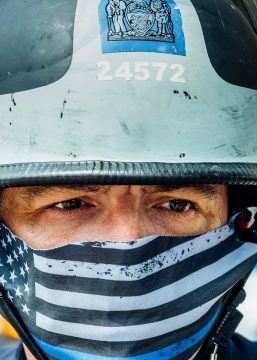 On Memorial Day, the police in Minneapolis killed George Floyd, a 46-year-old black man. Three officers stood by or assisted as a fourth, Derek Chauvin, pressed his knee into Floyd’s neck for more than eight minutes. Floyd said he could not breathe and then became unresponsive. His death has touched off the largest and most sustained round of protests the country has seen since the 1960s, as well as demonstrations around the world. The killing has also prompted renewed calls to address brutality, racial disparities and impunity in American policing — and beyond that, to change the conditions that burden black and Latino communities.
 T
T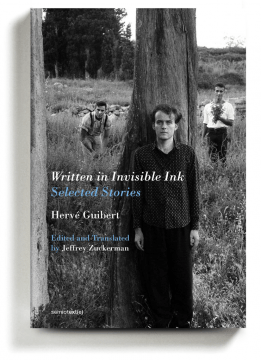 Anonymity comes for us all soon enough, but it has encroached with mystifying speed upon the French writer Hervé Guibert, who died at 36 in 1991. His work has been strangely neglected in the Anglophone world, never mind its innovation and historical importance, its breathtaking indiscretion, tenderness and gore. How can an artist so original, so thrillingly indifferent to convention and the tyranny of good taste — let alone one so prescient — remain untranslated and unread?
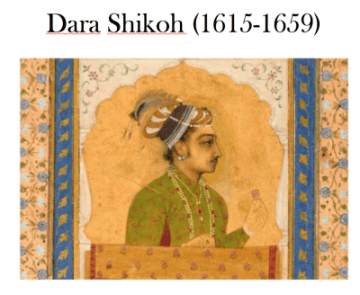 For Hegel, the Greek miracle lay in the separating out of mythology and philosophy, so that the articulation of questions about, say, the nature of time, could be addressed in a universal idiom that would not presuppose the existence of Chronos as a divine personification of time. For the ancient Persians, by contrast, to use Hegel’s own example, reflection on the nature of time could only proceed through culturally embedded narratives inseparable from religion and lore.
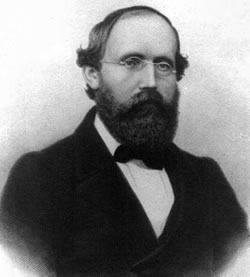 Albert Einstein changed our view of the universe in 1915 when he published the general theory of relativity, in which he set forth the notion of a four-dimensional spacetime that warps and curves in response to mass or energy. The geometric foundation for his work was laid some 60 years earlier, with the work of a German mathematician named Georg Friedrich Bernhard Riemann.
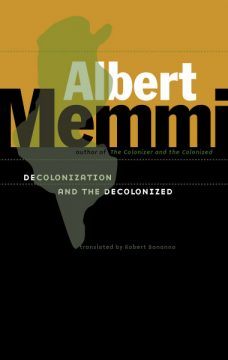 In
In 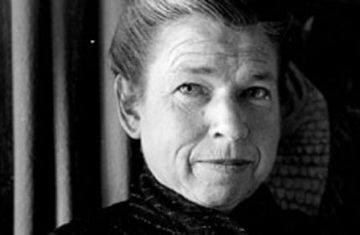 What stuck me about “
 Elizaveta Sivak spent nearly a decade training as a sociologist. Then, in the middle of a research project, she realized that she needed to head back to school.