
Rockwell Anyoha in SITN (Harvard University):
 In the first half of the 20th century, science fiction familiarized the world with the concept of artificially intelligent robots. It began with the “heartless” Tin man from the Wizard of Oz and continued with the humanoid robot that impersonated Maria in Metropolis. By the 1950s, we had a generation of scientists, mathematicians, and philosophers with the concept of artificial intelligence (or AI) culturally assimilated in their minds. One such person was Alan Turing, a young British polymath who explored the mathematical possibility of artificial intelligence. Turing suggested that humans use available information as well as reason in order to solve problems and make decisions, so why can’t machines do the same thing? This was the logical framework of his 1950 paper, Computing Machinery and Intelligence in which he discussed how to build intelligent machines and how to test their intelligence.
Unfortunately, talk is cheap. What stopped Turing from getting to work right then and there? First, computers needed to fundamentally change. Before 1949 computers lacked a key prerequisite for intelligence: they couldn’t store commands, only execute them. In other words, computers could be told what to do but couldn’t remember what they did. Second, computing was extremely expensive. In the early 1950s, the cost of leasing a computer ran up to $200,000 a month. Only prestigious universities and big technology companies could afford to dillydally in these uncharted waters. A proof of concept as well as advocacy from high profile people were needed to persuade funding sources that machine intelligence was worth pursuing.
Five years later, the proof of concept was initialized through Allen Newell, Cliff Shaw, and Herbert Simon’s, Logic Theorist. The Logic Theorist was a program designed to mimic the problem solving skills of a human and was funded by Research and Development (RAND) Corporation. It’s considered by many to be the first artificial intelligence program and was presented at the Dartmouth Summer Research Project on Artificial Intelligence (DSRPAI) hosted by John McCarthy and Marvin Minsky in 1956. In this historic conference, McCarthy, imagining a great collaborative effort, brought together top researchers from various fields for an open ended discussion on artificial intelligence, the term which he coined at the very event.
More here.
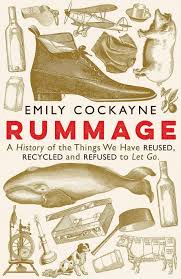 Above all, Cockayne wants us to revise our assumption that people in the past must have been better at reuse and recycling (not the same thing) than we are today. There is, she insists, “no linear history of improvement”, no golden age when everyone automatically sorted their household scraps and spent their evenings turning swords into ploughshares because they knew it was the right thing to do. Indeed, in the 1530s the more stuff you threw away, the better you were performing your civic duty: refuse and surfeit was built into the semiotics of display in Henry VIII’s England, which explains why, on formal occasions, it was stylish to have claret and white wine running down the gutters. Three generations later and Oliver Cromwell’s Parliamentarian troops had found new ways to manipulate codes of waste and value. In 1646 they ransacked Winchester cathedral and sent all the precious parchments off to London to be made into kites “withal to fly in the air”.
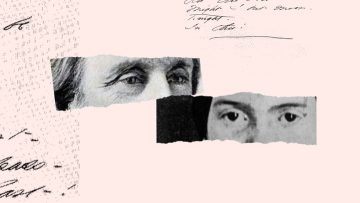 Dickinson said her life had not been constrained or dreary in any way. “I find ecstasy in living,” she explained. The “mere sense of living is joy enough.” When at last the opportunity arose, Higginson posed the question he most wanted to ask: Did you ever want a job, have a desire to travel or see people? The question unleashed a forceful reply. “I never thought of conceiving that I could ever have the slightest approach to such a want in all future time.” Then she loaded on more. “I feel that I have not expressed myself strongly enough.” Dickinson reserved her most striking statement for what poetry meant to her, or, rather, how it made her feel. “If I read a book [and] it makes my whole body so cold no fire can ever warm me I know that is poetry,” she said. “If I feel physically as if the top of my head were taken off, I know that is poetry. These are the only way I know it. Is there any other way.” Dickinson was remarkable. Brilliant. Candid. Deliberate. Mystifying. After eight years of waiting, Higginson was finally sitting across from Emily Dickinson of Amherst, and all he wanted to do was listen.
 S. Jones and Stefan Helmreich in Boston Review (figure from From Kristine Moore et al., “
 Aparna Kapadia in Scroll.in:
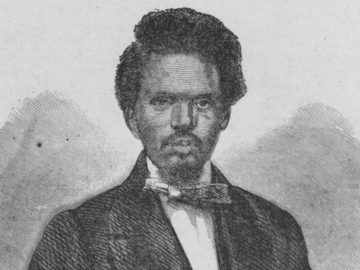 Cate Lineberry over at Smithsonian Magazine:
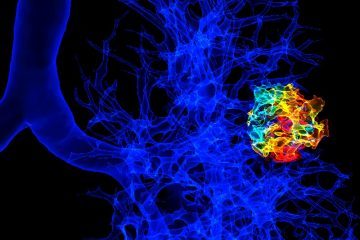 Before the COVID-19 pandemic, the TRACERx project had recruited 760 people with early-stage lung cancer. After a person is diagnosed with a primary lung tumour, it is surgically removed and the cells are analysed to reconstruct the tumour’s evolutionary history. Each individual receives a computed tomography (CT) scan every year for five years to check whether their cancer has returned. If there is no sign of relapse, they are discharged and deemed to have been cured. People with later-stage tumours (stages 2 and 3) are offered chemotherapy following surgery to improve the chance of remission or cure.
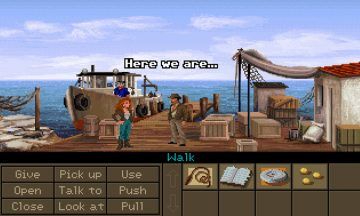 When I was a child, my brother and I played a computer game based on the Indiana Jones movie franchise. In the course of his adventures, Indy would sometimes come to a delicate impasse that required tact and nuance to resolve. Some adversary was blocking his path to a relic or treasure (including, oddly enough, one of Plato’s lost dialogues), and he needed to say just the right thing to get past them and on to the next challenge. The game offered players a selection of five or so sentences to choose from. The world would sit there in 8-bit paralysis and wait while we pondered how to make it do what we wanted. Press enter on the right sentence and pixelated Indy would sail through. Choose something inapt and game over.
 What they are understanding is that this coronavirus “has such a diversity of effects on so many different organs, it keeps us up at night,” said Thomas McGinn, deputy physician in chief at Northwell Health and director of the Feinstein Institutes for Medical Research. “It’s amazing how many different ways it affects the body.”
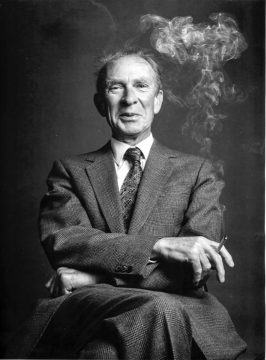 When I migrated from Cambridge to my new post at Pembroke College Oxford in the fall of 1969 I got the sense that many of the Old Guard there regarded me as some kind of foreign usurper. Perhaps their own favourite pupils had not been offered the job as they undoubtedly deserved. An exception was Peter Strawson, who was always friendly, and whom I came to admire greatly. Some years later when I belonged to a rather grubby photography workshop in the city I persuaded him to come downtown for me to make a portrait of him. I hope that some of the affection I felt comes through, as well as his undoubted amusement at the occasion.
 In 1977, the poet Adrienne Rich exhorted a graduating class of young women to think of education
  Arising by most accounts in the last decades of the nineteenth century, the novel of ideas reflects the challenge posed by the integration of externally developed concepts long before the arrival of conceptual art. Although the novel’s verbal medium would seem to make it intrinsically suited to the endeavor, the mission of presenting “ideas” seems to have pushed a genre famous for its versatility toward a surprisingly limited repertoire of techniques. These came to obtrude against a set of generic expectations—nondidactic representation; a dynamic, temporally complex relation between events and the representation of events; character development; verisimilitude—established only in wake of the novel’s separation from history and romance at the start of the nineteenth century. Compared to these and even older, ancient genres like drama and lyric, the novel is astonishingly young, which is perhaps why departures from its still only freshly consolidated conventions seem especially noticeable.
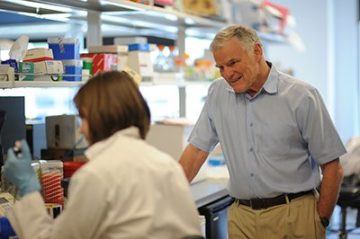 The highlights of Leroy Hood’s scientific career are like peaks in a mountain range spanning diverse fields, from molecular immunology and engineering, to genomics, to systems medicine. But Hood doesn’t think his trailblazing approach should be unusual, emphasizing that “one of the really key things about science is every 10 or 15 years, you really make a dramatic break and do something new… and you have to learn a lot before you can make fundamental contributions.”
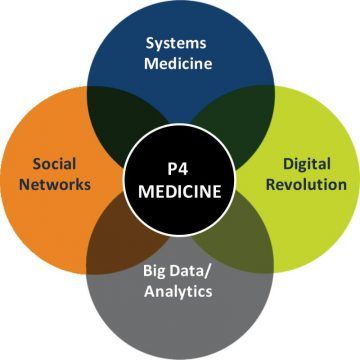 The term “