
Joshua P. Hochschild in First Things:
 Once upon a time, education was rhetorical training. Learning to think well, and thereby to negotiate all of life with responsible intelligence, was fundamentally about interacting with—drawing from and contributing to—a fund of powerful writing. But then, to make a long story short, things got complicated, “rhetoric” was demoted to one department among many, and that department was eventually rebranded as “Communication Studies.” In what could serve as a tragic epilogue to the history of Western education, young Mattie, son of the title character in Wendell Berry’s Hannah Coulter, goes off to study communication and becomes unable to talk to his own parents. “Communication of what?” asks Hannah’s husband, Nathan. “God knows what,” answers Hannah. “And that was about the extent of our conversation on that subject.”
It’s no surprise what Mattie missed in college. Anything like traditional rhetorical education is by now rare and usually accidental, and while some of us still try to keep alive a classical conception of “liberal education,” we sense a need for new rhetorical resources to capture what that is. Three new books about thinking testify that the old learning is ever-renewing, and available to anyone who knows what to look for.
Scott Newstok’s How to Think Like Shakespeare directly addresses rhetoric as “the craft of future discourse,” and attends to the particular practices that cultivate this craft.
More here.
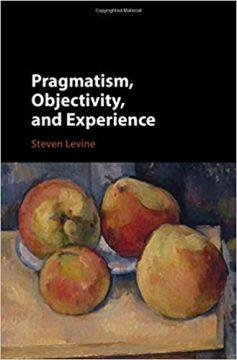 Steven Levine has written a superb book. The title advertises three perennially puzzling topics: pragmatism, objectivity, and experience. Some background will help locate his project on a larger map.
 A team of scientists hunting dark matter has recorded suspicious pings coming from a vat of liquid xenon underneath a mountain in Italy. They are not claiming to have discovered dark matter — or anything, for that matter — yet. But these pings, they say, could be tapping out a new view of the universe.
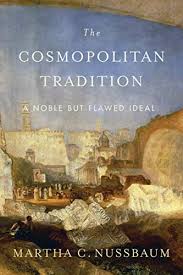 Nussbaum concludes that the cosmopolitan tradition “must be revised but need not be rejected.” She proposes that it be replaced by her own version of the “Capability Approach” to development. Conceived by the Nobel laureate economist Amartya Sen as an alternative to the prevailing mode of Western-exported market fundamentalism, the Capability Approach challenges the central tenets of economic globalization in its modern context: free trade, floating exchange rates, capital account and labor market “liberalization,” and so forth. In lieu of a sole focus on GDP and strictly monetary metrics of growth, the Capability Approach advocates a concern with the positive freedoms and opportunities that follow from investments in education, health care, leisure, environmental sustainability, and other factors.
 Collective demonizations of prominent cultural figures were an integral part of the Soviet culture of denunciation that pervaded every workplace and apartment building. Perhaps the most famous such episode began on Oct. 23, 1958, when the Nobel committee informed Soviet writer Boris Pasternak that he had been selected for the Nobel Prize in literature—and plunged the writer’s life into hell. Ever since Pasternak’s Doctor Zhivago had been first published the previous year (in Italy, since the writer could not publish it at home) the Communist Party and the Soviet literary establishment had their knives out for him. To the establishment, the Nobel Prize added insult to grave injury.
 A well-worn science-fiction trope imagines space travelers going into suspended animation as they head into deep space. Closer to reality are actual efforts to slow biological processes to a fraction of their normal rate by replacing blood with ice-cold saline to prevent cell death in severe trauma. But saline transfusions or other exotic measures are not ideal for ratcheting down a body’s metabolism because they risk damaging tissue.
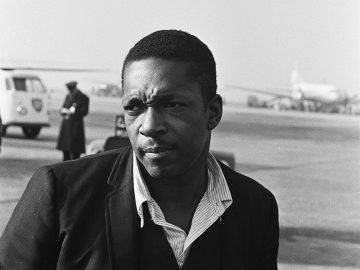 The John Coltrane Quartet’s “Alabama” is a strange song, incongruous with the rest of the album on which it appears. Inserted into Coltrane’s 1964 album Live at Birdland, it’s a studio track that confounds the virtuosic post-bop bliss of the album’s first three tracks, live recordings that include a jittery rendition of Mongo Santamaria’s “Afro Blue.” All of that collapses when we reach the sunken melancholy of “Alabama.” We are far, now, from the cascades of sound that Coltrane introduced us to in “Giant Steps,” far from the sonic innovations and precise phrasing he refined in this album’s live recordings. Here, Coltrane’s saxophone sounds hoarse and enfeebled, until it collapses on the threshold of a hole in the ground.
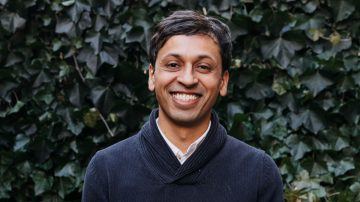 Last summer, Nikil Saval was best known as a head editor for the literary and political magazine n+1. He wrote freelance articles about architecture and design for The New York Times and The New Yorker. He used a Motorola razr flip phone.
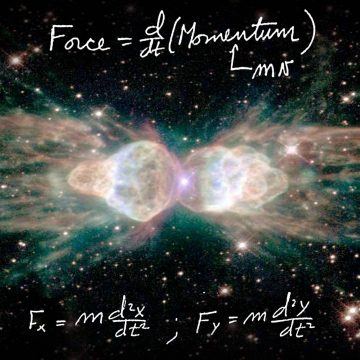 The World According to Physics, by the British physicist Jim Al-Khalili, looks less like a
  Even the way in which coronavirus data is presented can radically change our perception of its impact, depending on which factors have been included and which have been discarded.
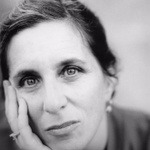 They have always been with me, these two fears: of boredom and bad smells. I have no memory of a life free of them.
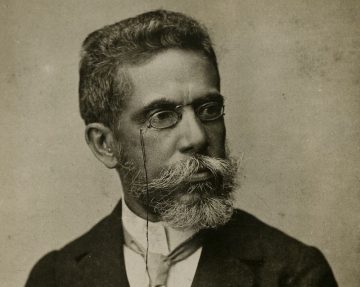 The literary models Machado mentions in his preface are Laurence Sterne, Xavier de Maistre, and Almeida Garrett, but behind the title there may also be an ironic reference to Chateaubriand’s Mémoires d’outre-tombe (Memoirs from Beyond the Grave), published posthumously in 1849 and 1850. Those memoirs filled two volumes; their author was a diplomat, politician, writer, historian, and supposed founder of French Romanticism. Brás Cubas’s posthumous memoirs (which are written from beyond the grave) fill a scant two hundred pages and the narrator is, by his own blithe admission, a complete mediocrity whose life can be summed up by a series of negatives. Echoes of Sterne, Maistre, and Garrett are definitely all there in the brief chapters, the oblique chapter titles, the non sequiturs, and the half-baked philosophy, and yet in many ways the book is also a straightforward nineteenth-century realist novel, with its jabs at the hypocrisy of middle-class society, and the standard themes of adultery, money, marriage, miserliness, and profligacy. Machado manages, seamlessly, to combine realism and the fantastic, and the novel’s fragmentary, allusive style and its frequent inclusion of us, the readers, strikes us now as very modern, as does Brás Cubas’s insistence, more than once, that this is not a novel at all.
 The new season of my