John Horgan in Scientific American:
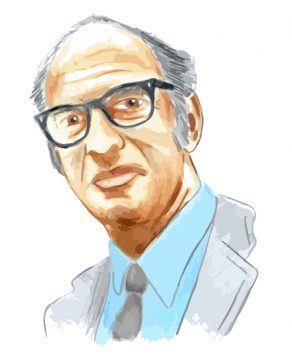 I’m recovering from flu, so I’ve spent more time than usual by myself lately, with odd ideas swirling around in my feverish brain. Recently a bunch of different thoughts–about Thomas Kuhn, AIDS denialism, George Bush, Errol Morris, Trump and of course the coronavirus—clumped together in a way that made me think: blog post! I’ll start with Kuhn. He is the philosopher of science who argued, in his 1962 book The Structure of Scientific Revolutions, that science can never achieve absolute, objective truth. Reality is unknowable, forever hidden behind the veil of our assumptions, preconceptions and definitions, or “paradigms.” At least that’s what I thought Kuhn argued, but his writings were so murky that I couldn’t be sure. When I interviewed him in 1991, I was determined to discover just how skeptical he really was.
Really, really skeptical, it turned out. We spoke for several hours in Kuhn’s office at MIT, and I found myself sticking up for the idea that science gets some things right. At one point, I told Kuhn that his philosophy applied to fields with a “metaphysical” cast, like quantum mechanics, but not to more straightforward realms, like the study of infectious diseases. As an example, I brought up AIDS. A few skeptics, notably virologist Peter Duesberg, were questioning whether the so-called human immunodeficiency virus, HIV, actually causes AIDS. These skeptics were either right or wrong, I said, not just right or wrong within the context of a particular social-cultural-linguistic context. Kuhn shook his head vigorously and said:
I would say there are too many grounds for slippage. There’s a whole spectrum of viruses involved. There’s a whole spectrum of conditions of which AIDS is one or several or so forth… I think when this all comes out you’ll say, Boy, I see why [Duesberg] believed that, and he was onto something. I’m not going to tell you he was right, or he was wrong. We don’t believe any of that anymore. But neither do we believe anymore what these guys who said it was the cause believe… The question as to what AIDS is as a clinical condition and what the disease entity is itself is not — it is subject to adjustment. And so forth. When one learns to think differently about these things, if one does, the question of right and wrong will no longer seem to be the relevant question.

 We know from every disaster movie that time is supposed to accelerate, not stand still, during a catastrophe. If asked to draw a scenario months ago, most of us would have imagined moments of chaos and disorder, akin to the profound social chaos in Florence during the plague as described by Boccaccio in his 14th-century work The Decameron, “all respect for the laws of God and man … broken down.”
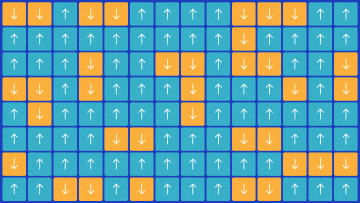 Sudden, radical transformations of substances known to humanity for eons, like water freezing and soup steaming over a fire, remained mysterious until well into the 20th century. Scientists observed that substances typically change gradually: Heat a collection of atoms a little, and it expands a little. But nudge a material past a critical point, and it becomes something else entirely.
 Scientism – the belief that science is the only valid source of knowledge and that all legitimate questions can be answered by science – is what spawns pseudoscience and science denialism. If science is treated as though it not only informs us but also dictates how our lives ought to be lived and how society ought to be run, then it is easier to peddle in the baseless denial of scientific claims than it is to challenge the illegitimate claim of authority over our choices made on science’s behalf.
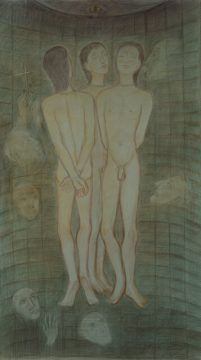 This is not to say that Klossowski was standoffish. One of the interesting things about him is that once you finally notice him you begin to see his shadowy presence everywhere in twentieth-century French culture. He was, for instance, an early French translator of Walter Benjamin—as well as Wittgenstein, Heidegger, and Kafka, among others. When very young, he was a secretary for André Gide and appears semidisguised as a character in Gide’s novel The Counterfeiters, a novel he appears to have helped edit and for which he also made illustrations (which were turned down for being too overtly erotic). The older brother of the painter Balthasar Klossowski de Rola, better known as Balthus, Klossowski was an artist himself, and his work is at once naïve and pornographically explicit in a way that sometimes references occult texts, mythology, and Klossowski’s own prose. He was a friend of Georges Bataille—and indeed Bataille’s own investigation of erotism might best be read in counterpoint to Klossowski. He was involved marginally with surrealists, spent time in a Dominican seminary, was later involved with the existentialists, and wrote philosophical texts on Friedrich Nietzsche and the Marquis de Sade that were influential for post-structuralism. His book-length economico-philosophical essay La Monnaie vivante (Living Currency) Foucault called “the best book of our times.” Fiction writer, philosopher, translator, and visual artist, Klossowski worked in many modes and media and seemed to touch the lives of many of the literary and artistic figures we now admire. Indeed, once he’s noticed, it’s hard not to suspect he’s lurking even where you don’t see him.
 For much of their history, intelligence tests have been rotten with the cultural and class biases of their makers, a diagnostic deck stacked against minorities, immigrants, and those at the bottom of the wage pyramid. Test designers have equated English-language fluency with intelligence, presumed a familiarity with upper-class pastimes such as tennis, and expected the examinee to provide the word “shrewd” as a synonym for “Jewish.” As late as the 1960 revision, the Stanford-Binet was presenting six-year-old children with crude cartoons of two women, one obviously Anglo-Saxon, the other a golliwog caricature of an African-American, with a broad nose and thick lips. The test accepted only one correct answer to the question, “Which is prettier?”12
 A FEW LONG WEEKS AGO,
 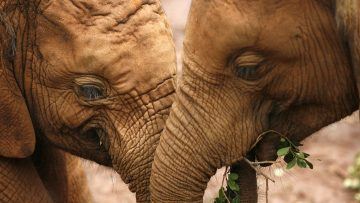 In 2012, on a whim, Vincent Lynch decided to search the genome of the African elephant to see if it had extra anti-cancer genes. Cancers happen when cells build up mutations in their DNA that allow them to grow and divide uncontrollably. Bigger animals, whose bodies comprise more cells, should therefore have a higher risk of cancer. This is true within species: On average, taller humans are more likely to develop tumors than shorter ones, and bigger dogs have a higher cancer risk than smaller ones.
 Most people who catch the new coronavirus don’t experience severe symptoms, and some have no symptoms at all. COVID-19 saves its worst for relatively few.
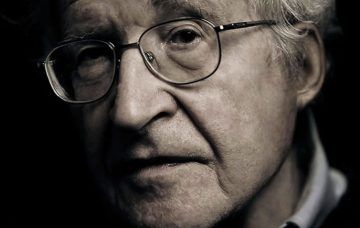 NC: The first thing that comes to mind is the absolutely unprecedented scope and scale of participation, engagement, and public support. If you look at polls, it’s astonishing. The
 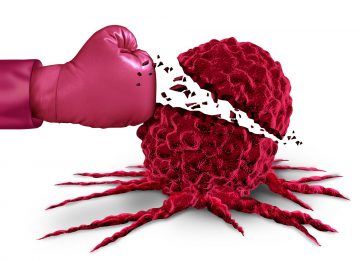 The cost of
 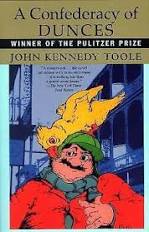 The New York publishers were wrong. A Confederacy of Dunces did, in fact, make a point, a fundamental one. Percy grasped it immediately: the book was a screed against American materialism and optimism, a defense of the oddball outcasts who live on the fringes and resist the push of progress, and a celebration of those who try to drop out with dignity.
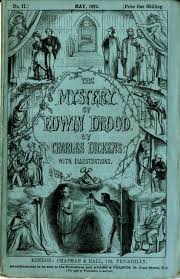 While he was writing Edwin Drood, Dickens was imbibing large quantities of opium, a drug that allows us, Thomas De Quincey explained in Confessions of an English Opium-Eater, access to a ‘second life’. Opium also allows the ‘guilty man’, De Quincey continued, to regain ‘for one night … the hopes of his youth, and hands washed pure of blood’. But at the same time as releasing the guilty man from his chains, taking opium causes further feelings of guilt. ‘In the one crime of OPIUM’, wailed Coleridge, whose life was destroyed by it, ‘what crime have I not made myself guilty of!’