
Category: Recommended Reading
The Gentle Genius of Mervyn Peake
Daisy Dunn at The Spectator:
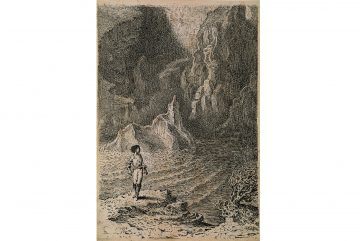 To be a good illustrator, said Mervyn Peake, it is necessary to do two things. The first is to subordinate yourself entirely to the book. The second is ‘to slide into another man’s soul’.
In 1933, at the age of 22, Peake did precisely that. Relinquishing his studies at the Royal Academy Schools to move to Sark, in the Channel Islands, he co-founded an artists’ colony and took to sketching fishermen and romantic, ripple-lapped coves. He put a gold hoop in his right ear, a red-lined cape over his shoulders, and grew his hair long, like Israel Hands or Long John Silver.
The incredible thing was that he had yet to receive his commission to illustrate Treasure Island. By the time the job came through, in the late 1940s, he had been sliding into more piratical souls for more than 20 years.
more here.
How to Make a Bodega Sandwich
Zain Khalid at The Believer:
 To properly construct a bodega sandwich, sammich, hoagie, or sub, it is helpful to first consider Théodore Géricault’s The Raft of the Medusa. Forget for a second that this painting ushered in the dawn of Romanticism. Instead, study the shipwrecked subjects, the fifteen men with faces longer than hymns who endured their own appetites for thirteen days at sea.
Bodegas often serve those who can’t or won’t eat elsewhere. Bodegas are cheap, accept EBT cards, and employ polyglot cashiers who can translate a purposeful nod into a chopped cheese. Where else to go after a longer-than-expected trip across an ocean? Where else can the impossibly hungry go? Think about all this while selecting a bread. When in doubt, choose the plain hero. It should be between one and three days old.
more here.
The Election That Could Break America
Barton Gellman in The Atlantic:
 The danger is not merely that the 2020 election will bring discord. Those who fear something worse take turbulence and controversy for granted. The coronavirus pandemic, a reckless incumbent, a deluge of mail-in ballots, a vandalized Postal Service, a resurgent effort to suppress votes, and a trainload of lawsuits are bearing down on the nation’s creaky electoral machinery.
…Let us not hedge about one thing. Donald Trump may win or lose, but he will never concede. Not under any circumstance. Not during the Interregnum and not afterward. If compelled in the end to vacate his office, Trump will insist from exile, as long as he draws breath, that the contest was rigged. Trump’s invincible commitment to this stance will be the most important fact about the coming Interregnum. It will deform the proceedings from beginning to end. We have not experienced anything like it before.
…Conventional commentary has trouble facing this issue squarely. Journalists and opinion makers feel obliged to add disclaimers when asking “what if” Trump loses and refuses to concede. “The scenarios all seem far-fetched,” Politico wrote, quoting a source who compared them to science fiction. Former U.S. Attorney Barbara McQuade, writing in The Atlantic in February, could not bring herself to treat the risk as real: “That a president would defy the results of an election has long been unthinkable; it is now, if not an actual possibility, at the very least something Trump’s supporters joke about.” But Trump’s supporters aren’t the only people who think extraconstitutional thoughts aloud. Trump has been asked directly, during both this campaign and the last, whether he will respect the election results. He left his options brazenly open. “What I’m saying is that I will tell you at the time. I’ll keep you in suspense. Okay?”
More here. (Note: Thanks to Mohsin Hamid)
Thursday Poem
“Maybe the greatest miracle is memory” – Brian Doyle
Father Joe
The holiest moments
were those curse words
Father Joe muttered under
his breath when some asshole
walked down the aisle or when, shit,
the choir started in too early. I always
volunteered to sit on his right so I could
hold the Bible open leaned in against my
sternum, Jesus Christ, as he read the Liturgy of the Word.
He’d gently, damnit, slide the long tassels across the pages
like a blessing. I still follow his eyes as he reads, arms
bent up from his elbows tucked into his side, palms up
Glory Be to the Highest, sonofabitch, listening
for those curse words in that sacred syntax.
by Michael Garrigan
from The Echotheo Review
Wednesday, September 23, 2020
Verne Edquist (1931-2020) – Glenn Gould’s Piano Man
Katie Hafner at the website of the Glenn Gould Foundation:
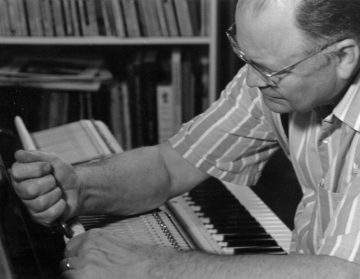 Verne Edquist, a master piano tuner who spent most of his professional life working for one client – Glenn Gould – died peacefully on August 27 after a long illness. He was 89.
I first met Verne in the summer of 2004, when I traveled to Toronto to start research for a book about Gould’s beloved CD-318. Verne and his wife, Lillian, welcomed me into their house on the outskirts of town and we sat for several hours in their living room, my recording device whirring away, while Verne recounted his life, and his work with the very eccentric Glenn Gould.
It was the start of an acquaintanceship that endured well past the publication of my book, A Romance on Three Legs: Glenn Gould’s Obsessive Quest for the Perfect Piano.
During that first meeting, I heard about the late-night recording sessions. Verne always arrived early to start tuning. Even after he finished tuning, he was required to stay throughout the session, in the event that a note should slip out of tune. I also heard about Gould’s endearingly bizarre coffee orders, his despair over the damaged CD-318, and his desperate calls to Verne late in his life, while re-recording The Goldberg Variations on a Yamaha.
More here.
Sean Carroll’s Mindscape Podcast: Netta Engelhardt on Black Hole Information, Wormholes, and Quantum Gravity
Sean Carroll in Preposterous Universe:
 Stephen Hawking made a number of memorable contributions to physics, but perhaps his greatest was a puzzle: what happens to information that falls into a black hole? The question sits squarely at the overlap of quantum mechanics and gravitation, an area in which direct experimental input is hard to come by, so a great number of leading theoretical physicists have been thinking about it for decades. Now there is a possibility that physicists might have made some progress, by showing how subtle effects relate the radiation leaving a black hole to what’s going on inside. Netta Engelhardt is one of the contributors to these recent advances, and together we go through the black hole information puzzle, why wormholes might be important to the story, and what it all might teach us about quantum gravity.
More here.
This Soldier’s Witness to the Iraq War Lie
Frederic Wehrey in the New York Review of Books:
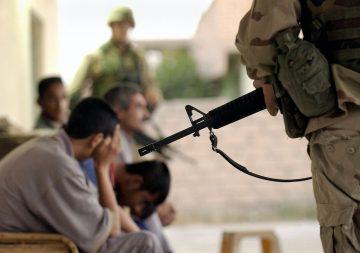
A few weeks before I deployed to Iraq as a young US military officer, in the spring of 2003, my French-born father implored me to watch The Battle of Algiers, Gillo Pontecorvo’s dramatic reenactment of the 1950s Algerian insurgency against French colonial rule. There are many political and aesthetic reasons to see this masterpiece of cinéma vérité, not least of which is its portrayal of the Algerian capital’s evocative old city, or Casbah. One winter morning in 2014, more than a decade after I first saw the film, I took a stroll down the Casbah’s rain-washed alleys and into the newer French-built city. Scenes from the black-and-white movie—like the landmark Milk Bar café where a female Algerian guerrilla sets off a bomb that kills French civilians—jumped to life. The ensuing French military response, memorably depicted in the film, included arbitrary arrests, torture, and “false flag” bombings that only inflamed the Algerian insurrection.
It was these moral perils of counterinsurgency that my father hinted at. “Keep your eyes open,” he told me. This was a prescient warning, one that served as the backdrop for my deployment, even if the Algerian analogy was imperfect and would become overused. As American soldiers soon faced a guerrilla and civil war in Iraq for which they were woefully ill-equipped, intellectually and militarily, The Battle of Algiers would be screened and discussed at the Pentagon. To this day, it is taught to West Point cadets as a cautionary tale.
More here.
Four steps to ending extreme poverty
Transmissions: The Music of Beverly Glenn-Copeland
Sasha Geffen at Artforum:
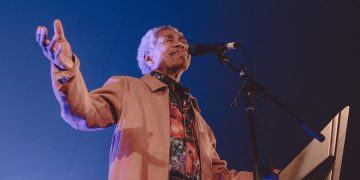 A new compilation, Transmissions: The Music of Beverly Glenn-Copeland, traces the artist’s career from his early days as a folk balladeer to his omnivorous current practice. Its narrative mirrors that of Posy Dixon’s 2019 documentary, Keyboard Fantasies: The Beverly Glenn-Copeland Story, which explores the years he spent working in obscurity, the realization of his identity as a transgender man in his fifties, and how in his seventies he came to be embraced by millennial listeners. The film captures part of a performance at Le Guess Who? in Utrecht, a full recording of which was released as a live album earlier this year. Dixon’s camera glides across the faces of a mostly young audience beaming at Glenn-Copeland and his band, composed of musicians in their twenties. This same crowd appears on Transmissions during “Deep River,” an exuberant live rendition of a well-known spiritual. Glenn-Copeland invites the audience to sing along with the song’s climax, and they do—tentatively at first, and then with gusto. When the band stops, he thanks the audience emphatically, an illustrative moment of genuine intergenerational interaction wisely included in the compilation.
more here.
Vivian Gornick
Dayna Tortorici at the NYRB:
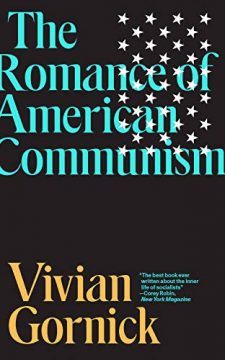 Because Gornick is foremost a memoirist, any tour of her work must contend with her autobiography as she tells it, in fragments. There is no single book in which she narrates her life story straight through; “truth in memoir,” she writes in The Situation and the Story (2001), “is achieved not through a recital of actual events.” Instead, each of her books marshals different pieces of her life in service of a central insight, whether she’s writing memoir, criticism, reportage, or a biography of someone else. She is dedicated to nonfiction as a genre, but has a novelist’s instinct for selection. To recount her biography chronologically thus requires some reconstruction.
Gornick was born in 1935 in the Bronx, the second child of working-class immigrant Jews. Her father, she recalls in The Romance of American Communism, was a kind man who “stood upright on the floor of a dress factory on West 35th Street…with a steam iron in his hand for thirty years.” Her mother, a passionate woman with a rougher style of affection, kept house.
more here.
Vivian Gornick | Unfinished Business
Wednesday Poem
The Five Horses of Doctor Ramón Emeterio Betances
Mayaguez Puerto Rico 1856
I. The First Horse
Cholera swarmed unseen through the water, lurking in wells and fountains,
… squirming in garbage and excrement, infinitesimal worms drilling the intestines,
… till all the water and salt would pour from the body, till the body became a worm,
… shriveling and writhing, a slug in salt, till the skin burned blue as flame, the skin
… of the peasant and the skin of the slave gone blue, the skin in the slave barracks blue,
… the skin of ten thousand slaves blue. The Blue Death, face hidden in a bandanna,
… dug graves with the gravediggers, who fell into holes they shoveled for the dead.
… The doctors died too, seeing the signs in the mirror, the hand with the razor shaking.
II. The Second Horse
Doctor Betances stepped off the boat, back from Paris, the humidity of the plague
… glistening in his beard. He saw the stepmother who fed him sink into a mound
… of dirt, her body empty as the husk of a locust in drought.He toweled off his hands.
… In the quarantine tents there was laudanum by the bitter spoonful, the lemonade
… and broth; in the dim of the kerosene lamps there was the compress cool against
… the forehead, the elixir of the bark from the cinchona tree. For peasants and slaves
… moaning to their gods, the doctor prescribed chilled champagne to soothe the belly.
… For the commander of the Spanish garrison, there was silence bitter as the spoon.
III. The Third Horse
At every hacienda, at every plantation, as the bodies of slaves rolled one by one
… into ditches all hipbones and ribs, drained of water and salt, stripped of names,
… Doctor Betances commanded the torch for the barracks where the bodies would
… tangle together, stacked up as if they never left the ship that sailed from Africa,
… kept awake by the ravenous worms of the plague feasting upon them. Watching
… the blue flames blacken the wood, the doctor and the slaves saw another plague
… burning away, the plague of manacles scraping the skin from hands that cut
… the cane, the plague of the collar with four spikes for the runaways brought back. Read more »
The Legal Fight Awaiting Us After the Election
Jeffrey Toobin in The New Yorker:
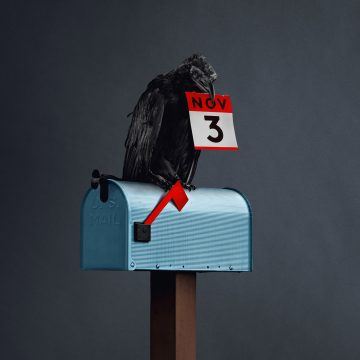 The immediate aftermath of the Presidential election of 2000 has taken on the air of legend. On Election Night, news organizations first called Florida for Vice-President Al Gore—then, about two hours later, withdrew the call and, about four hours after that, declared that George W. Bush, the governor of Texas, had won the state, giving him enough electoral votes to become President. Gore called Bush to concede, and left his hotel in a motorcade to announce the end of his campaign to his supporters. His aides, learning that the race in Florida was, in fact, too close to call, tried frantically to contact the Vice-President in his limousine. They reached him just in time, and he telephoned Bush to retract the concession. Bush indignantly told Gore that his “little brother”—the governor of Florida, Jeb Bush—had said that he had won. “Let me explain something,” Gore replied. “Your little brother is not the ultimate authority on this.”
Like all historical events, the following thirty-five days can look, in retrospect, inevitable, even preordained. But they were a product of choice, improvisation, and happenstance. Gore demanded recounts in four Democratic-leaning counties, which began the painstaking process of studying their punch-card ballots and determining whether the tiny boxes known as chads had been fully detached. Bush responded by filing a lawsuit in federal court in Miami to stop the recounts. In one of the lesser-known events surrounding that case, James A. Baker III, Bush’s lead strategist at the time, called John C. Danforth, the former Republican senator from Missouri and an ordained minister, who was famous for his rectitude. Baker wanted Danforth to be Bush’s spokesman in the suit. Danforth was horrified. “Candidates don’t sue,” he told Baker. “You could ruin Governor Bush’s career. He’s only fifty-four years old, and the decision to file a court case like this would be a black mark that followed him forever. And it would destroy the reputation of everyone involved on the Bush side.”
More here.
New 3-D printing method could jump-start creation of tiny medical devices for the body
Ben P. Stein in Phys.Org:
 Researchers at the National Institute of Standards and Technology (NIST) have developed a new method of 3-D-printing gels and other soft materials. Published in a new paper, it has the potential to create complex structures with nanometer-scale precision. Because many gels are compatible with living cells, the new method could jump-start the production of soft tiny medical devices such as drug delivery systems or flexible electrodes that can be inserted into the human body.
A standard 3-D printer makes solid structures by creating sheets of material—typically plastic or rubber—and building them up layer by layer, like a lasagna, until the entire object is created. Using a 3-D printer to fabricate an object made of gel is a “bit more of a delicate cooking process,” said NIST researcher Andrei Kolmakov. In the standard method, the 3-D printer chamber is filled with a soup of long-chain polymers—long groups of molecules bonded together—dissolved in water. Then “spices” are added—special molecules that are sensitive to light. When light from the 3-D printer activates those special molecules, they stitch together the chains of polymers so that they form a fluffy weblike structure. This scaffolding, still surrounded by liquid water, is the gel. Typically, modern 3-D gel printers have used ultraviolet or visible laser light to initiate formation of the gel scaffolding. However, Kolmakov and his colleagues have focused their attention on a different 3-D-printing technique to fabricate gels, using beams of electrons or X-rays.
More here.
Tuesday, September 22, 2020
“He Drank It Black”: On Dinah Lenney’s “Coffee”
Markman Ellis in the Los Angeles Review of Books:
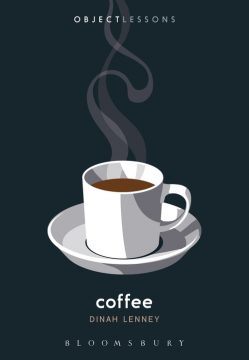 What does coffee do to you? Dinah Lenney’s Coffee is a free-form exploration of such surprisingly complicated questions: Why do we drink coffee? What gives it its power? Humans have been considering these and other coffee-related queries (like “Is it good for my health?” and “Is it good for my society?”) for centuries, ever since they first encountered the substance. Lenney is most interested in coffee’s direct effects on our lived experience, and what they mean.
The active property of coffee is called caffeine, as we all know. The word for the compound was coined in 1830, as a result of research by two different groups of scientists — one in Jena, Germany, led by a young chemist Ferdinand Runge, and the other in France, led by Pierre Jean Robiquet and Pierre Joseph Pelletier. Both groups successfully isolated the active substance of coffee in an organic “base” or vegetable salt. They showed that this salt caused the effects associated with coffee in humans. Caffeine, in other words, is the drug, and coffee is its vehicle. In 1861, Adolph Strecker defined the molecular structure of caffeine in the formula C8H10N4O2. Caffeine isn’t everything, though: coffee still tastes reasonably like coffee without caffeine, and coffee’s distinctive flavors, we now think, reside in a different set of chemical substances, including aromatic oils and volatile flavonoids, most of which are produced during the pyrolytic roasting process.
More here.
Oppenheimer’s Letter of Recommendation for Richard Feynman (1943)
Jørgen Veisdal in Cantor’s Paradise:
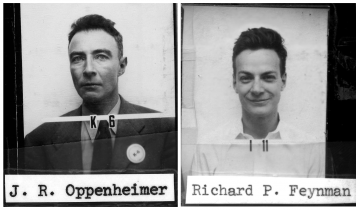 It is the beginning of November, 1943. The Manhattan project is in its fourth year of operations, and J. Robert Oppenheimer’s Los Alamos Laboratory is eleven months into its mission of designing and building the first atomic bomb. Oppenheimer had in 1942 been headhunted to the project by its Director, Lieutenant General Leslie Groves (1896–1970) on the strength of the recommendation of physicist Arthur Compton (1892–1962). He was 39 years old at the time, and came to the project already a Professor of Physics at the University of California, Berkeley. There, starting in the mid 1930s he had worked on deuteron-induced nuclear reactions, the so-called Oppenheimer-Phillips process, whose experiments were conducted at the newly built UC Berkeley cyclotron.
Although a classified endeavor, it was not uncommon for scientists and engineers on the project to communicate between themselves in letter-form about how things were proceeding. Indeed, communication across both institutions and scientific branches was imperative for ensuring a successful “Project Y”. Classified, of course, many such letters have since been made available to the public. When reading through Oppenheimer’s communications, one in particular stands out.
More here.
Sabine Hossenfelder: What is Quantum Cryptography?
Notes on the Economics of Cancel Culture
Justin E. H. Smith in his Substack Newsletter:
 I recall an illuminating moment a decade or so ago. Cathy Guisewite had just announced she would step back from creating new instalments of her long-running Cathy comic. The blogosphere, as it was called then, was all revved up, heatedly discussing the legacy of the perpetual dieter, hen-pecked by her mother, conflicted about her low-energy boyfriend Irving, never able to resist a box of chocolate, always discovering runs in her pantyhose, always frazzled. An acquaintance of mine, an up-and-coming journalist whom I knew in real life to have subtle opinions and an appreciation for the complexity of life, entered the online conversation. Cathy, she judged, was harmful to women’s self-image, and it is therefore good that she is —in the old sense of the word— to be cancelled.
Few people will know this about me, but I happen to like Cathy. I don’t think much about her, but to recall her to mind does make me happy for at least a moment. In fact I have to admit that I like all those comforting and mediocre representations traditionally and perplexingly known in the US as “the funnies”. What I wouldn’t give to read the Sunday comics in some hokey local American newspaper! Marmaduke, Ziggy, Garfield, Family Circus: none of them transformed into next-level memes on the internet, no Nietzsche Family Circus or Lasagna Cat, but just as they were meant to be by their hokey normie creators.
More here.
J. Krishnamurti & Iris Murdoch