
Siddhartha Mukherjee in The New York Times:
 Carl Zimmer’s book begins with a bang. Not a Big Bang, but a small one. In the fall of 1904, a 31-year-old physicist, John Butler Burke, working at the Cavendish Laboratory in Cambridge University, made a “bouillon” of chunks of boiled beef in water. To this mix, he added a dab of radium, the newly discovered element glowing with radioactive energy, and waited overnight. The next morning, he skimmed the radioactive soup, smeared a layer on a glass slide and placed it under a microscope. He saw spicules of coalesced matter — “radiobes,” as he called them — that resembled, to his eyes, the most primeval forms of life.
He was convinced that he had made a major discovery. “They are entitled to be classed among living things,” he would later write. It was heralded as a monumental advance — noted in newspapers and scientific journals. That December, black-tied physicists from the Cavendish gathered to celebrate Burke’s astonishing achievement. They sang:
Through me they say life was created
And animals formed out of clay,
With bouillon I’m told I was mated
And started the life of today.
Burke’s fall from fame, unfortunately, would be as precipitous as his rise. His “radiobes” would later turn out to have little to do with living chemicals, or life. But Burke, convinced that he had discovered “artificial life” and potentially shed light on life’s origins (make soup, throw in radioactivity, then just add water), turned into a ridiculous crank. Brushed off by the scientific community, this fleeting star of biology would die, impoverished and ranting about how his “radiobes” held the clue to life. He would eventually become the butt of scientific jokes — the modern version of the medieval alchemist who was once convinced that a mixture of semen and rotting meat, incubated in a warm hole, could spontaneously form a homunculus, a miniature human.
More here.
 The continuity stretching from the earlier flower and plant paintings to the landscape work in New Mexico comes from O’Keeffe’s lifelong obsession with looking at things. I mean that quite literally. How do you look at a thing? How do you see a thing? Well, you just look, don’t you? But O’Keeffe’s answer is, “No, you don’t just look, because you don’t know how to look.” So what’s the difference between looking in the normal way and looking in the O’Keeffe way? Much of it has to do with time. O’Keeffe liked to look at things for a long time. She’d stare at a single flower over and over again, hour after hour. We think we know what that means. But do we? I suspect the actual experience is crucial here. That’s to say, don’t assume you know what it means to look at one thing hour after hour unless you’ve done it. I’ve done it, sort of. I stared at a flower once more or less without interruption for over an hour. It was immensely difficult for the first twenty minutes or so. Then something changed. My vision started to surrender to something else. Everything suddenly slowed down and intensified. I started to see the flower as a whole, as well as the tiny individual parts, simultaneously. A kind of meditational state kicked in. My vision became a form, almost, of physical touching. It was sensuous and sensual, which is why all the critics who’ve talked about the sensuality of O’Keeffe’s flower paintings are not completely wrong.
 Artificial-intelligence systems are nowhere near advanced enough to replace humans in many tasks involving reasoning, real-world knowledge, and social interaction. They are showing human-level competence in low-level pattern recognition skills, but at the cognitive level they are merely imitating human intelligence, not engaging deeply and creatively, says
  Somewhere out of the mysterious interplay between nature and nurture, internal and external factors, cultures and structures, and bottom-up and top-down forces there emerge the individual and group outcomes that we care about and which ultimately make the difference between human flourishing and its absence. What distinguishes various political ideologies, in effect, is how the line of causation is drawn, or, more specifically, from which direction. What gets left unexamined in the rush for compelling narratives and ideological certainty, however, is the territory between different causes and how they combine to shape reality. Few have gone further to map that territory than the American economist, political philosopher, and public intellectual Thomas Sowell.
 In the study, investigators reported the extensive presence of mouse viruses in patient-derived xenografts (PDX). PDX models are developed by implanting human tumor tissues in immune-deficient mice, and are commonly used to help test and develop
  According to the late Christopher Lasch, the advent of mass production and the new relations of authority it introduced in every sphere of social life wrought a fateful change in the prevailing American character. Psychological maturation—as Lasch, relying on Freud, explicated it—depended crucially on face-to-face relations, on a rhythm and a scale that industrialism disrupted. The result was a weakened, malleable self, more easily regimented than its pre-industrial forebear, less able to withstand conformist pressures and bureaucratic manipulation—the antithesis of the rugged individualism that had undergirded the republican virtues.
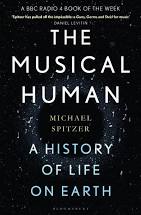 The first note known to have sounded on earth was an E natural. It was produced some 165 million years ago by a katydid (a kind of cricket) rubbing its wings together, a fact deduced by scientists from the remains of one of these insects, preserved in amber. Consider, too, the love life of the mosquito. When a male mosquito wishes to attract a mate, his wings buzz at a frequency of 600Hz, which is the equivalent of D natural. The normal pitch of the female’s wings is 400Hz, or G natural. Just prior to sex, however, male and female harmonise at 1200Hz, which is, as Michael Spitzer notes in his extraordinary new book, The Musical Human, ‘an ecstatic octave above the male’s D’. ‘Everything we sing’, Spitzer adds, ‘is just a footnote to that.’
 We tested 100 participants twice on a range of tests: some took them first in summer and then winter, and some in the opposite order. Among the tasks, there was a test of pure speed (‘press this button as quickly as possible as soon as you see a circle in the middle of the screen’); a test of immediate memory for digits; a test of memory for words presented
  Take a look at the numbers 294,001, 505,447 and 584,141. Notice anything special about them? You may recognize that they’re all prime — evenly divisible only by themselves and 1 — but these particular primes are even more unusual.
 For several decades, child advocates have tried to bring more public indignation to the scandal of extreme child poverty, and have pushed for the expansion of the Child Tax Credit. In recent years, some progressives have called for something that seemed even more utopian, a universal basic income.
 What is the matrix? Without resorting to pharmaceuticals in various chromatic registers—red, blue—and the versions of paranoid reality such pills might produce, it feels right to recall the ways this concept has been deployed in mediums neither cinematic nor far-right political. In the early 1990s,
  What’s so fantastic about seeing these paintings at the Frick Breuer is not only how close you can get to the work, now that it’s not surrounded with furniture and bric-a-brac. In the mansion, the Fragonards are installed — even swaddled and segregated — in a wonderful Rococo drawing room, with attendant panels over doors and next to windows. Here, the work is given pride of place on the fourth floor next to the gigantic trapezoidal window looking out over Madison Avenue. Up close and at eye level, the work is reborn as these huge heraldic thunderous paintings, visually vehement and emotionally commanding. I love them more than I ever have.
 When the London-based neurologist Suzanne O’Sullivan flew to Sweden to visit a sick girl in a small town north-west of Stockholm, the child did not acknowledge her. Not when O’Sullivan entered her bedroom, or when she knelt down to introduce herself, or even when she examined her. Nola (not her real name) wasn’t trying to be rude. It had been more than a year since she had got out of bed, opened her eyes or moved at all. A feeding tube, taped to her cheek, kept her alive.