
Algis Valiunas at The New Atlantis:
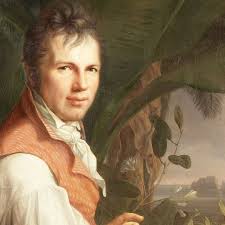 The presiding scientific genius of the Romantic age, when science had not yet been dispersed into specialties that rarely connect with one another, Alexander von Humboldt wanted to know everything, and came closer than any of his contemporaries to doing so. Except for Aristotle, no scientist before or since this German polymath can boast an intellect as universal in reach as his and as influential for the salient work of his time. His neglect today is unfortunate but instructive.
Humboldt (1769–1859) undertook to disseminate the knowledge he acquired as rapidly and widely as possible, and initiated a network of correspondents among the world’s principal scientific specialists. Thus, Humboldt’s prodigious achievement ironically made it impossible for his scientific descendants to have a career so wondrously varied as his. Taking the entirety of nature and culture as his province, through the gathering and arrangement of all the particulars that one extraordinary mind could hold, he sought “a scheme comprehending the whole material creation” — “perhaps too bold a plan.” So he declared in his 1845 summa, Cosmos: Sketch of a Physical Description of the Universe.
more here.
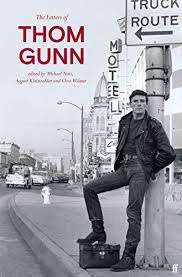 Some of the rawest moments come in early letters to Mike Kitay, Gunn’s lifelong partner, whom he met in 1952 when they were both undergraduates at Cambridge and whom he followed to the USA when Kitay returned there in 1954, after which Gunn felt able to come out. ‘We can lead rich lives together if we allow each other to, my beloved,’ Gunn writes to him in 1961. ‘Oh baby, please settle for me. I’ll never be your ideal, but you’ll never find your ideal on earth.’ It’s a letter written over the course of a week, with headings marking out the different days; it ends, ‘I can’t go on like this much longer. Please, my darling Mike.’ Gunn was largely a writer of tight, syllabic poetry who aimed for a lack of ‘central personality’; the directness and freedom of expression in letters such as these offer us a side of him we rarely, if ever, have seen before. By contrast, a letter written a few months later to the Faber editor Charles Monteith sees Gunn retreating behind a mask of business, discussing what would become a well-known combined edition of his work and that of Ted Hughes, eventually published in 1962 (the footnote reveals, interestingly, that Larkin was also to be included in the project, but his publisher at the time, the Marvell Press, said no).
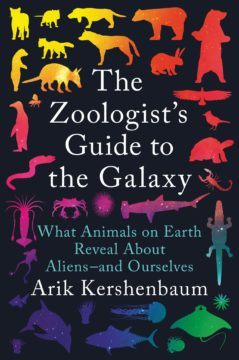 Is anybody else out there? For as long as humans have recognized Earth as but one planet in a vast, orb-speckled universe, we have pondered the mystery of extraterrestrial life. After Nicolaus Copernicus introduced heliocentric theory to 16th century Europe, astronomers began to dream about “other worlds” — and populate them with imaginary creatures. Pioneering astronomers such as Johannes Kepler (father of planetary motion) and William Herschel (discoverer of Uranus) believed in the existence of alien life. Peering through his telescope, Herschel thought he spied towns and forests on the lunar surface. We’re still looking. In 2017, a mysterious object named “Oumuamua” was observed
 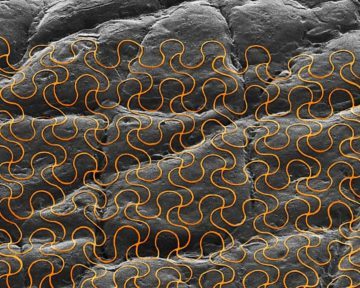 Materials scientists aren’t the first people you’d think would be pulled into the fight against COVID-19. But that’s what happened to John Rogers. He leads a team at Northwestern University in Evanston, Illinois, that develops soft, flexible, skin-like materials with health-monitoring applications. One device, designed to sit in the hollow at the base of the throat, is a wireless, Bluetooth-connected piece of polymer and circuitry that provides real-time monitoring of talking, breathing, heart rate and other vital signs, which could be used in individuals who have had a stroke and require speech therapy
 At Vancouver’s University of British Columbia, the Brock Commons Tallwood House, sheathed in sleek blond wood, stands out among the neighboring gray concrete towers. This striking facade isn’t just an aesthetic choice. When it opened in 2017, the 18-story residence hall was the tallest building constructed of timber in the world. Erected from prefabricated components in just 70 days, it was faster and cheaper to build than a conventional building. What’s more, its material saved over 2,400 metric tons of carbon emissions.
 This is the “demarcation problem,” as the Austrian-British philosopher Karl Popper famously called it. The solution is not at all obvious. You cannot just rely on those parts of science that are correct, since science is a work in progress. Much of what scientists claim is provisional, after all, and often turns out to be wrong. That does not mean those who were wrong were engaged in “pseudoscience,” or even that they were doing “bad science”—this is just how science operates. What makes a theory scientific is something other than the fact that it is right.
 In Muslim communities, homosexuality is intrinsically linked to anxiety, intimidation, violence, and, in some cases, death. For many, it involves living a closeted existence for fear of being ostracised or disowned. Islamic theological teachings, disseminated by religious institutions and espoused by community leaders, range from preaching for our execution to advising us to live a life of celibacy. Yet voices on the left, historically a stronghold of LGBTI support, do not sufficiently decry the abysmal treatment of gay and bi people of Muslim heritage, nor do they adequately mobilize against this specific and brutal form of homophobia.
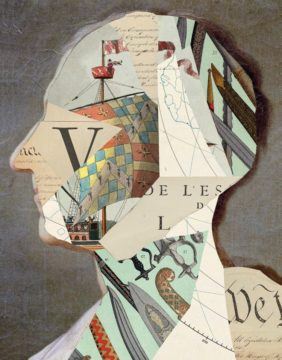 In 1947, Kurt Gödel, Albert Einstein, and Oskar Morgenstern drove from Princeton to Trenton in Morgenstern’s car. The three men, who’d fled Nazi Europe and become close friends at the Institute for Advanced Study, were on their way to a courthouse where Gödel, an Austrian exile, was scheduled to take the U.S.-citizenship exam, something his two friends had done already. Morgenstern had founded game theory, Einstein had founded the theory of relativity, and Gödel, the greatest logician since Aristotle, had revolutionized mathematics and philosophy with his incompleteness theorems. Morgenstern drove. Gödel sat in the back. Einstein, up front with Morgenstern, turned around and said, teasing, “Now, Gödel, are you really well prepared for this examination?” Gödel looked stricken.
 Natural selection seems, at first glance, to be so frustratingly inefficient. Generation after generation of baby gazelles are born, destined to be eaten by lions. Only by chance is one baby born with longer legs, able to run faster, and so escape being eaten. Of course, the very beauty of natural selection is that it doesn’t require any foresight; natural selection explains life in the universe precisely because there is no presumption of any prior knowledge. No Creator is necessary, because the evolutionary process is guaranteed to proceed even without any predefined rules. Life evolves—albeit slowly—without having to know where it’s going.
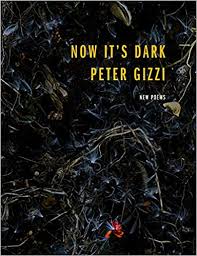 An especially mysterious manifestation of the materiality of language in these poems is the projection of voice from, or into, the material world. Repeatedly, at special moments, things speak: “the hollyhocks spoke”; “Freezing rain with silver seems to be speaking”; “these colors speak”; “The sky speaks to me”; “The roofs speak”; “the room alive speaks when the corpse speaks… and the earth speaks”; “the trees and grass are speaking”; “the old sun / is speaking.” This eruption of voice from things—Gizzi calls it “thinging,” in a pun on “singing”—seems to mark that recovery of the world that Gizzi associates with elegy in the second “Now It’s Dark” poem. However, in the volume Now It’s Dark, that recovery is purchased at the price of another loss, that of “the speaking subject,” as it is called in psycholinguistic theory, or the one who says “I,” in the traditional view of lyric poetry. Drawing on that theory, Language writers accused lyric poetry of escaping into an illusory interior world inhabited by an equally illusory “I.”
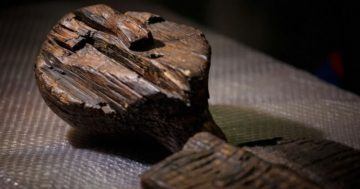 The world’s oldest known wooden sculpture — a nine-foot-tall totem pole thousands of years old — looms over a hushed chamber of an obscure Russian museum in the Ural Mountains, not far from the Siberian border. As mysterious as the huge stone figures of Easter Island, the Shigir Idol, as it is called, is a landscape of uneasy spirits that baffles the modern onlooker.
 When you think about what separates humans from chimpanzees and other apes, you might think of our big brains, or the fact that we get around on two legs rather than four. But we have another distinguishing feature: water efficiency.
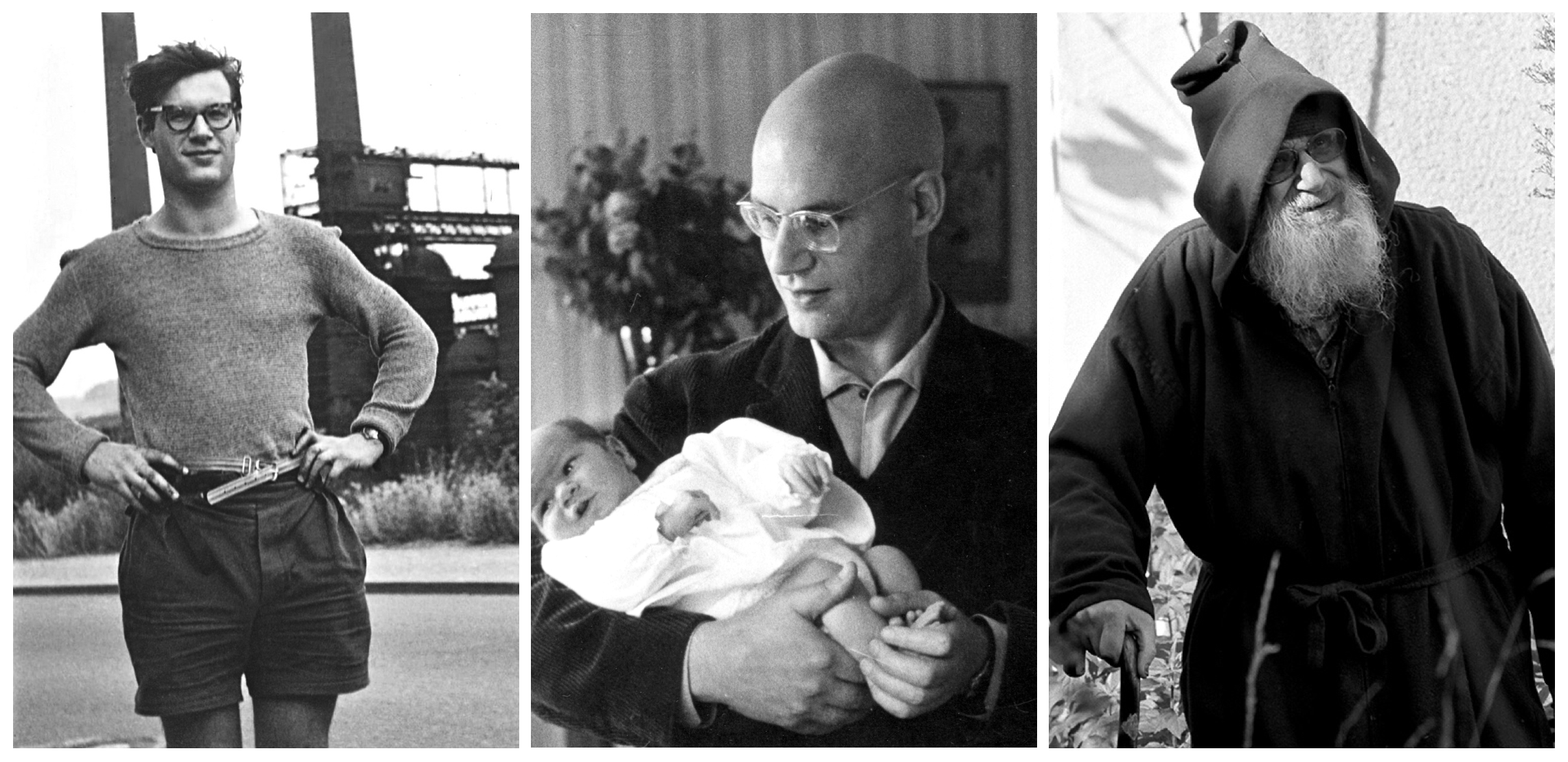 Mathematician Alexander Grothendieck was born in 1928 to anarchist parents who left him to spend the majority of his formative years with foster parents. His father was murdered in Auschwitz. As his mother was detained, he grew up stateless, hiding from the Gestapo in occupied France. All the while, he taught himself mathematics from books and before his twentieth birthday had re-discovered for himself a proof of the
  Claudia Sahm over at INET: