
Anastasia Gorelova in Phys.Org:
 In a paper published in Nature Neuroscience last week, University of Pittsburgh researchers described how reward signals in the brain are modulated by uncertainty. Dopamine signals are intertwined with reward learning; they teach the brain which cues or actions predict the best rewards. New findings from the Stauffer lab at Pitt School of Medicine indicate that dopamine signals also reflect the certainty surrounding reward predictions. In short, dopamine signals might teach the brain about the likelihood of getting a reward.
Briefly, what is the background for this study?
KR: We were studying ambiguity—a complex environmental factor that makes it hard for humans and animals to know what to predict—and this project was a cool detour that arose organically from our preliminary data. We found something interesting that we were not expecting, and we saw it to completion.
WS: Dopamine neurons are crucial for reward learning. Dopamine neurons are activated by rewards that are better than predicted and suppressed by rewards that are worse than predicted. This pattern of activity is reminiscent of “reward prediction errors,” the differences between received and predicted rewards. Reward prediction errors are crucial to animal and machine learning. However, in classical animal and machine learning theories, ‘predicted rewards’ are simply the average value of past outcomes. Although these predictions are useful, it would be much more useful to predict average values as well as more complex statistics that reflect uncertainty. Therefore, we wanted to know whether dopamine teaching signals reflect those more complex statistics, and whether they could be used to teach the brain about real-world incentives.
More here.
 David Wyatt has worked in public relations for more than 20 years, having worked his way up to become a senior vice-president at an Austin, Texas-based firm. He recognises his privileges as a
 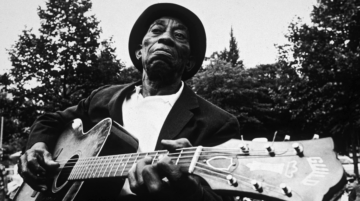 Mississippi John Hurt, Cab Calloway, Woody Guthrie, James Brown, Wilson Pickett, Tina Turner, Bob Dylan, and Beck are among the hundreds who have sung a version of Stagolee’s story. Lloyd Price took a rollicking rendition of “Stagger Lee” to the top of the pop charts in 1959. Such brushes with mainstream success never compromised Stag’s street cred, though. In bars, barbershops, and prisons, he remained “the baddest n—– who ever lived,” the antihero of profane epics and rhyming “toasts” whose exploits offered a fantasy of freedom from life’s indignities. Stagolee haunts the prose of Richard Wright and Toni Morrison; James Baldwin worked on a novel about the character and late in his life published a long poem called “Staggerlee Wonders.”
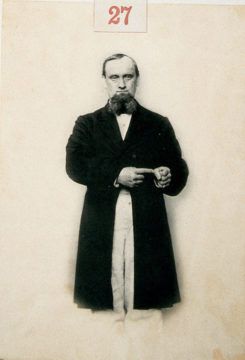 In 1843, the Independent Order of Odd Fellowship was established in Baltimore following a wave of reforms within the Grand Lodge of Odd Fellows of the United States. In the years since the Odd Fellows first arrived from England in 1819, the fraternal organization had gained a reputation for boisterous carousing while garnering membership as a working-class alternative to Freemasonry. The Antimasonic movement of the 1830s introduced a massive wave of upper-middle-class initiates to the Odd Fellows, who brought with them a new emphasis on moral uprightness. Initiation fees increased, a newly formed judicial system expelled disreputable members, and alcohol was banned from all lodges, which began to save and invest their funds, no longer assisting members in times of need. In this new spirit of exclusivity and high principles, the I.O.O.F. instituted a body of rituals to accompany a streamlined and regulated order of degrees. The keys to these rituals were a set of books owned by each Grand Lodge, the “Albums of Written and Unwritten Work.”
 Four billion years ago, Earth was a lifeless place. Nothing struggled, thought, or wanted. Slowly, that changed. Seawater leached chemicals from rocks; near thermal vents, those chemicals jostled and combined. Some hit upon the trick of making copies of themselves that, in turn, made more copies. The replicating chains were caught in oily bubbles, which protected them and made replication easier; eventually, they began to venture out into the open sea. A new level of order had been achieved on Earth. Life had begun.
 You might think that human beings, exhausted by competing for resources and rewards in the real world, would take it easy and stick to cooperation in their spare time. But no; we are fascinated by competition, and invent games and sports to create artificial competition just for fun. These competitions turn out to be wonderful laboratories for exploring concepts like optimization, resource allocation, strategy, and human psychology. Today’s guest, Daryl Morey, is a world leader in thinking analytically about sports, as well as the relationship between impersonal data and the vagaries of human behavior. He’s currently an executive in charge of the Philadelphia 76ers, but I promise you don’t need to be a fan of the Sixers or of basketball or of sports in general to enjoy this wide-ranging conversation.
 Today, many people see democracy as under threat in a way that only a decade ago seemed unimaginable. Following the fall of the Berlin Wall in 1989, it seemed like democracy was the way of the future. But nowadays, the state of democracy looks very different; we
  “The first thing I remember is sitting in a pram at the top of a hill with a dead dog lying at my feet.” So opens an early chapter of a memoir by Graham Greene, who is viewed by some—including Richard Greene (no relation), the author of a new biography of Graham, “
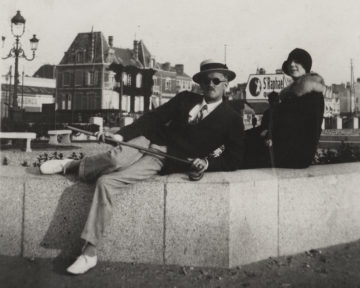 When researching my bio-fictional novel about Emily Dickinson, I read the erotic letters between Emily’s brother, Austin, and his mistress, Mabel Loomis Todd. The letters were direct, steamy, and quite mad in parts—for their paranoia and plotting—and I thought uncomfortably, No one on earth should be privy to these kinds of intimacies! When I first read Joyce’s letters to Nora, I was similarly gobsmacked. I recognized the frank language and the explicit, obscene imaginings. I liked, too, the intimate, tender spillover into poetic trances. But I was made wide-eyed, particularly, by his obsession with defecation as an erotic act. There are numerous references to Joyce’s love for what he calls “the most shameful and filthy act of the body.” Over and over he refers to being turned on by “shit,” “farts,” and “brown stains.” Even now, more familiar with the letters, I squirm a bit when I read this from Joyce to Nora: “The smallest things give me a great cockstand—a whorish movement of your mouth, a little brown stain on the seat of your white drawers, a sudden dirty word spluttered out by your wet lips, a sudden immodest noise made by you behind and then a bad smell slowly curling up out of your backside. At such moments I feel mad to do it in some filthy way, to feel your hot lecherous lips sucking away at me.” This was an utterly private sharing between lovers, the things they traded to bind themselves together, and Joyce’s fetish ought not bother me at all, as I shouldn’t know about it. Although, anyone who has read Molly Bloom’s wondrous speech in the Penelope episode of Ulysses might reasonably guess at Joyce’s delight in the coprophilic. When Molly wants money, she plans to let Bloom kiss her bottom, saying he can “stick his tongue 7 miles up my hole as hes there my brown part then Ill tell him I want £1.”
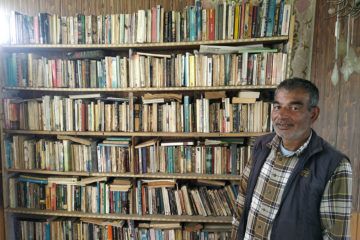 After climbing a stiff wooden stair, we reach the “Traveler’s Library,” its walls painted white and windows open on three sides. The front overlooks Dal Lake’s houseboats and other boats for everyday use. Next to an old green sofa is a woven wicker table. And on the right are Mr. Oata’s books. With about 600 volumes, this library may not look like much. But for years, this room has been a place where Kashmir – a beautiful but long fought-over Muslim-majority region, tucked at the top of India – has touched the wider world. It’s been an oasis for visitors, and readers; but most of all, for one book-lover who can’t read. “Ask as many questions as you can to get the information you require,” Mrs. Oata says, before her husband comes in. “He will not explain things on his own.” She laughs and leaves the room.
 Some studies estimate that a large proportion of the population in Europe and the United States — as high as 50% — experiences chronic pain
 In 1987 I had a sort-of-girlfriend, let us call her Nikki, who came from a devout Catholic working-class family of French-Canadian heritage. When I met her she had just returned from a family pilgrimage to Medjugorje, in post-Tito, pre-war Yugoslavia, where her mother and father had hoped to see the famed weeping statue of Mary, fluentis lacrimis. I knew enough of Slavic etymology already to be intrigued by that town’s name, like the young W. V. O. Quine, who once found himself on a street in Prague that started with the preposition Pod, and thought: “I must be at the bottom of something”. The Medju clearly meant the place was between or amidst something or other, but what exactly?
 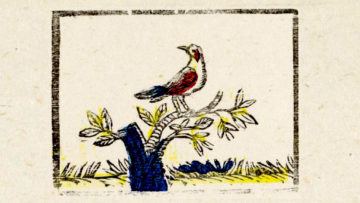 Last winter, Ray Harinarain, a heating and air-conditioning contractor living in Brooklyn, flew home to Guyana with several thousand dollars in cash. Escorted by armed guards, he drove from village to village, examining wild finches like some veterinary talent scout. The birds had been captured in nearby forests using glue strips or nets. Some were visibly frightened by life in captivity. A few had begun the halting process of habituation, waiting on their perches instead of bashing against the bars. And the “baddest” birds—which in Guyanese patois means the best birds—were just about ready to burst into song.
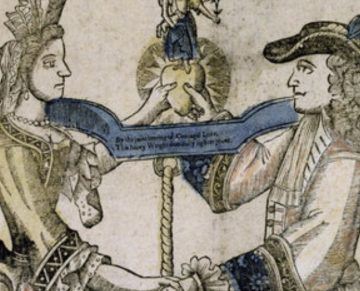 A good many people claim to be “free speech absolutists,” but I’m not sure whether they really are. Push an absolutist hard enough with edge cases and you typically discover that they do indeed draw lines beyond which speech may not be permitted to go. (How many celebrants of free speech advocate the elimination of libel and slander laws?) But even if true absolutists exist, some of the people most often cited in support of free speech certainly were not so absolute. And there may be useful lessons for us in that.
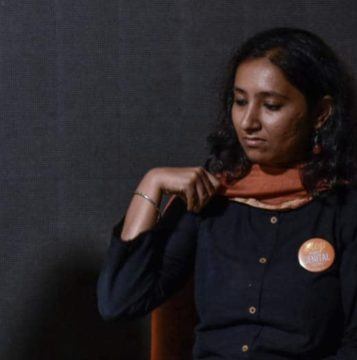 Arefa Johari was