
Rafia Zakaria in The Baffler:
 I HAVE NEVER BEEN ABLE to visit Bombay, but the city, or rather the ghost of it, lingered in the plotline of my Pakistani childhood. Both sides of my family were from Bombay: on one side were Iranian exiles from the uprooting of the Qajar dynasty in the 1920s, and on the other, Muslim businessmen from the heart of the city. Both sides decided to leave after Partition in 1947 and come to Karachi, where I was born. Disparate as their worlds may have been in Bombay, they had merged in Karachi, then a desert backwater. Neither seemed particularly sanguine about the choice, a judgment I made based on the frequency with which the magical Bombay of their memories and imaginations appeared in conversation. As a Pakistani born in the place wrested from India and the British, I could not go and see the city of Bombay. Naturally this has meant that I relish any chance to catch a glimpse of the “real” Bombay, even if it is provided via the very unreal creations of Bollywood or, more recently, the reality dramas dished up on Netflix. I devoured Indian Matchmaking in an afternoon, the tone and timbre and accent of matchmaker “Seema Aunty” as familiar to me as the soundtrack of my childhood, made up of just such gossipy fare exchanged by my migrated grown-ups. Then came The Fabulous Lives of Bollywood Wives, and now another one, a show called Bombay Begums.
Unlike Indian Matchmaking and Bollywood Wives, Bombay Begums is a drama, its protagonist played by the actress Pooja Bhatt, a once-upon-a-time Bollywood star looking to make a comeback in the relatively less-ageist environs of the Netflix drama. Her character, Rani Irani, is the just-ascended CEO of a powerful bank (the fictional Royal Bank of Bombay). Having beat out many men for the job, Irani has a lot to prove and she sets about doing just that. She is clad in the most resplendent silk saris, many of which hang in her office, a deliberately feminized backdrop to the conversations about sex or money or bribes that take place in the cream upholstered and tastefully backlit space.
More here.
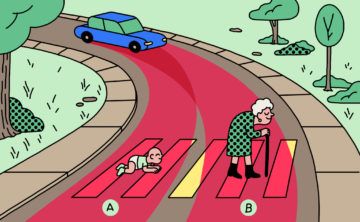 In 2014 researchers at the MIT Media Lab designed an experiment called
 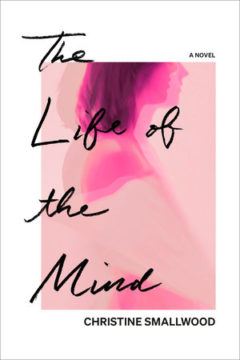 Charlie Tyson reviews Christine Smallwood’s The Life of the Mind in The Chronicle of Higher Education:
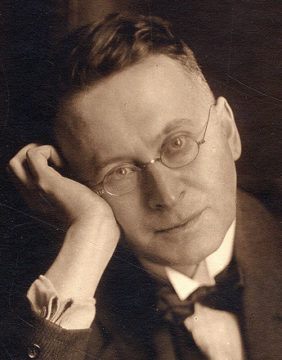 Ari Linden in Public Books:
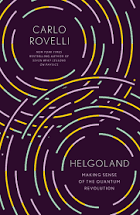 With the light touch of a skilled storyteller, Rovelli reveals that Heisenberg had been wrestling with the inner workings of the quantum atom in which electrons travel around the nucleus only in certain orbits, at certain distances, with certain precise energies before magically “leaping” from one orbit to another. Among the unsolved questions he was grappling with on Helgoland were: why only these orbits? Why only certain orbital leaps? As he tried to overcome the failure of existing formulas to replicate the intensity of the light emitted as an electron leapt between orbits, Heisenberg made an astonishing leap of his own. He decided to focus only on those quantities that are observable – the light an atom emits when an electron jumps. It was a strange idea but one that, as Rovelli points out, made it possible to account for all the recalcitrant facts and to develop a mathematically coherent theory of the atomic world.
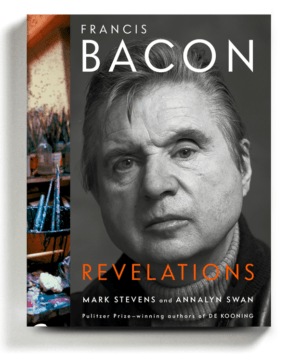 “A deep-end girl,” he called himself, not one “minnying along the sidewalk of life.”
 Maggie O’Farrell found the prospect of writing the central scenes of her
  ROAD WARRIOR In the month since the publication of her memoir, “
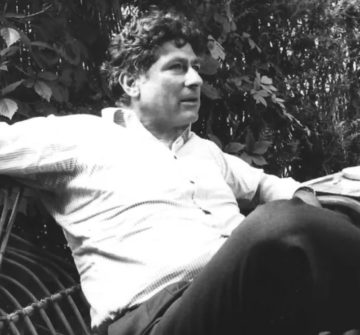 Edward Said was our prince,” the Egyptian novelist Ahdaf Soueif recently said in a conversation reflecting on the Palestinian public intellectual’s life and writings. An incomparable thinker, Said is credited with founding postcolonial studies, penning histories of cultural representation and “the Other,” and, in so doing, upending the Anglo-American academy. His Orientalism, published in 1978, is among the most cited books in modern history, by
 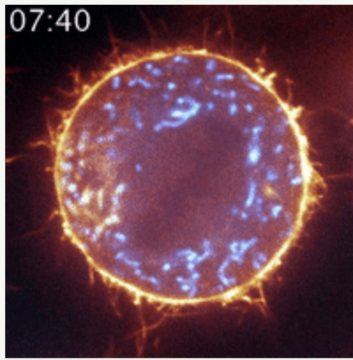 In a landmark study, a team led by researchers at the Perelman School of Medicine at the University of Pennsylvania has discovered—and filmed—the molecular details of how a cell, just before it divides in two, shuffles important internal components called mitochondria to distribute them evenly to its two daughter cells.
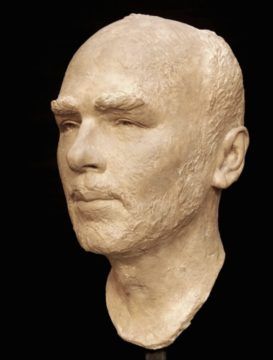 I wrote about poet