
Jane Mayer in The New Yorker:
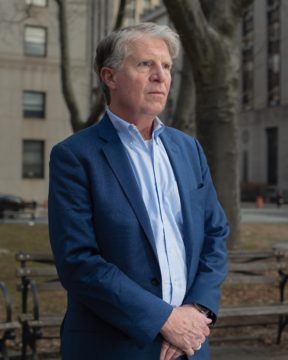 On February 22nd, in an office in White Plains, two lawyers handed over a hard drive to a Manhattan Assistant District Attorney, who, along with two investigators, had driven up from New York City in a heavy snowstorm. Although the exchange didn’t look momentous, it set in motion the next phase of one of the most significant legal showdowns in American history. Hours earlier, the Supreme Court had ordered former President Donald Trump to comply with a subpoena for nearly a decade’s worth of private financial records, including his tax returns. The subpoena had been issued by Cyrus Vance, Jr., the Manhattan District Attorney, who is leading the first, and larger, of two known probes into potential criminal misconduct by Trump. The second was opened, last month, by a county prosecutor in Georgia, who is investigating Trump’s efforts to undermine that state’s election results.
Vance is a famously low-key prosecutor, but he has been waging a ferocious battle. His subpoena required Trump’s accounting firm, Mazars U.S.A., to turn over millions of pages of personal and corporate records, dating from 2011 to 2019, that Trump had withheld from prosecutors and the public. Before Trump was elected, in 2016, he promised to release his tax records, as every other modern President has done, and he repeated that promise after taking office. Instead, he went to extraordinary lengths to hide the documents. The subpoena will finally give legal authorities a clear look at the former President’s opaque business empire, helping them to determine whether he committed any financial crimes. After Vance’s victory at the Supreme Court, he released a typically buttoned-up statement: “The work continues.”
If the tax records contain major revelations, the public probably won’t learn about them anytime soon: the information will likely be kept secret unless criminal charges are filed. The hard drive—which includes potentially revealing notes showing how Trump and his accountants arrived at their tax numbers—is believed to be locked in a high-security annex in lower Manhattan. A spokesman for the Manhattan District Attorney’s office declined to confirm the drive’s whereabouts, but people familiar with the office presume that it has been secured in a radio-frequency-isolation chamber in the Louis J. Lefkowitz State Office Building, on Centre Street. The chamber is protected by a double set of metal doors—the kind used in bank vaults—and its walls are lined with what looks like glimmering copper foil, to block remote attempts to tamper with digital evidence. It’s a modern equivalent of Tutankhamun’s tomb.
More here.
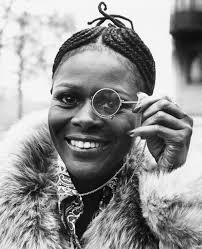 “I
“I 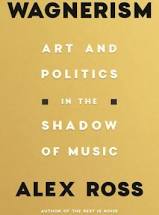 Mann contended that Wagner’s art was neither monolithically grand nor sinister but deeply, violently ambivalent. He cited Nietzsche’s swing from filial devotion to Oedipal rebellion as a case in point. In his first major work, The Birth of Tragedy (1872), Nietzsche hailed his friend’s art in terms that fused Wagner’s own revolutionary rhetoric with Schopenhauer’s metaphysics of self-annihilation: it broke the “spell of individuation,” reopening the way to “the innermost heart of things.” But over the following decade Nietzsche shifted slowly from acolyte to skeptic, estranged by Wagner’s growing nationalism, the spectacle of Bayreuth, and his own changing intellectual needs. The final breach, he wrote, was precipitated by the self-betrayal of Parsifal, in which “Wagner, seemingly the all-conquering, actually a decaying, despairing decadent, suddenly sank down helpless and shattered before the Christian cross.” Later, in The Case of Wagner (1888), Nietzsche concluded that there had been nothing there to betray in the first place. Wagner had always been a disease, a toxin, and a neurosis, even before the encounter with Schopenhauer. “Only the philosopher of decadence gave to the artist of decadence—himself.”
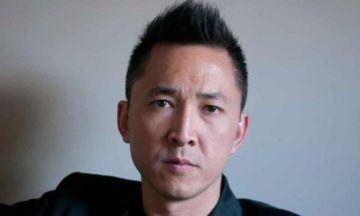 We were the unwanted, the unneeded and the unseen, invisible to all but ourselves.” And with those words he is back, the “man of two faces and two minds” as well as many guises: Vietnamese, French, American, soldier, academic, Japanese tourist, waiter, hoodlum, killer, communist, capitalist, spy. In 2016 the unnamed protagonist of Viet Thanh Nguyen’s first novel
  Deep in the
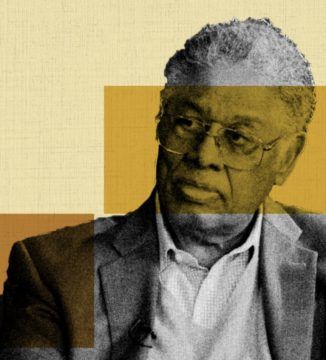 The first time I heard the name Thomas Sowell was during that bitterly partisan—though in retrospect, comparatively tame—transition period from George W. Bush to Barack Obama. My mother’s younger sister, a gun-owning, born-again evangelical Christian and staunchly Republican voter from Southern California had by then become an active and vocal Facebook user. In those days, I was half a decade out of undergrad, living in New York City, making my first forays into the world of professional opinion-having. I felt my first (and, it would turn out, my last) stirrings of political romanticism in my exuberance over the candidacy and election of the first black president. Suffice it to say we locked digital horns on a regular basis. “It’s not about color for me,” my aunt said while railing against Obama. “For example, I love Thomas Sowell.”
 To that side of my extended family, I became the stereotype of a coastal liberal, writing for the New York Times and wholly out of touch with the real America. In fact, I’ve always prided and defined myself as an anti-tribal thinker, and sometime contrarian, working firmly within a left-of-center black tradition—a tradition populated by brave and brilliant minds from Ralph Ellison and Albert Murray to Harold Cruse, Stanley Crouch, Orlando Patterson, at times even Zadie Smith and James Baldwin.
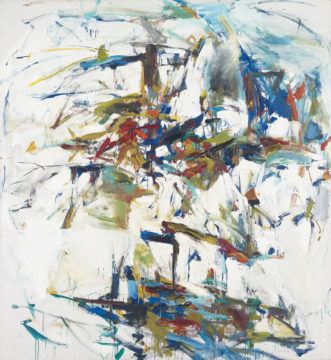 JOAN MITCHELL’S PAINTINGS from the late 1950s have space in them. They are big surfaces covered with marks, like most Abstract Expressionist paintings made in New York in the same decade, and so they look much flatter than a carefully measured perspectival scene from the 1940s by, for example, Edward Hopper. But compared with almost everything her most productive and now famous peers were doing at the same time, Mitchell’s paintings are practically voluminous.
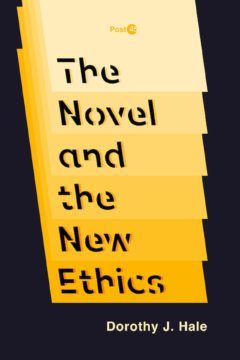 “EVERYBODY BEHAVES BADLY,” says Hemingway’s Jake Barnes. “Give them the proper chance.” Why read novels about people behaving badly? Can a novel about bad people do readers good? These questions about the real-world effects of fictional characters — not just their “reality effects” — have come to the fore in recent years with the ascendancy of autofiction, on the one hand, and the persistence of the stoutly character-driven novel, on the other: the kind where characters, and, by extension, readers, get to know, and accept, social others who are nothing like them. Whereas autofiction asserts a kind of apolitical license — it’s my life, so it doesn’t matter if my problems seem trivial and if everyone I know is exactly like me — it’s incumbent on the latter kind of novelist to make social difference legible, rather than erasing or tokenizing it. It’s a tall order, and between the demands of professional and lay critics, on and off Twitter, the bar for ethical fiction, in which characterization is the vehicle for moral instruction, keeps getting raised ever higher.
 Months of lockdowns and waves of surging Covid cases throughout last year shuttered clinics and testing labs, or reduced hours at other places, resulting in steep declines in the number of screenings, including for breast and colorectal cancers, experts have said. Numerous studies showed that the number of patients screened or given a diagnosis of cancer fell during the early months of the pandemic. By mid-June, the rate of screenings for breast, colon and cervical cancers were still 29 percent to 36 percent lower than their prepandemic levels, according to
 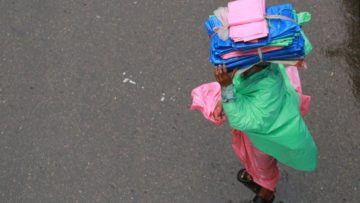 Scientists have made fabrics from polythene in a move they say could reduce plastic pollution and make the fashion industry more sustainable. Polythene is a ubiquitous plastic, found in everything from plastic bags to food packaging. The new textiles have potential uses in sports wear, and even high-end fashion, according to US researchers. The plastic “cloth” is more environmentally-friendly than natural fibres, and can be recycled, they say. Dr Svetlana Boriskina, from the department of engineering at the Massachusetts Institute of Technology (MIT) in Cambridge, US, said plastic bags that nobody wants can be turned into high-performance fabrics with a low environmental footprint. “There’s no reason why the simple plastic bag cannot be made into fibre and used as a high-end garment,” she told BBC News. “You can go literally from trash to a high-performance garment that provides comfort and can be recycled multiple times back into a new garment.”
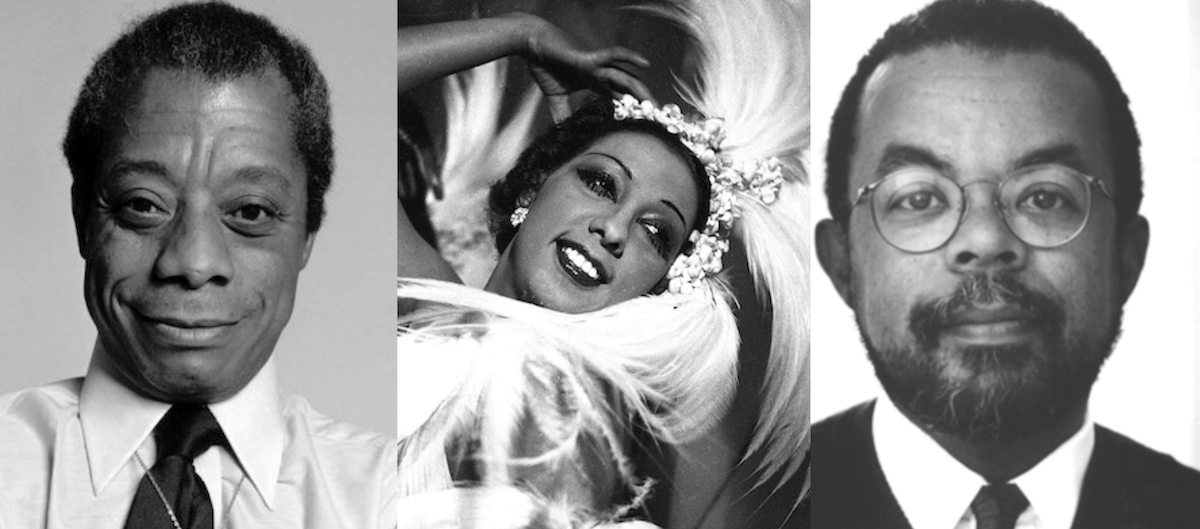 In the summer of 1973 Time magazine decided not to run a piece that it had commissioned,
 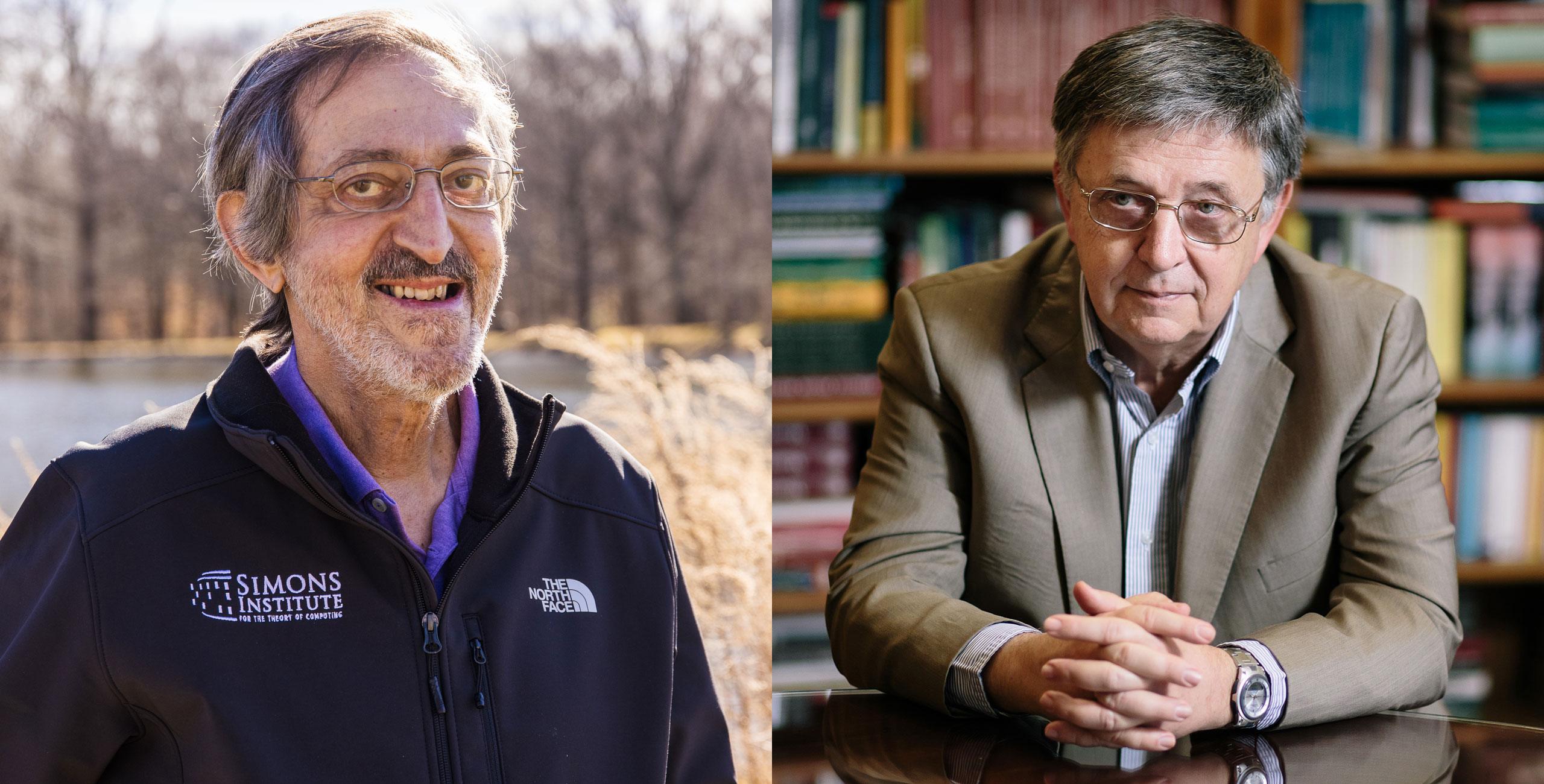 When Avi Wigderson and László Lovász began their careers in the 1970s, theoretical computer science and pure mathematics were almost entirely separate disciplines. Today, they’ve grown so close it’s hard to find the line between them. For their many fundamental contributions to both fields, and for their work drawing them together, today Lovász and Wigderson were awarded the
 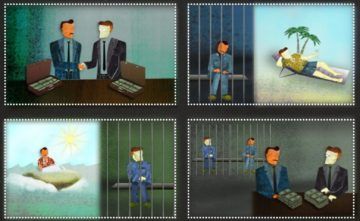 When and why do people cooperate or compete? Researchers at the RAND Corporation studied this question in the 1950s using what was then a new decision science called game theory. Game theory was developed during World War II by the Hungarian mathematical physicist and leading Manhattan Project contributor John von Neumann and the Austrian economist Oskar Morgenstern. It was immediately used by operations researchers for military logistics, and to develop a science of military decision making. By the late 1950s it was applied to nuclear deterrence, with the future Nobel laureate economist Thomas Schelling publishing The Strategy of Conflict in 1960.