
Wayne Koestenbaum at n+1:

The pivotal event in our friendship concerned Mallarmé. The translator, Abel Mars, had discovered the secret key to Divagations, and embarked on a translation that would reveal to the world the unsuspected sexual architecture underlying Mallarmé’s sense-confounding essays, which destroyed readers while seeming to titillate them. Abel (or Abelline, as I sometimes called him, in moments of intimacy) had a fear of blue objects (vases, shirts, flowers, paintings, rugs); anything blue horrified him, perhaps because his mother had once exposed him, during a childhood attack of meningitis, to a not-yet-patented blue light, which a quack acquaintance had pushed on the family as a cure-all device for their ailing, precocious son. The blue light, which his mother had trained on his naked body as he lay on the living room carpet, had caused him to bleed from the ears; the bleeding cured his meningitis—expelling it from his body—but instilled in him a fear of anything blue. More logical it would have been if Abel had grown to fear illness itself; paradoxically, he feared not the pathogens but the anti-pathogens.
more here.
 Charles Patterson’s Peppers, 1953, presents a pair of gigantic green peppers against an unnaturally manicured landscape. Textured with a kind of tense muscularity, the fruits convey the sense they might burst forth from the board and, as such, are more than a little bit threatening. This slightly off-kilter depiction of quotidian objects, rendered with painterly exactitude, seems precisely to fit Barr’s characterization. But in another piece of Patterson’s—The Room, 1958—the stagey improbability and expressionless faces of its five assembled characters combine to much less disconcerting effect. A wide-eyed female figure reclines on a divan while a man and woman struggle with a large dog that may wish to chase the cat dashing beneath the studio couch. An open curtain behind the group reveals an elderly woman robing a skeletal figure in a bath. If the realm of unconscious reverie is being evoked, it is done with a deliberateness that recalls the clichés of an overly earnest Surrealism—locomotives emerging from fireplaces, elephants on bony stilts, and the like.
 Imagine two people with exactly the same innate abilities, but one is born into a wealthy family and the other is born into poverty. Or two people born into similar circumstances, but one is paralyzed in a freak accident in childhood while the other grows up in perfect health. Is this fair? We live in a society that values some kind of “equality” — “All men are created equal” — without ever quite specifying what we mean. Elizabeth Anderson is a leading philosopher of equality, and we talk about what really matters about this notion. This leads to down-to-earth issues about employment and the work ethic, and how it all ties into modern capitalism. We end up agreeing that a leisure society would be great, but at the moment there’s plenty of work to be done.
 Even though China and Russia started inoculating their citizens last year before publishing the efficacy results from their phase 3 clinical trials, which inevitably raised legitimate concerns, these vaccines have since been proven safe and efficient. The medical journal The Lancet published in February results from late-stage trials showing that Sputnik V, the Russian vaccine, has an efficacy rate of 91.6 percent. At least twenty-five countries around the world, meanwhile, have approved and are administering Sinopharm, one of the Chinese vaccines, with seemingly successful results.
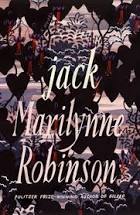 But Robinson’s Christianity manifests as more than a formal approach to experience—the particulars of her belief do matter, and they serve as a foundation for the representation of American racism in the Gilead novels. With John Calvin, she shares the conviction that there is “a visionary quality to all experience” and that God animates, at every moment, all of creation. This endows that creation with immanence and revelatory potential. She believes in the existence of souls, mysterious and unaccountable and equal, which profoundly influences how she engages the material reality of racist institutions and social practices. She believes, like Calvin and the contemporary Black theologian Reggie L. Williams, that each encounter with another person is an encounter with an image of God, in effect God himself, thus placing an immense weight on the treatment of others, surpassing even the Golden Rule. Even if a man is trying to kill you, “you owe him everything.” As Calvin does, she believes that each encounter with another person is a question that God is asking of you. In a recent lecture, she described one of God’s goals for creation—which, by implication, should be a human goal—as “human flourishing.” “Flourishing” is a startling word. Its pursuit demands far more than tolerance, or even civic equality: it demands a passionate devotion to others, regardless of your connections through family, country, race or religion. For her, good and evil are relational, social—not solely internal matters. Christianity, she has said, is an ethic, not an identity.
 IN THE ANTIC TALE that opens The Cheerful Scapegoat, Wayne Koestenbaum’s book of self-described “fables,” a woman named Crocus, like the flower, arrives at a house party wearing a checkered frock designed by the Abstract Expressionist Adolph Gottlieb. She cowers in the entrance, vacillating over whether to enter or not. She phones her doctor, a man whom she refers to as the “miscreant-confessor,” who entreats her to be social. Inside, Crocus accompanies a “fashionable mortician” to a bedroom where she happens upon a fully clothed woman lying atop a fully clothed man. Observing something “unformed and infantile” about the man’s features, Crocus is overcome by a feeling of revulsion, “as if she were looking at a Chardin painting for the first time and were not comprehending her ecstasy—a conundrum which forced Crocus to shove her rapture into a different medicine-cabinet, a hiding-place christened ‘Disgust.’” From this point on, any attempt to pithily encapsulate what happens is doomed.
 Most contemporary union drives are ultimately about the past—about the contrast that they draw between the more even prosperity of previous decades and the jarring inequalities of the present. But one that will culminate on Monday, the deadline for nearly six thousand
  In January, French President Emmanuel Macron called the AstraZeneca–Oxford coronavirus vaccine “quasi-ineffective for people over 65”, on the day that the European Medicines Agency (EMA) recommended approving it. Kate Bingham, one of the architects of the UK vaccine-procurement programme, has since called the remarks “irresponsible”, because the vaccine has been recommended by regulators for use in people of all ages.
 Most of us think that knowledge starts with experience. You take yourself to know that you’re reading this article right now, and how do you know that? For starters, you might cite your visual experiences of looking at a screen, colourful experiences. And how do you get those? Well, sensory experiences come from our sensory organs and nervous system. From there, the mind might have to do some interpretative work to make sense of the sensory experiences, turning the lines and loops before you into letters, words and sentences. But you start from a kind of cognitive freebie: what’s ‘given’ to you in experience.
 The experiment measures the decays of B-hadrons, particles containing bottom quarks. Quarks make up the protons and neutrons inside every atomic nucleus, but those are “up” and “down” quarks. The bottom quark is one of their cousins, and is much heavier.
 On the day before the accident, Milad Salama could hardly contain his excitement for the kindergarten class trip. “Baba,” he said, addressing his father, Abed, “I want to buy food for the picnic tomorrow.” Abed took his five-and-a-half-year-old son to a nearby convenience store, buying him a bottle of the Israeli orange drink Tapuzina, a tube of Pringles, and a chocolate Kinder Egg, his favorite dessert.