Adam Entous in The New Yorker:
 During the final weeks of the Trump Administration, a senior official on the National Security Council sat at his desk in the Eisenhower Executive Office Building, across from the West Wing, on the White House grounds. It was mid-November, and he had recently returned from a work trip abroad. At the end of the day, he left the building and headed toward his car, which was parked a few hundred yards away, along the Ellipse, between the White House and the Washington Monument. As he walked, he began to hear a ringing in his ears. His body went numb, and he had trouble controlling the movement of his legs and his fingers. Trying to speak to a passerby, he had difficulty forming words. “It came on very suddenly,” the official recalled later, while describing the experience to a colleague. “In a matter of about seven minutes, I went from feeling completely fine to thinking, Oh, something’s not right, to being very, very worried and actually thinking I was going to die.”
He fell to the ground before he reached his car, and realized that he was in no condition to drive. Instead, he made his way to Constitution Avenue, where he hoped to hail a taxi. He managed to open the Lyft app on his phone, and ordered a driver, who took him to the hospital. When he arrived at the emergency room, the official thought, I’m probably not walking out of here. He approached the reception desk. “Are you on drugs?” a doctor asked him. The official shook his head. He was led to an examination room. Hospital staff found his White House identification card in his pocket, and three cell phones, one of which they used to call his wife. They thought he might be having a stroke, but an MRI ruled it out. Blood tests also turned up nothing unusual. The official, who was in his mid-thirties, had no preëxisting conditions. The doctors were at a loss, but told him they suspected that he had suffered a “massive migraine with aura.”
It took about two hours for his speech to begin to return. When he checked out of the hospital, the next day, he still had a pounding headache, but was soon able to go back to work. Several days later, a colleague called him to discuss suspected cases of the Havana Syndrome, a mysterious ailment that had first affected dozens of U.S. officials in Cuba, and which now appeared to be spreading. The N.S.C. official didn’t think that he was suffering from the Havana Syndrome; it seemed outlandish that someone would be struck while on the grounds of the White House. But, as his colleague described some of the more severe cases that had been reported, it occurred to the official that this might be his problem. “Look, this is probably nothing,” he told his colleague, “but what you described sounds kind of like what happened to me.”
More here.

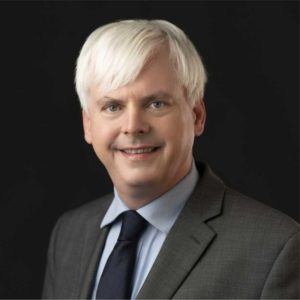 Democracy posits the radical idea that political power and legitimacy should ultimately be found in all of the people, rather than a small group of experts or for that matter arbitrarily-chosen hereditary dynasties. Nevertheless, a good case can be made that the bottom-up and experimental nature of democracy actually makes for better problem-solving in the political arena than other systems. Political theorist Henry Farrell (in collaboration with statistician Cosma Shalizi) has made exactly that case. We discuss the general idea of solving social problems, and compare different kinds of macro-institutions — markets, hierarchies, and democracies — to ask whether democracies aren’t merely politically just, but also an efficient way of generating good ideas.
 When we first traveled to
  Along with fish, aluminium and Björk, Eve Online is one of Iceland’s biggest exports. Launched in 2003, it is a science-fiction project of unprecedented scale and ambition. It presents a cosmos of 7,500 interconnected star systems, known as New Eden, which can be travelled in spaceships built and flown by any individual. In-game professions vary. There are miners, traders, pirates, journalists and educators. You are free to work alone or in loose-knit corporations and alliances, the largest of which are comprised of tens of thousands of members.
 The American Land Museum is a network of landscape exhibition sites being developed across the United States by the Center for Land Use Interpretation and other agencies. The purpose of the museum is to create a dynamic contemporary portrait of the nation, a portrait composed of the national landscape itself. Selected exhibition locations represent regional land use patterns, themes, and development issues. Within each exhibit location are a number of specified experiential zones with collections of material artifacts in the landscape, landmarks selected from among the field of existing structures.
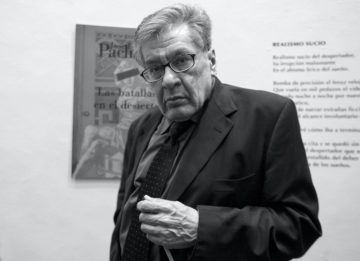 Reading Battles in the Desert, one will note the special magic of Pacheco’s writing — that simplicity, so deceptive and so masterful. The narrative voice is a well-calibrated device gliding through the reality of things, stories, and emotions, always giving the impression that memory never betrays. “Pacheco’s craft and mastery make writing look easy,” writes Luis Jorge Boone in “José Emilio Pacheco: Un lector fuera del tiempo” (“José Emilio Pacheco: a reader outside of time”), an essay on the author’s work. “Achieving that almost magical ease took Pacheco years of rewrites, edits, cuts. The layers upon layers of work the author put into his books over the years is legendary.”
 I
I Many philosophers, at least in the West, have sought to identify the invariable or essential conditions of being a self. A widely taken approach is what’s known as a psychological continuity view of the self, where the self is a consciousness with self-awareness and personal memories. Sometimes these approaches frame the self as a combination of mind and body, as René Descartes did, or as primarily or solely consciousness. John Locke’s prince/pauper thought experiment, wherein a prince’s consciousness and all his memories are transferred into the body of a cobbler, is an illustration of the idea that personhood goes with consciousness. Philosophers have devised numerous subsequent thought experiments – involving personality transfers, split brains and teleporters – to explore the psychological approach. Contemporary philosophers in the ‘animalist’ camp are critical of the psychological approach, and argue that selves are essentially human biological organisms. (Aristotle might also be closer to this approach than to the purely psychological.) Both psychological and animalist approaches are ‘container’ frameworks, positing the body as a container of psychological functions or the bounded location of bodily functions.
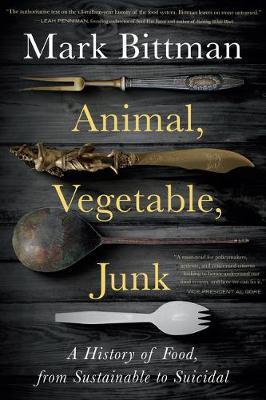 From his magnum opus, How to Cook Everything, and its many cookbook companions, to his recipes for The New York Times, to his essays on food policy, Bittman has developed a breeziness that masks the weight of the politics and economics that surround the making and consuming of food. In Animal, Vegetable, Junk, his latest book, he offers us his most thoroughgoing attack on the corporate forces that govern our food, tracking the evolution of cultivation and consumption from primordial to modern times and developing what is arguably his most radical and forthright argument yet about how to address our contemporary food cultures’ many ills. But it still goes down easy; the broccoli tastes good enough that you’ll happily go for seconds.
 When Shashank Yadav took to Twitter to plead for oxygen to save his dying grandfather
 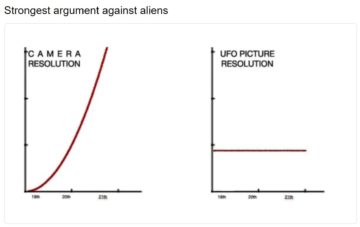 The idea of UFOs has gone mainstream. The dam broke with a New York Times story about a year ago on
 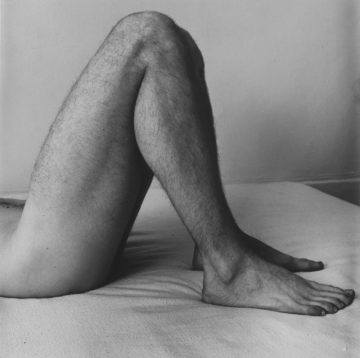 “How to describe the effect of these photographs?” writes Moyra Davey on the pictures that the late American artist Peter Hujar took of the Hudson River in 1976. “The water seems embodied, we see faces—eyes and lips—and liquid takes on a velvety smoothness and viscosity that could almost be a solid. Each image seems to have its own personality, and we sense Hujar’s presence as well, a man standing on a pier, with all the connotations of that locale, looking out and taking in the river at his feet. I wonder if he knew when he took the pictures that the resulting images would be so sensual, so corporeal and unearthly at the same time.” Davey writes these words at the end of The Shabbiness of Beauty, a newly published photobook, in which she delves into the image-archives of Hujar and edits his photographs into a new series together with her own.