
Matthew Daddodna in McSweeney’s:
 The first public literary reading I ever gave was at Manhattan’s Le Poisson Rouge for a now-defunct magazine’s issue showcase. I was 21 years old and had never read my poems in front of a live audience. More important, I had never built up the requisite nerves to read my poems aloud, and, as a way of coping, I had spent that afternoon day drinking in nearby Washington Square Park with a group of strangers from the Bronx who could have been troubadours from Kentucky. By the time I got to the venue, drunk on whiskey siphoned from their flasks and cheap beer from the local bodega, I was shocked to see that some of my friends and professional peers had shown up to watch me perform. If it wasn’t enough to want to impress them by reading at a public space, I had also trained myself to recite the poems, sans paper. Hours earlier, I had even been so bold as to crumple the printed poems and pour beer on them as a final act of humiliation. Now, in the impractically lit basement that functioned as a lounge, a bar, and a performance space, the lines of the poems melted away and the humiliation was turned inward. Once I was called up to the stage, I looked into the far recesses of the dim basement for something—call it a friendly face, call it a sign—to look back. But I saw nothing; I heard only applause and a couple glasses clink as they were placed on the bar. I put my sweaty palms inside my pocket in an attempt to dig out poems that were no longer there.
“Thank you for coming,” I said to the expectant crowd.
 I will remember 2020 not as a year of looking but as a year of listening. For months as the pandemic overtook New York, ambulance sirens sounded at all hours in strange choruses. When the sound of the sirens would break occasionally or fade into the distance after dawn, it was replaced not by eerie silence but by birdsong: the shrieks of the blue jays, the playful cheeps of the sparrows in the bushes, the eeks, chirps, and oddly varied sounds of the grackles everywhere. I wondered then, Were these sounds always here, and it was we who were made quiet? I rarely left my neighborhood of Ditmas Park, in Brooklyn, except to take my partner, Kate, pregnant with our second child, to appointments at the Manhattan hospital complex that was itself a hive of sirens that grew louder each time we approached. In my memory the sirens and birdsong were followed by police helicopters seemingly always overhead, as the city erupted in Black Lives Matter protests and the violent police response that only ensured they should continue. The helicopters loomed in the skies above as I ran circles over the same patch of weeds in the small plot of our shared backyard, playing a game my four-year-old daughter, Leo, calls “dinosaur chase” (she is the dinosaur, I am her lunch). Half the year was marked by interrupted sleep—first the constant fireworks at all hours of the night and then, by the end of the summer, the squawking and cooing of the baby, unaware of the distinction between day and night. As I write this, collecting a year, it is spring again. The neighborhood seems to be returning to some approximation of the old sounds from before. That is, if we can recall the way it used to sound. Even the old sounds are heard differently now. With my daughter in her mud boots, bird book and binoculars in hand, as the baby sleeps at home on Kate, we begin each day our circuit. Leo collects sticks, rocks, and seed pods, stomps in puddles, and pauses to track blue jays in a tree, following their noisy stutter.
 Adam Shatz in the LRB:
 Thomas Meaney in Sidecar:
 Rebecca Stropoli in Chicago Booth Review:
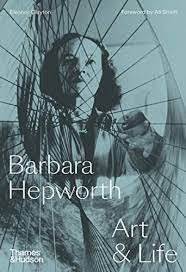 This biography’s value and novelty are level-headedness and fine-grained research. Clayton explains rather than exculpates, narrates rather than judges. She sets Hepworth talking through the pages, quoting generously from letters that correct, or complicate, previous accounts of her humourless self-absorption. A passionate and stylish correspondent, Hepworth makes strings of her words: “one’s mind is so turned towards France & the weather & winds & sea!”; “the feel of the earth as one walks on it, the resistance, the flow the weathering the outcrops the growth structure, ice-age, flood”. Clayton uses letters to show again and again how Hepworth doted on her children. On parting with the triplets: “it’s the hardest thing I’ve ever had to think about. I am so deeply happy about the babies & want them with me all the time”. This confirms what Hepworth’s work had already made clear: motherhood and family nourished and inspired her. Many of her sculptures of babies are exquisitely tender, the infant’s skull properly outsized and somehow translucent, as if veins pulsed beneath wooden skin and marble bone.
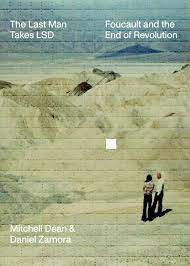 It all goes back, strangely, to a trip the French thinker
  “There is nothing I could write in this book or tell you that would help you get to know me,” writes
 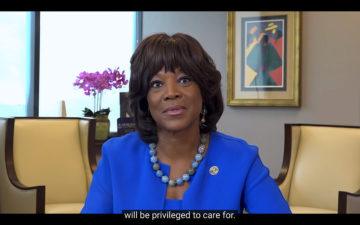 “YOU ARE GRADUATING AT AN INFLECTION POINT
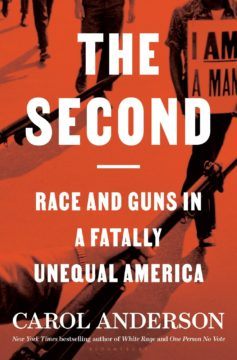 In “The Second: Race and Guns in a Fatally Unequal America,” the historian Carol Anderson argues that the Second Amendment to the United States Constitution, which provides for a “well regulated militia” and “the right of the people to keep and bear arms,” offers “a particularly maddening set of double standards where race is concerned.” On the one hand, she claims that slaveholding founding fathers insisted on the inclusion of the Second Amendment in the Bill of Rights in order to assure themselves of a fighting force willing to suppress slave insurrections. On the other hand, she maintains that racist practices have deprived Blacks of access to arms that might have enabled them to defend themselves in the absence of equal protection of law.
 Aftab’s new album
 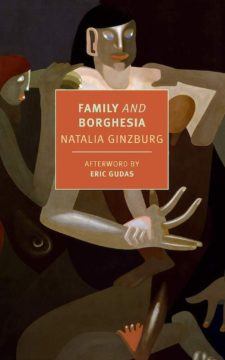 I WAS 24 years old when I met Natalia Ginzburg in Rome. I had just come from three weeks of intensive study of Italian at the Universita per Stranieri di Perugia (University for Foreigners in Perugia), and before that had managed to pass an Italian reading comprehension test for a graduate program that I never completed. With the misplaced confidence of the young, I assumed I’d be able to conduct an adequate conversation with her. During the Italian course at Perugia, the teacher had introduced us to Ginzburg’s early essays collected in Le piccole virtù (The Little Virtues) and I was immediately enamored of them. Every lucid, plangent sentence enchanted my ears and twisted my heart. The essay “Broken Shoes” considered the condition of her shoes as she walked through Rome after the fascists murdered her husband, preceded by a spell of political exile with their children in a village in the Abruzzi region. The essays about their life in that town sketched the mutually generous friendships that developed between her family and the local people.
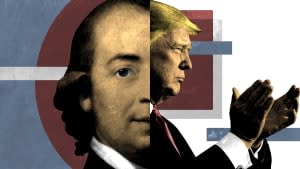 There are many ways to understand the tendency roiling liberal-democratic politics in recent years, from the outcome of the Brexit vote and the presidency of Donald Trump to the surge in support for antiliberal politicians and parties across Europe, Asia, and the Americas. It’s been variously described as an explosion of right-wing populism, a resurgence of nationalism, a renewed flowering of xenophobia and racism, even a rebirth of fascism. But what all of these theories are striving to explain is a pervasive collapse of faith in multiculturalism as an organizing principle of free societies.
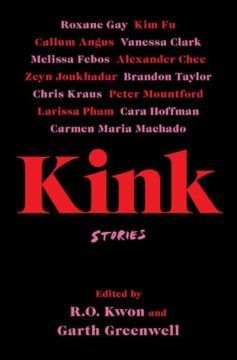 Kink, a new anthology of short fiction edited by R. O. Kwon and Garth Greenwell, intends to “[c]lose some of the distances between our solitudes” by collecting kinky sex-centered stories written by 15 authors of different races, sexual orientations, gender identities, and ethnicities. A quick look at the writers’ bios, though, shows how remarkably alike they are. Five of them graduated from, or currently teach at, the University of Iowa’s MFA program. Almost all are famous in the world of contemporary literary fiction — in addition to the editors, Kink’s contributors include Roxane Gay, Chris Kraus, Carmen Maria Machado, Alexander Chee, and Brandon Taylor. The kink, too, is pretty one-note. There’s a lot of BDSM, most of it light: boot-licking, choking, spitting, and slapping.
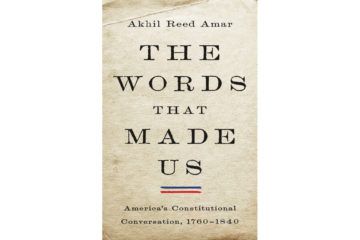 Who wrote the Declaration of Independence? Thomas Jefferson is generally credited as its author, but Akhil Reed Amar believes there’s a better answer. “America did,” Amar argues in “The Words That Made Us: America’s Constitutional Conversation, 1760-1840.”