
Jeffrey Weiss at Artforum:
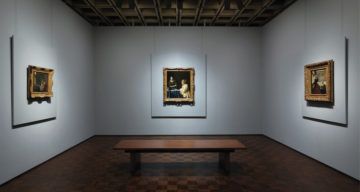 Yet the overarching impact of the Breuer installation is one of pictorial rather than historical logic. The relocation from one setting to the other has made the paintings close to unfamiliar. For those long used to visiting the Frick Collection, the change is transformational. Three paintings by Vermeer, for example, are displayed on three adjacent walls, an arrangement that is discreetly formal but otherwise without ceremony. The effect is heart-stopping. This sensation derives not from the utmost rarity of the works (only thirty-four paintings by the artist are known to exist), something of which the visitor may even be unaware, but from a naked intensity of pictorial encounter. In particular, the storied qualities of the painting Mistress and Maid, ca. 1666–67—optical precision, consummate painterly control, and the suspended animation of the two figures, who pass a letter between them, spotlit against the impenetrable darkness of an unknowable space—now project with startling immediacy. The installation supports a salience, a hereness, that intensifies the ritualized intimacy of the depiction of gesture and glance.
more here.
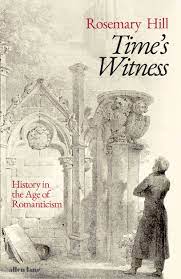 We still tend to dismiss the antiquary as the kind of uninspired collector of information embodied by George Eliot’s ossified Casaubon. To the gentlemen historians of the Enlightenment, they were tasteless provincial nobodies (in other words, they lacked the means for a grand tour), whose interest in the material remains of the past ranged from the dull to the downright insanitary. To the 19th-century professionals who succeeded them, they were an amateurish embarrassment, whose contributions to knowledge were rarely acknowledged, even (or especially) when they provided the basis for later work. In Time’s Witness, a history of history in the Romantic age, Hill launches a rehabilitation. Taking her ‘impetus’ from Hugh Trevor-Roper’s implication in ‘The Romantic Movement and the Study of History’ that the development of the discipline fell into abeyance between the towering figures of the 18th century (Hume, Gibbon, Robertson) and the 19th (Macaulay, Michelet, Ranke), she contends that the study of the past during those years was stewarded by exactly these much-maligned endeavourers.
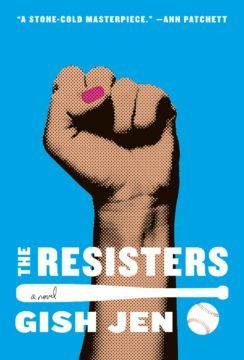 For more than thirty years now, Gish Jen has been writing fiction that explores the American landscape while ranging across any boundaries expectations about literary fiction might try to impose: her five novels and many short stories are literary and entertaining; funny and serious; rich in characters with stories to tell. Whether she’s writing from the point of view of a Chinese American teenager in a primarily Jewish suburb, as in Mona in the Promised Land (1996), or the sharply observant and comic Hattie Wong in World and Town (2010), Jen creates characters who explore not just what it is to be American, but what it is to be human.
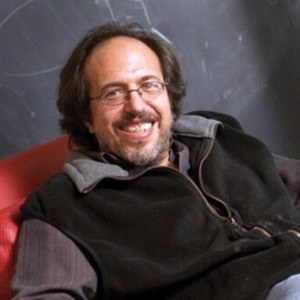 The challenge to a theoretical physicist pushing beyond our best current theories is that there are too many ways to go. What parts of the existing paradigm do you keep, which do you discard, and why make those choices? Among today’s theorists, Lee Smolin is unusually reflective about what principles should guide us in the construction of new theories. And he is happy to suggest radical revisions to well-established ideas, in areas from the nature of time to the workings of quantum mechanics. We talk about time, the universe, the role of philosophy, a new picture of spacetime, and the future of physics.
 The first time I drank alcohol, it was red rum straight from a quarter bottle – riding pillion as my boyfriend took us around a secluded part of the city of Lucknow, in provincial northern India. It was spring 2010, I was in the third year of law school, and
 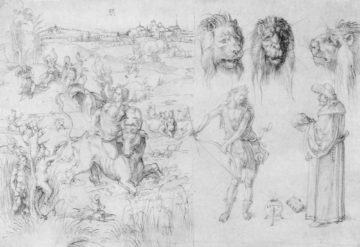 Does anything in this sprawling catalog of rewritten myth redeem the figure of Europa, for our purposes? Will these contradictory lineages be summoned, however dimly, in our readers’ minds? Stuart Hall acknowledged that the myth could be read in emancipatory or pluralistic ways, but was anyone really doing it? “The figure is certainly not being used,” he concluded, “to remind contemporaries that much of what we now think of as Europe’s achievements were originally external to Europe and had non-European, Asian, African and Islamic roots.” Yet Hall’s critique is itself canonical now, at least in some circles, and the myth can be activated accordingly. In Citizens of Nowhere: How Europe Can Be Saved from Itself (2018), Lorenzo Marsili and Niccolo Milanese can invoke a postcolonial, postnational Europa as a matter of course.
 I
I 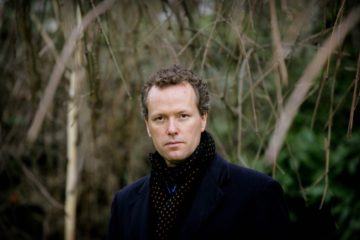 By the time Edward St. Aubyn completed the last of his
  Art Garfunkel once described his legendary musical chemistry with Paul Simon, “We meet somewhere in the air through the vocal cords … .” But a new study of duetting songbirds from Ecuador, the plain-tail wren (Pheugopedius euophrys), has offered another tune explaining the mysterious connection between successful performing duos. It’s a link of their minds, and it happens, in fact, as each singer mutes the brain of the other as they coordinate their duets. In a study published May 31 in Proceedings of the National Academy of Sciences, a team of researchers studying
 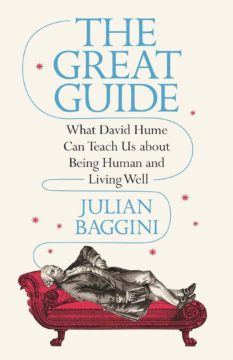 Philosophy has a vexed relationship with the business of self-help. On the one hand, philosophers offer systematic visions of how to live; on the other hand, these visions are meant to be argued with, not deferred to or chosen off the rack. Though it runs deep, this tension has not slowed the flood of titles, published in the last few years, that take a dead philosopher as a guide to life. These books will teach you How to Be a Stoic, How to Be an Epicurean, and How William James Can Save Your Life; you can take The Socrates Express to Aristotle’s Way and go Hiking with Nietzsche.
 Economics is one of the better-funded and more scientific social sciences, but in some critical ways it is failing us. The main problem, as I see it, is standards: They are either too high or too low. In both cases, the result is less daring and creativity.
 In the hot summer of 1840, the young orientalist Henry Rawlinson arrived in Karachi and began anxiously searching for his mentor, the pioneering archaeologist of Afghanistan, Charles Masson. The rumours he had heard profoundly alarmed him.