
Fermilab press release in Symmetry:
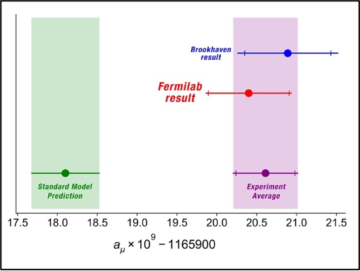 The long-awaited first results from the Muon g-2 experiment at the US Department of Energy’s Fermi National Accelerator Laboratory show fundamental particles called muons behaving in a way that is not predicted by scientists’ best theory, the Standard Model of particle physics. This landmark result, made with unprecedented precision, confirms a discrepancy that has been gnawing at researchers for decades.
The strong evidence that muons deviate from the Standard Model calculation might hint at exciting new physics. Muons act as a window into the subatomic world and could be interacting with yet undiscovered particles or forces.
“Today is an extraordinary day, long awaited not only by us but by the whole international physics community,” says Graziano Venanzoni, co-spokesperson of the Muon g-2 experiment and physicist at the Italian National Institute for Nuclear Physics. “A large amount of credit goes to our young researchers who, with their talent, ideas and enthusiasm, have allowed us to achieve this incredible result.”
More here.
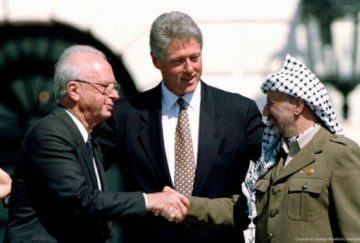 It is hard to believe that it has been fifty years since I used to sit on the floor of drafty college residences in Oxford with Hussein Agha, Ahmad Samih Khalidi, Ahmad’s cousin Rashid Khalidi, and other luminaries of the Oxford University Arab Society, listening to their discussions of the then-parlous state of the Palestinian freedom movement (and voicing an occasional interjection). During the previous year, Palestinian guerrillas earlier chased out of the West Bank by Israel had proceeded to challenge King Hussein’s rule in Jordan; and during “Black” September 1970, Hussein hit back at them hard. In Spring 1971 the guerrillas were still reeling from Black September and were struggling to regroup in the extensive Palestinian refugee camps in Lebanon. In Oxford we eagerly read any scrap of news we could get about their achievements there.
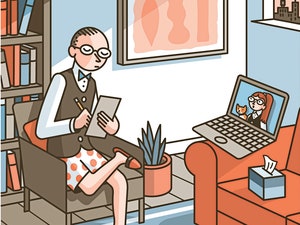 First, let’s survey the situation. It’s as though the haze of our inner lives were being filtered through a screen of therapy work sheets. If we are especially online, or roaming the worlds of friendship, wellness, activism, or romance, we must consider when we are centering ourselves or setting boundaries, sitting with our discomfort or being present. We “just want to name” a dynamic. We joke about our coping mechanisms, codependent relationships, and avoidant attachment styles. We practice self-care and shun “toxic” acquaintances. We project and decathect; we are triggered, we say wryly, adding that we dislike the word; we catastrophize, ruminate, press on the wound, process. We feel seen and we feel heard, or we feel unseen and we feel unheard, or we feel heard but not listened to, not actively. We diagnose and receive diagnoses: O.C.D., A.D.H.D., generalized anxiety disorder, depression. We’re enmeshed, fragile. Our emotional labor is grinding us down. We’re doing the work. We need to do the work.
 Louis Renard
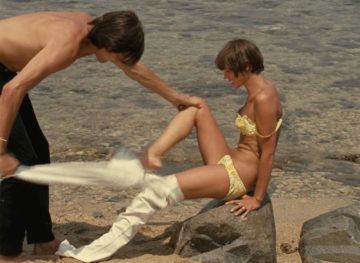 By all accounts, Maurice Schérer led an oppressively virtuous life. He never cheated on his wife. He was sober, refusing both drugs and alcohol, and he attended Mass each Sunday. Though he could have afforded a car, he never bought one, and he considered even occasional taxi trips an undue extravagance. In his old age, when he was suffering from painful scoliosis, he continued taking two buses to work in the Montparnasse neighborhood of Paris each morning, then the same two buses back home each night. He cherished quiet enjoyments: classical music, visits to museums, nights at home with his family. He was born in 1920 and died in 2010, but he never owned a telephone.
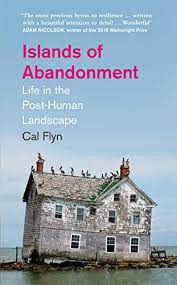 Flyn isn’t interested so much in what we’ve done to nature as in how it bounces back. ‘What draws my attention’, she writes, ‘is not the afterglow of pristine nature as it disappears over the horizon, but the narrow band of brightening sky that might indicate a fresh dawn of a new wild as, across the world, ever more land falls into abandonment.’ More of the world being abandoned – is that right? We assume that as our numbers increase, so we claim more territory from the wild. But in fact our activity is increasingly concentrated in smaller areas and, in the developed world at least, we are leaving more land to its own devices.
 What ever happened to machines taking over the world? What was once an object of intense concern now seems like a punchline. Take one of the
  In a world flooded with information, everybody necessarily makes choices about what we pay attention to. This basic fact can be manipulated in any number of ways, from advertisers micro-targeting specific groups to repressive governments flooding social media with misinformation, or for that matter well-meaning people passing along news from sketchy sources. Zeynep Tufekci is a sociologist who studies the flow of information and its impact on society, especially through social media. She has provided insightful analyses of protest movements, online privacy, and the Covid-19 pandemic. We talk about how technology has been shaping the information space we all inhabit.
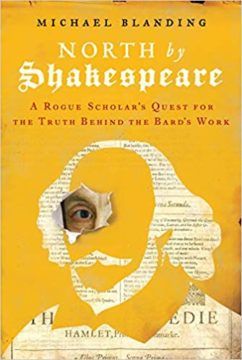 The “rogue scholar” referred to in Michael Blandings’ captivating book, “North by Shakespeare: A Rogue Scholar’s Quest for the Truth Behind the Bard’s Work,” is a researcher who has confronted one of the most entrenched literary orthodoxies: that William Shakespeare of Stratford-upon-Avon wrote the plays that bear his name.
 Some 2,700 years ago in the ancient city of Sam’al, in what is now modern Turkey, an elderly servant of the king sits in a corner of his house and contemplates the nature of his soul. His name is Katumuwa. He stares at a basalt stele made for him, featuring his own graven portrait together with an inscription in ancient Aramaic. It instructs his family, when he dies, to celebrate ‘a feast at this chamber: a bull for Hadad harpatalli and a ram for Nik-arawas of the hunters and a ram for Shamash, and a ram for Hadad of the vineyards, and a ram for Kubaba, and a ram for my soul that is in this stele.’ Katumuwa believed that he had built a durable stone receptacle for his soul after death. This stele might be one of the earliest written records of dualism: the belief that our conscious mind is located in an immaterial soul or spirit, distinct from the matter of the body.
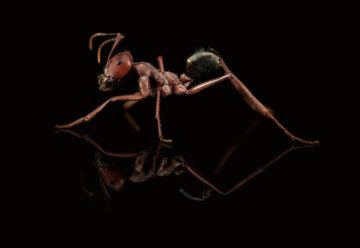 It is telling, the entomologist Eleanor Spicer Rice writes in her introduction to a new book of ant photography by Eduard Florin Niga, that humans looking downward on each other from great heights like to describe the miniaturized people we see below us as looking “like ants.” By this we mean faceless, tiny, swarming: an indecipherable mass stripped of individuality or interest. Intellectually, though, we can recognize that each scurrying dot is in fact a unique person with a complicated and interconnected life, even if distance appears to wipe away all that diversity and complexity. So then why, Dr. Rice asks, don’t we apply the same logic to the ants we’re comparing ourselves to?
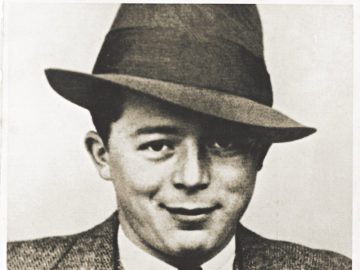 Although Wilder père had other plans for his son—a respectable, stable career in the law, an exalted path for good Jewish boys of interwar Vienna—Billie was drawn, almost habitually, to the seductive world of urban and popular culture and to the stories generated and told from within it. “I just fought with my father to become a lawyer,” he recounted for the filmmaker Cameron Crowe in Conversations with Wilder: “That I didn’t want to do, and I saved myself, by having become a newspaperman, a reporter, very badly paid.” As he explains a bit further in the same interview, “I started out with crossword puzzles, and I signed them.” (Toward the end of his life, after having racked up six Academy Awards, Wilder told his German biographer that it wasn’t so much the awards he was most proud of, but rather that his name had appeared twice in the New York Times crossword puzzle: “once 17 across and once 21 down.”)
 I
I 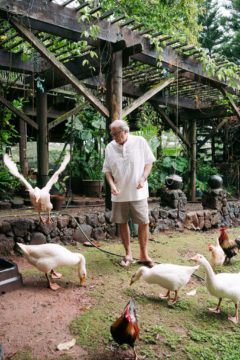 Theroux turns 80 in April. For a generation of backpackers now gone gray, the tattered paperback accounts of his treks through China, Africa and South America were a prod to adventure, bibles of inspiration under many a mosquito net. He has a new novel out from Houghton Mifflin Harcourt in April, “Under the Wave at Waimea,” and his best-known book (and