
Dean Flower at the Hudson Review:
 We may still wonder why Balzac occupied so much space in James’s writing career and particularly in The Prefaces. In temperament and method the two were poles apart. But Balzac had come to represent for James something primal, fundamentally generative—more a natural phenomenon than an individual. The sculptor Gloriani, who appears in James’s first novel, Roderick Hudson, reappears in The Ambassadors, at the center of his garden in Paris, a man in touch with “the great world,” Strether thinks, a figure who has “something covertly tigerish” about him, compelling a stab of envy and admiration for “the glossy male tiger, magnificently marked.” This is the moment when Strether realizes, and tells little Bilham, “Live now! Live all you can; it’s a mistake not to . . . Live!” It’s difficult here to ignore Balzac as Gloriani’s progenitor, the figure that kept telling James to embrace life with more vital courage—and greater response to its magnificence. Gloriani appears again in “The Velvet Glove,” a short story of 1909, but he’s also present in metaphors like the beast in “The Beast in the Jungle,” in which John Marcher waits passively for Life’s big revelation to seize him—that was Strether’s mistake, too. Think of Balzac again when you read about James visiting Edith Wharton at The Mount in 1904 and reading aloud together Walt Whitman’s celebrations of “The Body Electric” with unselfconscious joy.
more here.
Enjoying the content on 3QD? Help keep us going by donating now.
 In the novels of André Aciman
 The most significant developments in society and technology have all occurred over the past 10,000 years or so. That includes the agricultural, scientific, industrial, and digital revolutions, not to mention the dawn of religion, money, and any of the other symbolic concepts that separate Homo sapiens from other species.
 In 2019, the Business Roundtable, an association of the United States’ most powerful CEOs, won widespread praise by
  Five years ago, at the height of the Covid-19 pandemic, Andrew Cuomo was at the apex of his political power, watched by millions as he delivered daily televised briefings as the governor of New York. Zohran Mamdani, a then-unknown 28-year-old, was running for State Assembly as a democratic socialist in the gentrifying Western Queens neighborhood of Astoria. He would prevail by fewer than 500 votes.
 A common bacterium can be adapted to convert plastic waste into paracetamol, a study published this week in Nature Chemistry
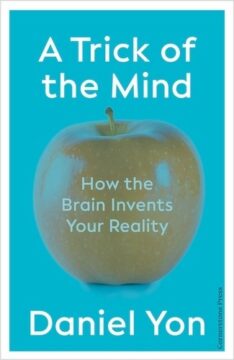 A century ago, someone with an interest in psychology might have turned to the work of Freud for an overarching vision of how the mind works. To the extent there is a psychological theory even remotely as significant today, it is the “predictive processing” hypothesis. The brain is a prediction machine and our perceptual experiences consist of our prior experiences as well as new data. Daniel Yon’s A Trick of the Mind is just the latest popularisation of these ideas, but he makes an excellent guide, both as a scientist working at the leading edge of this field and as a writer of great clarity. Your brain is a “skull bound scientist”, he proposes, forming hypotheses about the world and collecting data to test them.
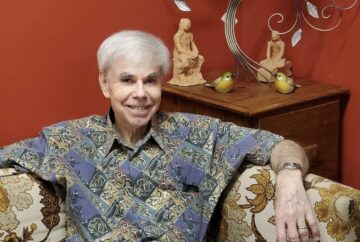 Hofstadter: One does what one’s desires determine one to do. I, like everyone else, am filled with conflicting desires, and they fight it out inside my brain, and the fight’s winner determines what I will do. Last weekend, for instance, I was of two minds about whether or not to go to the “No Kings” demonstration here in Bloomington. Part of me wanted very much to be part of the collective action against all the forces of evil that have taken over this country, but another part of me wanted very much to work on a personal project that is super-important to me. These forces inside me battled, and in the end, the go-to-the-rally force just barely beat out the work-on-your-project force, and so I went (and I’m glad I did). I “decided” to do so in the sense that the two above-described intense desires battled it out inside of me, and the stronger of them won. There was no freedom there; it was just a battle to see which desire was stronger. (In case you want to read more on this, I spell these ideas out somewhat more fully in Chapter 23 of I Am a Strange Loop.)
 Zohran Mamdani, a little-known state lawmaker whose progressive platform and campaign trail charisma electrified younger voters, stunned former Gov. Andrew M. Cuomo in the Democratic primary for mayor of New York City on Tuesday night, building a lead so commanding that Mr. Cuomo conceded.
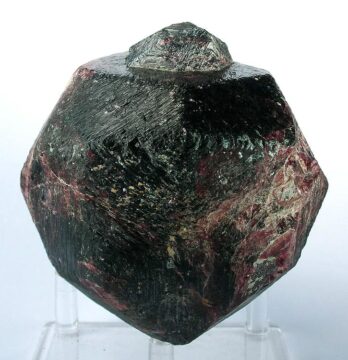 Garnets, however, are the true fruit of the underworld. They occur in a variety of colors, not just red, and all of them have colorful properties and histories. Calcium-aluminum garnet is called grossular, from the Latin name for gooseberry, a reference to its translucent pink to pale green hue. Calcium-chromium garnet is a rare grass-green variety named uvarovite, after Count Sergey Uvarov (1786-1855), who, when not busy with his duties as a statesman under Russian Emperor Nicholas I, spent his time collecting unusual minerals. These calcium-rich varieties of garnet are most commonly found in marbles and “skarns” — rocks formed by the metamorphism of limestones interbedded with shale and sandstone.
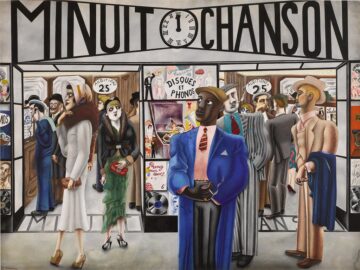 Burra’s hard-to-categorise career is the subject of an immaculate and revealing new exhibition at Tate Britain. It shows a man whose art reflected a rare sense of engagement with his times, especially its queer fringes. The works of the 1920s and 1930s treat his experiences in France and New York and verge on both satire and caricature. Burra used watercolour almost as oil paint and built up layers to give unusual depth of colour and subtle gradations.
 Zohran Mamdani, a little-known state lawmaker whose progressive platform and campaign trail charisma electrified younger voters, stunned former Gov. Andrew M. Cuomo in the Democratic primary for mayor of New York City on Tuesday night, building a lead so commanding that Mr. Cuomo conceded.
 A
A “I know this is considered heresy, but I like it best when it’s ice cold,” says Agnetha Fältskog, then looks around before spooning a couple of large ice cubes into her glass of Chablis.
 “People who have more frequent nightmares age faster and die earlier,” says