
Thomas Meaney at The New Yorker:
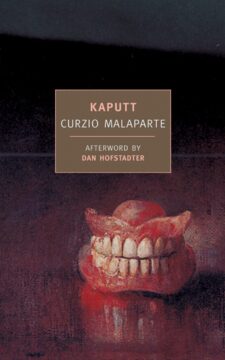
“You’re a born Fascist, one of the authentic ones,” the Italian writer Piero Gobetti wrote to his friend Curzio Malaparte in 1925, three years into Mussolini’s dictatorship. Gobetti, twenty-four and hailed as the most brilliant liberal writer of his generation, hoped to prevent Malaparte, then twenty-seven, from throwing all his talent behind the Fascist cause. “Don’t you understand that you’re wasting time, that the Fascists are playing you, that in the party you’re a fifth-class man, that your writings for the past year haven’t been worth a damn?” he wrote. Gobetti died the next year, from injuries inflicted by Black Shirts. Malaparte, by then, was making his name as one of Mussolini’s highbrow henchmen. During the Second World War, he became the regime’s star foreign correspondent, mobilizing the techniques of surrealism to evoke the era’s savagery. Malaparte rode to the Eastern Front with the Wehrmacht and toured the Warsaw ghetto with Nazi commanders and their wives. A fabulist whose medium was reality, he assembled his impressions into a nightmarish triptych—“The Volga Rises in Europe,” “Kaputt,” and “The Skin”—which forms the basis of his reputation today. With their uncanny sang-froid, their suave delight in ripping off the skin of experience, they leave no reader unmarked.
more here.
Enjoying the content on 3QD? Help keep us going by donating now.
 No, this is no hound. It’s just a dog.
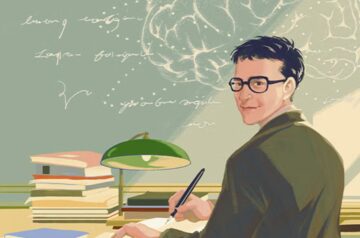 His name was Peter Putnam. He was a physicist who’d hung out with Albert Einstein, John Archibald Wheeler, and Niels Bohr, and two blocks from the crash, in his run-down apartment, where his partner, Claude, was startled by a screech, were thousands of typed pages containing a groundbreaking new theory of the mind.
 In 2023, Sam Altman embarked on a world tour, meeting with heads of state to discuss AI regulation. According to Time’s
  If to err is human, then so too is to regret. At least if we follow Paddy McQueen in his recent book about the nature, normativity, and politics of regret. According to McQueen, regret is, roughly, a painful feeling of self-reproach or self-recrimination for making a “mistake” (21). Like all emotions, regret is more than just a judgment, though it has a constitutive thought type (i.e., “I have made a mistake”), which can be realized by many different token thoughts (e.g., “I wish I had not done that”, “I should have acted differently” or “what an idiot I am!”). Regret’s “phenomenological core” is the feeling of “kicking oneself” or “beating oneself up” for a mistake (21). Regret directs our attention to the mistake in decision-making we have made and motivates us to avoid making the same kind of mistake in the future (72, 136).
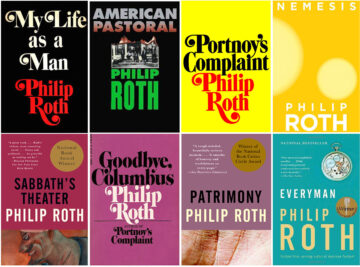 “Unwilling to portray themselves as victims (cringe, politically wrong), or as aggressors (toxic masculinity), unable to assume the authentic voices of others (appropriation), younger white men are no longer capable of describing the world around them,” Savage, who is 41, wrote. What they do write, he added, avoids “grappling directly with the complicated nature of their own experience in contemporary America.”
 Some people have a gift
 “How would you feel about living in another country?”
 If you’ve ever cooed at a baby, you have participated in a very special experience. Indeed, it’s an all but unique one: Whereas humans constantly chatter to their infants, other apes hardly ever do so, a new
 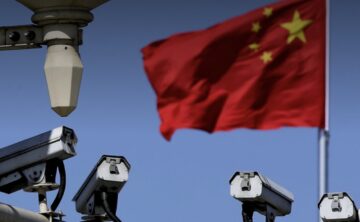 From Washington, D.C. to Silicon Valley, champions of new technologies often argue, with good reason, that we must embrace them because, if we don’t, the Chinese will — and then where will we be?
 Leftists argued, with considerable justification, that the MAGAworld response to neo-liberalism was little more than scapegoating where, to cite the Marxist geographer David Harvey, you “blame immigrants, foreign competition, in other words you blame everything except the underlying problems of capital because that is something which you’re allowed to talk about.” But in addition to these diversionary strategies, Trump won his second term in office promising to raise tariffs, bring manufacturing back to America, and defy international economic institutions. Despite his reassurances to powerful corporations that their profits would continue to grow, he managed to convince a sufficient number of aggrieved anti-globalist voters that he was on their side in the battle against unaccountable, unelected elites who sought to run the world on their terms.
 I
I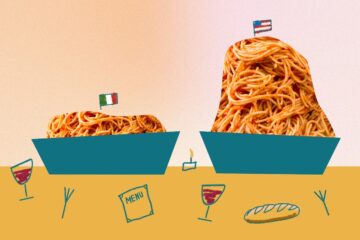 I had the great good fortune to spend the entire month of May in Italy. And if you’ve heard the reports of people going there on vacation, eating their way through the country, and miraculously coming home a few pounds lighter, I’m here to tell you it doesn’t always work out that way. Those folks, though, often come home scratching their head about why Italians are so much thinner than Americans. And, when you go to Italy, or even read about going to Italy, it does make you wonder. They eat cookies for breakfast. Lunch and dinner are typically multicourse meals, with a pasta or risotto as a first course and a meat dish as a second. There are sometimes antipasti as well. Even