Wednesday Poem

Pike

I take it he doesn’t think at all,
But muscles his slippery fight, an engine
Green deep, powering his belly flash
In his water mother, his horizonless well;
The hooked gill the fault in the world
Of his will, his preying paradise.
Near enough to net I have him,
And the murk of his body is my fear
Of our meeting somehow equally.
He pauses on the strain of my line;
I have him netted, sluicing the air,
How pure and brave my wet thrasher, my enemy.

by John Bruce
from Canadian Poetry Online

Enjoying the content on 3QD? Help keep us going by donating now.

Tuesday, July 1, 2025

How Societies Morph With the Seasons

Cecilia Padilla-Iglesias in Sapiens:

If you ask a BaYaka Forager in the Central African rainforest, “Where do you live?,” they often reply with a question of their own: “Mouanga or Pela?”

You’ll get the same response for nearly any question about their lives: Who do you live with? Who is this camp’s leader? How do you mourn the dead?

“Mouanga or Pela?”—meaning, “dry or wet season?” The BaYaka’s social world shifts throughout the year. The location and size of their homes, the materials used to build them, leadership, funerals—all transform depending on the season.

As an evolutionary anthropologist working with the BaYaka, I initially presumed people simply adjusted because of the seasonal availability of different foods. But their changes extended way beyond sustenance into the realms of politics, economics, rituals, and relationships.

More here.

Enjoying the content on 3QD? Help keep us going by donating now.

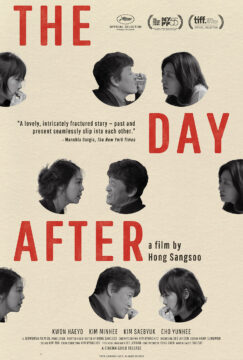
On Hong Sangsoo

Andrew Eckholm at n+1:

The narrative premises of Hong Sangsoo’s films tend to be simple. A chance encounter on the street. A quick trip to a nearby town. A man walks into a bar. Where the films of a director like, say, his countryman Bong Joon-Ho unfold through the exposition of a concept, Hong’s films are not built around ideas. The plot is not contained in the premise. Instead, he presents you with a place, an actor, a situation. From there the movie proceeds with an aleatory nimbleness, noticing details—a repeated gesture, a revealing bit of dialogue—that accumulate to reveal the characters and story. The director’s camera technique is likewise simple: extraordinarily long, single-shot, carefully composed scenes of people, often drunk at a table and trending toward conflict; roving zooms and pans, more likely to settle on a listener than a speaker; opening or concluding camera drifts that call attention to some stray object, animal, or landscape feature.

The 64-year-old South Korean director—who to date has made thirty-four films—is probably most famed for his lightweight production methods.

more here.

Enjoying the content on 3QD? Help keep us going by donating now.

A shark scientist reflects on the movie”Jaws” at 50

Jennifer Ouellette at Ars Technica:

Today marks the 50th anniversary of Jaws, Steven Spielberg’s blockbuster horror movie based on the bestselling novel by Peter Benchley. We’re marking the occasion with a tribute to this classic film and its enduring impact on the popular perception of sharks, shark conservation efforts, and our culture at large.

(Many spoilers below.)

Jaws tells the story of Chief Martin Brody (Roy Scheider), the new police chief for Amity Island, a New England beach town and prime summer tourist attraction. But that thriving industry is threatened by a series of shark attacks, although the local mayor, Larry Vaughn (Murray Hamilton), initially dismisses the possibility, ridiculing the findings of visiting marine biologist Matt Hooper (Richard Dreyfuss). The attacks keep escalating and the body count grows, until the town hires a grizzled shark hunter named Quint (Robert Shaw) to hunt down and kill the great white shark, with the help of Brody and Hooper.

Benchley wrote his novel after reading about a sports fisherman named Frank Mundus, who captured a very large shark in 1964; in fact, the character of Quint is loosely based on Mundus.

More here.

Enjoying the content on 3QD? Help keep us going by donating now.

What Goes Wrong When We Write Ghazals in English

Anthony Madrid at the Paris Review:

Everybody likes ghazals. Or they do when they learn what they are: A ghazal is a poetic form originating in and strongly associated with the Islamic cultural sphere. It is a medieval thing—or what Westerners would call medieval. Many famous Persian poets are famous for their ghazals. Likewise, Arabic poets, Turkish, Urdu … The ready-to-hand comparison is with the Italian sonnet. Ghazals are a lot like that: song length, rhyme heavy, lots of lovey-doveyness, lots of over-the-top cosmic reasoning.

It took forever for modern English-language poets to pick up on the existence of the ghazal, but once the word got out, plenty of smart people started trying to write original ghazals in English, with differing commitments to the formal rules. I’m one of these poets.

This piece is about translation, but it’s also about writing original poetry in one’s own language while following the rules developed for a different language. I want to talk about English ghazals, but (for lots of good reasons) I’m going to start in left field … with haiku.

more here.

Enjoying the content on 3QD? Help keep us going by donating now.

Andrew Cuomo and the Death of Centrism

Sarah Jones in New York Magazine:

Mamdani didn’t have Cuomo’s money or institutional support, which may have freed him to run a transformative campaign. He didn’t shy away from his racial and religious identity, or from backing trans rights, or from supporting Palestine, and he didn’t have to because those positions are not inherently at odds with a “kitchen-table” campaign. He ran on affordability and championed meaningful economic proposals like universal child care and baby baskets, plus a rent freeze for regulated apartments. He told the obvious truth, which is that the city is crushing everyone who isn’t rich, and proposed solutions. With the laudatory assistance of Brad Lander, he modeled a new and more collaborative politics in contrast to Cuomo’s narcissism. He took that optimism to the streets and to social media with what seemed like boundless energy, and he redefined pragmatism for a new age in city politics. Maybe it’s radical to let child-care costs drive families out of the city. Maybe it’s Cuomo and his backers who are out of touch with real people.

More here.

Enjoying the content on 3QD? Help keep us going by donating now.

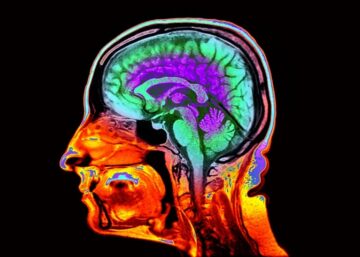
How fast is your brain ageing? Ordinary scans reveal the pace

Heidi Ledford in Nature:

Telltale features visible in standard brain images can reveal how quickly a person is ageing, a study of more than 50,000 brain scans has shown1.

Pivotal features include the thickness of the cerebral cortex — a region that controls language and thinking — and the volume of grey matter that the cerebral cortex contains. These and other characteristics can predict the rate at which a person’s ability to think and remember will decline with age, as well as their risk of frailty, disease and death. Although it’s too soon to use the new results to assess people in the clinic, the test provides advantages over previously reported ageing ‘clocks’ — typically based on blood tests — that purport to measure how fast a person is ageing, says Madhi Moqri, a computational biologist who studies ageing at Harvard Medical School in Boston, Massachusetts.

More here.

Enjoying the content on 3QD? Help keep us going by donating now.

How Two Neuroscientists View Optical Illusions

Katrina Miller in The New York Times:

Take a look at this video of a waiting room. Do you see anything strange?

Perhaps you saw the rug disappear, or the couch pillows transform, or a few ceiling panels evaporate. Or maybe you didn’t. In fact, dozens of objects change in this video, which won second place in the Best Illusion of the Year Contest in 2021. Voting for the latest version of the contest opened on Monday.

Illusions “are the phenomena in which the physical reality is divorced from perception,” said Stephen Macknik, a neuroscientist at SUNY Downstate Health Sciences University in Brooklyn. He helps run the contest with his colleague and spouse, Susana Martinez-Conde, a neuroscientist at the same institution and the primary organizer of the contest.

More here.

Enjoying the content on 3QD? Help keep us going by donating now.

Tuesday Poem


Unhealthy particulates were found throughout the home
—”The Toxic Homes of Los Angeles,” June 24, 2025

Reading the Times

So many things to be afraid of: the space junk of Damocles
orbiting in the troposphere, that worrisome spot
on my friend’s pancreas, the disappearance of the bagel man
& donut lady & farmworker to far-off destinations while the asylum
issues new protocols for the planet. There go the forests & trout streams
of your youth & here comes another blackout, your apartment gone dark
as a fresh coal on the tongue about to be fired like the one the pharaohs
offered Moses–the choice was that or gold, the story goes some angel shoved
his hand toward the coal so he ended up purified, but also stuttering
like the brother I spent my childhood hiding from in my father’s closet
below rows of suit coats, next to the electric buffer for his shoes. The buffers
were soft wool, & my brother the wolf raged through the house
like a man with a custom power tool through a federal grant program.
If Jesus saves, he must be saving up for something big, waiting for the last
possible moment which is what hardcore evangelicals think I guess but
those people really terrify me. In the City of Angels, chloride anions
in the light fixtures, cyanide in the sofas & baseboards & benzine in the air
while in the city of St. Francis, at sunset, a jobless man casts his line
from a dock to feed his family with fish that will kill them, hauling up bass
& white sturgeon from the shining blameless waters of the bay.

by Kim Addonizio
from Rattle Magazine

Enjoying the content on 3QD? Help keep us going by donating now.

Monday, June 30, 2025

Mark Blyth: The World Economy Is on the Brink of Epochal Change

Mark Blyth in The Atlantic:

The global economy is getting a hardware refit and trying out a new operating system—in effect, a full reboot, the likes of which we have not seen in nearly a century. To understand why this is happening and what it means, we need to abandon any illusion that the worldwide turn toward right-wing populism and economic nationalism is merely a temporary error, and that everything will eventually snap back to the relatively benign world of the late 1990s and early 2000s. The computer’s architecture is changing, but how this next version of capitalism will work depends a great deal on the software we choose to run on it. The governing ideas about the economy are in flux: We have to decide what the new economic order looks like and whose interests it will serve.

The last such force-quit, hard-restart period was in the 1930s. In the United States, the huge liquidity crunch caused by the 1929 Wall Street crash combined with the Smoot-Hawley Tariff Act of 1930 to kill commercial activity and trigger the Great Depression. Bank failures swiftly turned into a mass failure of firms and industries; wages tumbled and unemployment shot up, in some areas to a quarter of the workforce.

More here.

Enjoying the content on 3QD? Help keep us going by donating now.

The Unnerving Vision Of Muriel Spark

Frances Wilson at The Guardian:

There is a supernatural process going on under the surface and within the substance of all things,” says a priest in Muriel Spark’s 1965 novel The Mandelbaum Gate. Spark believed herself wired into this process. The novelist was aware from the start of “a definite ‘something beyond myself’”, an “access to knowledge that I couldn’t possibly have gained through normal channels”.

“Somehow things happened, odd things, when Muriel was around,” recalled her friend Shirley Hazzard. “Everything that happened to Muriel,” according to her American editor Barbara Epler, “had been foreseen”, usually in her books themselves. If Spark wrote about blackmail, she too would be blackmailed; if she wrote about a burglary, she would then be burgled. Thirty years after toying with an idea for The Hothouse by the East River (1973), in which electrocution by lightning takes place down a telephone line, lightning struck Spark’s house in Italy, sending a current of electricity through the external wires and burning her upper lip.

more here.

Enjoying the content on 3QD? Help keep us going by donating now.

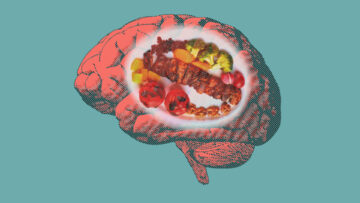
A Possible Connection Between Mental Illness and Diet

Gordy Slack at Undark:

In a report discussed in Psychiatry Redefined in 2022, Palmer and a small team of researchers at McLean had examined  case studies of two patients who had suffered from schizophrenic symptoms for much of their lives. One, an 82-year-old woman who had suffered from schizophrenia for decades and was suicidal, started a ketogenic diet at age 70 and found her symptoms abated to the point she no longer needed medication; she no longer had hallucinations or paranoia and also lost 150 pounds. Another woman, age 39, also went onto the ketogenic diet and eventually stopped using medication after her symptoms subsided. Although she later suffered a severe psychotic episode and was hospitalized, she “slowly tapered off Haldol” after her release and remained symptom-free five years later, the journal reported.

In fact, ketogenic diets have long been used in conventional medicine to treat severe or intractable epilepsy. Several studies published in the past few years suggest that ketogenic metabolitc therapy, or KMT, may not only help control seizures, bipolar disorder, major depressive disorder, and schizophrenia — but may also reduce the sometimes devastating side effects that often accompany antipsychotic medications, said Palmer.

More here.

Enjoying the content on 3QD? Help keep us going by donating now.

What Is The Genius of Brian Wilson?

Sid Holt at The Nation:
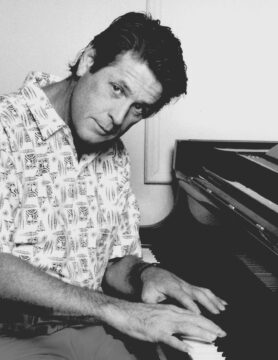
Wilson was strange—probably mad—and it was his strangeness that contributed as much as his music to his reputation as a genius. Even in videos of the Beach Boys performing in the early 1960s, he appears to be searching for an exit. The breakdown that led to his forsaking live performance; the piano in the living-room sandbox; his panicked abandonment of Smile (the intended, and soaringly ambitious, follow-up to Pet Sounds); his wandering the aisles of his very own health-food store, the Radiant Radish, in a bathrobe—all became part of his legend.

And now Brian is dead, far outliving his brothers—the 39-year-old Dennis, who drowned in 1983 after a day of drinking, and the dutiful Carl, who died of cancer, then 51, in 1998—and most of his bandmates. (Of the Beach Boys most will remember, only his cousin Mike Love and his high school friend Al Jardine, survive.) More to the point, he had outlived the times he helped define. Yet the 45s and the best of the LPs—The Beach Boys Today!Summer Days (and Summer Nights!!)Pet Sounds, even Smiley Smile, which was definitely not Smile—endure. Come summer, the title of one of the Beach Boys’ greatest-hits albums, Spirit of America, never seems truer. It is the music my Gen X wife and millennial daughters (and as one day, I am sure, my Gen Beta grandson will) all demand with their hot dogs and Cokes.

more here.

Enjoying the content on 3QD? Help keep us going by donating now.

Sold to the Trump family: one of the last undeveloped islands in the Mediterranean

Marzio Mian in The Guardian:

Albanians call Sazan Ishulli i Trumpëve – Trump Island. Until now mostly untrammelled by development, it is on the verge of becoming a mecca for ultra-luxury tourism, another addition to Ivanka Trump and Jared Kushner’s real-estate portfolio. Speaking on the Lex Fridman podcast in July 2024, Trump could barely conceal her excitement: “I’m working with my husband, we have this 1,400-acre island in the Mediterranean and we’re bringing in the best architects and the best brands,” she said. “It’s going to be extraordinary.”

When I reached Kushner by phone the same month, I detected brimming enthusiasm for Sazan, which he seemed to regard as something of a treasure. He said he plans “to create the ideal resort that I’d want to be at with my family and with my friends”.

Before I visited the island, I marvelled at the thought of traversing its roughly 40 miles of trails, climbing its mountains covered in rainforest and exploring its deep waterways with names such as the Bay of Paradise, Hell’s Gorge, Devil’s Gulf and Admiral’s Beach. I wanted to see it before the phrase “I’m going to Sazan” becomes the prerogative of the rich.

More here.

Enjoying the content on 3QD? Help keep us going by donating now.

Demanding Pleasures: On the art of observation

Lydia Davis in Harper’s Magazine:

A person once said to me, “You’re a writer. You must have a lot to say.” He was making an assumption. I’ve thought about his assumption many times. Is it that simple? Do I write because I have a lot to say? I do have a lot to say. No matter how much I have said, isn’t there always more to say? But then, I imagine everyone has a lot to say, writers and nonwriters alike. I can’t imagine anyone not having a lot to say—even if they keep their mouth closed.

Human beings with a lot to say like to make noise. So do crickets, dogs, mice, other insects, rabbits when frightened or being killed, moose, and many, many others. It is impressive to think of all the creatures on earth and all the different noises they make, for different reasons. Some of their noises are effective. Some fail to have an effect.

More here.

Enjoying the content on 3QD? Help keep us going by donating now.