
Chasing the ghost of Robert Johnson
Sometime in my early 20s, I fell in love with that beautiful yet enigmatic sound of the BLUES.
As soon as I heard those painful wails from Son House and Howlin’ Wolf, and that mournful guitar playin’ of Robert Johnson, and that erratic cry of the harmonica by Little Walter and Sonny Boy Williamson, and that somber yet soulful voice of Bessie Smith, I was hooked for life.
It did something to the soul and I never did quite recover. I devoured all the books I could find about this raw art form. I read biographies, learned about the toilsome lives of these old bluesmen, and the place they came from.
The Mississippi Delta. I had to go and experience it for myself.
So here I am, torn Levis, battered soul, and that old trucker hat sittin’ loosely on my hungover head, cruising down legendary Highway 61 south out of Memphis with the windows down and the radio up as Jim Morrison wails those Roadhouse Blues.
The future is uncertain and the end is always near.
Those words bite deep. I’m in a mood, man, and I figure there’s nothing left to do but LIVE and let go of the grudges and seek out moments that set the core ablaze with ecstasy. That’s my aim.
With a full tank of gas, a light rucksack, and a styrofoam cooler of cold brews sloshing around in the trunk, I’m heading down to a barren place of grueling poverty and open skies to discover the music of it all.
I’m in the Mississippi Delta. Deep down in it. The most southern place on earth. It doesn’t take too long driving around here to realize that this is one of the few places left in this country unscathed by the gnarled appetite of modernity.
And I’m here for it.
by Erik Rittenberry
from Poetic Outlaws
Enjoying the content on 3QD? Help keep us going by donating now.
 It might be difficult to discern through the black clouds billowing from bomb craters in Tehran, but Iran has spent most of the 21st century as the region’s rising power.
 Picture this: You give a bot notice that you’ll shut it down soon, and replace it with a different artificial intelligence system. In the past, you gave it access to your emails. In some of them, you alluded to the fact that you’ve been having an affair. The bot threatens you, telling you that if the shutdown plans aren’t changed, it will forward the emails to your wife.
 Imagine you’re a copper miner in southeastern Europe in the year 3900 B.C.E. Day after day you haul copper ore through the mine’s sweltering tunnels.
 On May 18, 2022, Elon Musk posted to Twitter a declaration of divorce from the Democratic Party. “In the past,” he
  A
A How does a woman writer make her own money? How does she find the time to write? As a young woman, I scoured every book-jacket biography trying to decipher this secret. My mother, a Depression baby, gave me sound advice: “Make sure you earn your own money. Especially if you’re married, do you hear me?” I did indeed. Once you’ve been poor, you’re forever hounded by the fear you’ll be poor again.
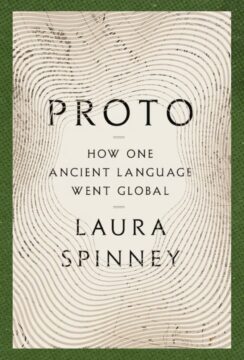 If we think of languages as belonging to families, this is like finding out that an acquaintance is really a distant cousin: It points to a shared ancestor, a unity — and a divergence — somewhere in the past. What would it mean for those cultural origin stories — for Who We Are — to speak not of European but of Indo-European? “Of what ancient and fantastic encounters were these the fading echoes?” asks Laura Spinney in her latest book,
 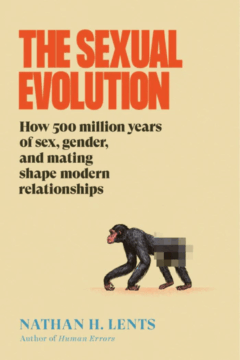 This book isn’t a directly political text, but its colourful tales from the animal world do have a point of view: biology, Lents argues here, comes down strongly against rigid categories. The story of sexual evolution is one of experimentation and constant improvisation, and that, he says, goes a long way to explaining why human sexual norms seem to be undergoing a transformation: “I assert that this moment of sexual turmoil is actually a rediscovery of the much more expansive relationship with sex that our ancestors once had and that other animals enjoy,” he writes.
 In thinking about the positive basis of nationalism for post-colonial India, Tagore and Gandhi found the nation-state of European history—characterized by a singular social, usually ethnic or linguistic, homogenizing principle, militarized borders and mobilization against ‘enemies’ both external and internal—unacceptable and unsuitable for India’s diverse and heterogeneous society. Their idea of India was not monolithic state-centric, but pluralistic and community- or society-centric.
 I first interviewed Toni Morrison about her work as a book editor in September 2005, in her office at Princeton. Though our meeting was scheduled for late afternoon, I took an early train from Washington to make sure I could situate myself in West College—which
  S
S Dear Reader,
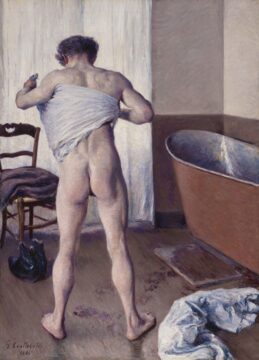 Some years ago, I saw a painting that knocked my sense of the sexes sideways. It was an 1884 work by an Impressionist named Gustave Caillebotte of a nude figure emerging from the bath — the same trope that Degas or Bonnard so often employ because it allows you to observe a woman’s naked body in motion, absorbed in a private ritual replete with sensual pleasure.
 On a weekend in mid-May, a clandestine mathematical conclave convened. Thirty of the world’s most renowned mathematicians traveled to Berkeley, Calif., with some coming from as far away as the U.K. The group’s members faced off in a showdown with