Corinna da Fonseca-Wollheim in The New York Times:
 In December 1915, while serving on the Russian front, the German astronomer and mathematician Karl Schwarzschild sent a letter to Albert Einstein that contained the first precise solution to the equations of general relativity. Schwarzschild’s approach had been simple. He had plugged Einstein’s equations into a model that posited an ideal, perfectly spherical star, in order to calculate how its mass would warp the surrounding space. Schwarzschild’s solution was elegant, but it revealed something monstrous: If the same process were applied not to an ideal star but to one that had begun to collapse, its density and gravity would increase infinitely, creating an enclosed region of space-time, or a singularity, from which nothing could escape. Schwarzschild had given the world its first glimpse of black holes.
In “When We Cease to Understand the World,” a gripping meditation on knowledge and hubris, Benjamín Labatut describes how Schwarzschild was seized by a sense of foreboding over his own discovery. “The true horror” of the singularity, he told a fellow mathematician, was that it created a “blind spot, fundamentally unknowable,” since even light would be unable to escape it. And what if, he continued, something similar could occur in the human psyche? “Could a sufficient concentration of human will — millions of people exploited for a single end with their minds compressed into the same psychic space — unleash something comparable to the singularity? Schwarzschild was convinced that such a thing was not only possible, but was actually taking place in the Fatherland.”
Schwarzschild, who was Jewish, did not live to see Hitler rise to power and concentrate the collective German will to catastrophic effect. But a different premonition came true within months. The “void without form or dimension,” which he told his wife had invaded his being, took shape as a rare disease that would cover his body in pustulant blisters and kill him mere months after his scientific breakthrough.
More here.

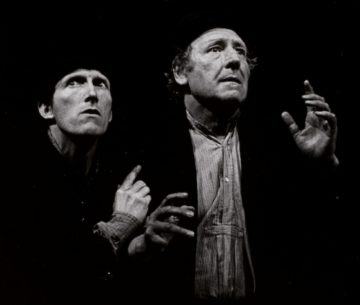 Almost every first draft (and third, and fifth) is overwritten. Maybe too much is happening, but usually it’s all the talk that bloats and clogs. Too much of anything at the outset can be helpful, though; every tailor knows it’s easier to cut cloth than to adhere it. But there is an art to cutting.
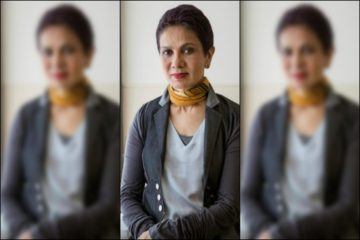 US-based Azra Raza, a respected oncologist of Pakistani origin, has been treating cancer patients for around two decades. Her grouse, articulated in her book, The First Cell, is that most new drugs add mere months to one’s life, that too at great physical, financial and emotional cost. In her telling, the reason the war on cancer has reached an impasse is because doctors are essentially trying to protect the last cell, instead of checking the disease at birth. This has to change, and now, Raza writes with an evangelist’s passion.
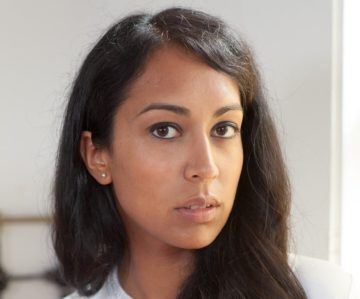 When the philosopher Amia Srinivasan’s essay “The Right to Sex” appeared in the London Review of Books, in 2018, it garnered a level of attention not usually paid to writing by academics. From the provocative title to the bracing clarity of the content (“Sex is not a sandwich,” Srinivasan wrote), the essay’s stylistic appeal was matched by a willingness to entertain positions that had long been off the table in both feminist and mainstream discussions of sex. The piece responded to the commentary surrounding Elliot Rodger, perhaps the most famous of the so-called incels, or involuntary celibates, who in 2014 killed six people after penning a 107,000-word manifesto that railed against the women who had deprived him of sex. Many feminists were quick to read Rodger as a case study in male sexual entitlement. Fewer wanted to broach one of the manifesto’s thornier claims: that Rodger, who was half white and half Malaysian Chinese, had been denied sex because of his race. Srinivasan took Rodger’s undesirability head-on: of course, no one has a right to be desired, she wrote. But we ought to acknowledge, as second-wave feminists more readily did, that who or what is desired is a political question, subject to scrutiny.
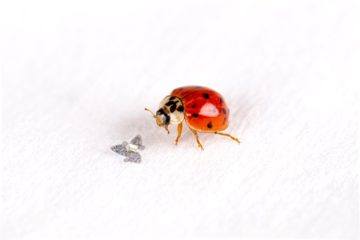 As spring ends, maple trees begin to unfetter winged seeds that flutter and swirl from branches to land gently on the ground. Inspired by the aerodynamics of these helicoptering pods, as well as other
 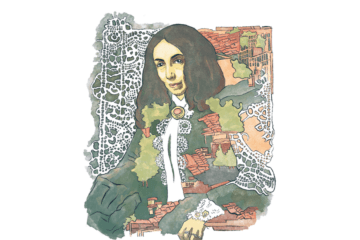 During her lifetime, Elizabeth Barrett Browning (1806-61) was widely regarded as Britain’s best female poet. Her groundbreaking work helped sway public opinion against slavery and child labor and changed the direction of English-language poetry for generations. Yet within 70 years of her death, Barrett Browning was no longer viewed as an international literary superstar but as an invalid with a small, couch-bound life. By the 1970s, critics described her as lacking the talent of her husband, Robert Browning, and hindering his writing. Fiona Sampson challenges those views in “Two-Way Mirror: The Life of Elizabeth Barrett Browning,” the first new biography of the poet in more than 30 years. Sampson, whose works include the critically acclaimed biography “In Search of Mary Shelley,” reframes Barrett Browning’s reputation by highlighting her development as a writer despite the many restrictions she faced in Victorian society.
 How should we think of human rationality? The cognitive wherewithal to understand the world and bend it to our advantage is not a trophy of Western civilization; it’s the patrimony of our species. The San of the Kalahari Desert in southern Africa are one of the world’s oldest peoples, and their foraging lifestyle, maintained until recently, offers a glimpse of the ways in which humans spent most of their existence. Hunter-gatherers don’t just chuck spears at passing animals or help themselves to fruit and nuts growing around them. The tracking scientist Louis Liebenberg, who has worked with the San for decades, has described how they owe their survival to a scientific mindset. They reason their way from fragmentary data to remote conclusions with an intuitive grasp of logic, critical thinking, statistical reasoning, correlation and causation, and game theory.
 Servaas Storm over at INET:
 Becca Rothfield in Boston Review:
 Adam Tooze at his podcast Ones and Tooze over at Foreign Policy:
 Marco D’Eramo in NLR’s Sidecar (Photo by
 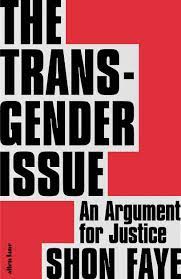 The
The 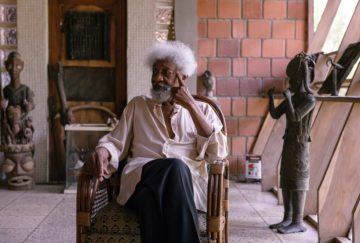 Wole Soyinka the firebrand activist is always getting Wole Soyinka the writer into trouble.
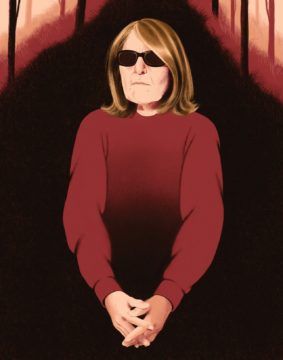 You don’t encounter the fiction of Joy Williams without experiencing a measure of bewilderment. Williams, one of the country’s best living writers of the short story, draws praise from titans such as George Saunders, Don DeLillo, and Lauren Groff, and many of her readers, having imprinted on her wayward phrasing and screwball characters, will follow her anywhere. But the route can be disorienting, like climbing an uneven staircase in a dream. Her tales offer a dark, provisional illumination, and they make the kind of sense that disperses upon waking. For years, Williams has worn sunglasses at all hours, as if to blacken her vision. The central subject of art, she has written, is “nothingness.”