
Scott Alexander in Astral Codex Ten:

Imagine a postapocalyptic world. Beside the ruined buildings of our own civilization – St. Peter’s Basilica, the Taj Mahal, those really great Art Deco skyscrapers – dwell savages in mud huts. The savages see the buildings every day, but they never compose legends about how they were built by the gods in a lost golden age. No, they say they themselves could totally build things just as good or better. They just choose to build mud huts instead, because they’re more stylish.
This is the setup for my all-time favorite conspiracy theory, Tartaria. Its true believers say we are those savages. We live in the shadow of the Taj Mahal, Art Deco skyscrapers, etc. But our buildings look like this: [See photo.]
So (continues the conspiracy) probably we suffered some kind of apocalypse a hundred-ish years ago. Our elites are keeping it quiet, and have altered the records, but they haven’t been able to destroy all the buildings of the lost world. Their cover story is that technology and wealth level haven’t regressed or anything, those kinds of buildings have just “gone out of style”.
More here.
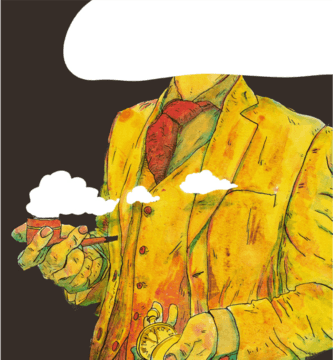 If you want to predict the future accurately, you should be an incrementalist and accept that human nature doesn’t change along most axes. Meaning that the future will look a lot like the past. If Cicero were transported from ancient Rome to our time he would easily understand most things about our society. There’d be a short-term amazement at various new technologies and societal changes, but soon Cicero would settle in and be throwing out Trump/Sulla comparisons (or contradicting them), since many of the debates we face, like what to do about growing wealth inequality, or how to keep a democracy functional, are the same as in Roman times.
 Barack Obama was awarded the Nobel Peace Prize during his first year in the White House, but he also became the first U.S. president to be at war during the entirety of his two terms in office. The irony of this contrast has often been noted. To historian and legal scholar Samuel Moyn, it represents more than a case of poor judgment by the Nobel committee—or, as others might see it, an example of how the toxic politics surrounding terrorism can blunt the best of intentions.
 I’M NOT ONE FOR FLATTERY and hyperbole, especially when reacting to exhibitions. There is already enough sycophancy to go around on social media—even in the feeds of those who should know better. I am therefore going against every fiber of my being when I say that the Cézanne drawing show at New York’s Museum of Modern Art is unequivocally a once-in-a-generation not-to-be-missed event.
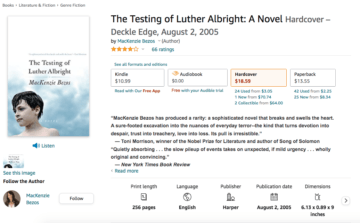 The Testing of Luther Albright (2005) and Traps (2013) are perfectly good novels if one has a taste for it. The second thing that needs to be noted about them is that, after her divorce from Jeff Bezos, founder and controlling shareholder of Amazon, their author is the richest woman in the world, or close enough, worth in excess (as I write these words) of $60 billion, mostly from her holdings of Amazon stock. She is no doubt the wealthiest published novelist of all time by a factor of … whatever, a high number. Compared to her, J. K. Rowling is still poor.
  ELIZABETH HOLMES SAYS
  In
In  On December 15, 1929, Dr. Philip M. Lovell, the imperiously eccentric health columnist for the Los Angeles Times, invited readers to tour his ultramodern new home, at 4616 Dundee Drive, in the hills of Los Feliz. On a page crowded with ads promoting quack cures for “chronic constipation” and “sagging flabby chins,” Lovell announced three days of open houses, adding that “Mr. Richard T. Neutra, architect who designed and supervised the construction . . . will conduct the audience from room to room.” Neutra’s middle initial was actually J., but this recent Austrian immigrant, thirty-seven years old and underemployed, had little reason to complain: he was being launched as a pioneer of American modernist architecture. Thousands of people took the tour; striking photographs were published. Three years later, Philip Johnson and Henry-Russell Hitchcock, the codifiers of the International Style,
  THE ARC THAT SAID HIMSELF
 We will be switching over to new servers today, Thursday, September 23, and this means we may not be able to post new items for a day or possibly longer. Thanks for your patience, and we’ll make the interruption as short as possible.
 He died the day after Christmas. His loved ones washed and anointed his body and kept vigil at his bedside. “He looked like a king,” Jenifer told me. “He was really, really beautiful.” She showed me a few photos. His body had been laid atop a hemp shroud and covered from the neck down in a layer of dried herbs and flower petals. Bouquets of lavender and tree fronds wreathed his head, and a ladybug pendant on a beaded string lay across his brow like a diadem. Only his bearded face was exposed, wearing the peaceful, inscrutable expression of the dead. He did look like a king, or like a woodland deity out of Celtic mythology—his gauze-wrapped neck the only evidence of his life as a mortal.
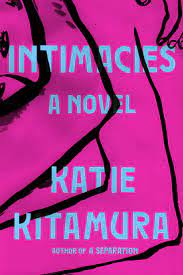 The one thing you can say for sure about Katie Kitamura’s wonderfully sly new novel – the follow-up to her 2017 breakthrough A Separation, and one of Barack Obama’s summer reading picks – is that it offers a portrait of limbo. The unnamed narrator, a Japanese woman raised in Europe, has accepted a one-year contract as an interpreter at the International Criminal Court – identified only as “the Court” – in The Hague. The book’s title – which, like that of its predecessor, rejects the firmness of the definite article – refers to the relationship one might ideally have with language, spaces, customs, other people, one’s own emotions, the past. It’s unclear, at least at first, to what degree the character’s own failure to achieve this state herself is a product of temperament or circumstances – whether she is simply adjusting, or whether this is how she always presents, and negotiates, the world.
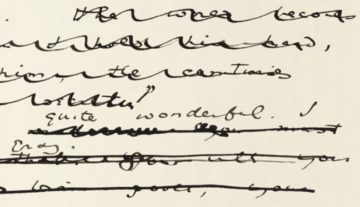 The historian Joe Moran begins his 2018 style guide, First You Write a Sentence, by outlining a comic routine unfortunately familiar to many of us:
 Back in 2000, when
 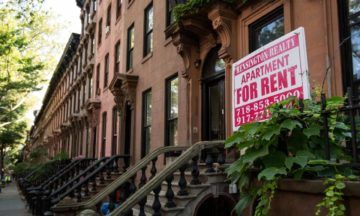 I travelled to New York City in August for the first time since the pandemic began, to visit friends who had just bought their first home. They are firmly upper-middle class and in their 40s. They took out a mortgage for $1.5m (£1.1m) to buy a place in a Brooklyn neighbourhood that was regarded until recently as an area immune to gentrification. So far, so typical. Asset ownership comes late these days.