
Category: Recommended Reading
Wednesday Poem
First Milk
After all that birth, the legs you’ve used your whole life
are now wobbly & the lake where your son used to swim
trickles from between them. The spaces between your fingers
feel sticky. The first thing the baby does is search for the warmth
of you, his face a small suction cup for the mounds you’ve been
building. Those first golden drops, thick as honey, spill from you
& the nurse rushes to catch them with a plastic spoon. God forbid
they soak your hospital gown or run down your rib cage. Once, you were
a girl with two breasts like the smallest constellation, an incomplete ellipsis.
Today, they find new purpose. Today they are nourishment & comfort,
food, water, some kind of magic. They work so hard after years
of thinking themselves merely decorative.
by Danni Quintos
from Poetry magazine, September, 2021
A meander around many circulatory systems
Henry Nicholls in Nature:
 Rich in meaning and metaphor, the word ‘heart’ conjures up many images: a pump, courage, kindness, love, a suit in a deck of cards, a shape or the most important part of an object or matter. These days, it also brings to mind the global increase in heart attacks and cardiovascular damage that attends COVID-19. As a subject for a book, the heart is an organ with a lot going for it.
Enter zoologist Bill Schutt. His book Pump refuses to tie the heart off from the circulatory system, and instead uses it to explore how multicellular organisms have found various ways to solve the same fundamental challenge: satisfying the metabolic needs of cells that are beyond the reach of simple diffusion. He writes of the co-evolution of the circulatory and respiratory systems: “They cooperate, they depend on each other, and they are basically useless by themselves.” At his best, Schutt guides us on a journey from the origin of the first contractile cells more than 500 million years ago to the emergence of vertebrates, not long afterwards. He takes in, for example, horseshoe crabs, their blood coloured blue by the presence of the copper-based oxygen-transport protein haemocyanin (equivalent to humans’ iron-based haemoglobin).
We learn that insects, lacking a true heart, have a muscular dorsal vessel that bathes their tissues in blood-like haemolymph. Earthworms, too, are heartless but with a more complex arrangement of five pairs of contractile vessels. Squid and other cephalopods have three distinct hearts. The are plenty of zoological nuggets to enjoy along the way. The tubular heart of a sea squirt, for instance, contains pacemaker-like cells that enable it to pump in one direction and then the other. Some creatures need masses of oxygen, others little, leading to more diversity. The plethodontids (a group of salamanders) have neither lungs nor gills, he explains: their relatively small oxygen requirements are met by diffusion through the skin.
More here.
Making Eye Contact Signals a New Turn in a Conversation
Lydia Denworth in Scientific American:
 What is found in a good conversation? It is certainly correct to say words—the more engagingly put, the better. But conversation also includes “eyes, smiles, the silences between the words,” as the Swedish author Annika Thor wrote. It is when those elements hum along together that we feel most deeply engaged with, and most connected to, our conversational partner, as if we are in sync with them. Like good conversationalists, neuroscientists at Dartmouth College have taken that idea and carried it to new places. As part of a series of studies on how two minds meet in real life, they reported surprising findings on the interplay of eye contact and the synchronization of neural activity between two people during conversation. In a paper published on September 14 in Proceedings of the Natural Academy of Sciences USA, the researchers suggest that being in tune with a conversational partner is good but that going in and out of alignment with them might be better.
Making eye contact has long been conceived as acting like a cohesive glue, connecting an individual to the person with whom they are talking. Its absence can signal social dysfunction. Similarly, the growing study of neural synchrony has focused on the positive aspects of alignment in brain activity between individuals.
In the new study, by using pupil dilation as a measure of synchrony during unstructured conversation, psychologist Thalia Wheatley and graduate student Sophie Wohltjen found that the moment of making eye contact marks a peak in shared attention—and not the beginning of a sustained period of locked gazes. Synchrony, in fact, drops sharply after looking into the eyes of your interlocutor and only begins to recover when you and that person look away from each other. “Eye contact is not eliciting synchrony; it’s disrupting it,” says Wheatley, senior author of the paper.
More here.
Tuesday, September 21, 2021
This Isn’t the Essay’s Title
Ed Simon at The Millions:
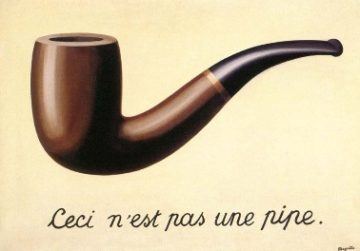 On a December morning in 1947 when three fellows at Princeton’s Institute for Advanced Study set out for the Third Circuit Court in Trenton, it was decided that the job of making sure that the brilliant but naively innocent logician Kurt Gödel didn’t say something intemperate at his citizenship hearing would fall to Albert Einstein. Economist Oscar Morgenstern would drive, Einstein rode shotgun, and a nervous Gödel sat in the back. With squibs of low winter light, both wave and particle, dappled across the rattling windows of Morgenstern’s car, Einstein turned back and asked, “Now, Gödel, are you really well prepared for this examination?” There had been no doubt that the philosopher had adequately studied, but as to whether it was proper to be fully honest was another issue. Less than two centuries before, and the signatories of the U.S. Constitution had supposedly crafted a document defined by separation of powers and coequal government, checks and balances, action and reaction. “The science of politics,” wrote Alexander Hamilton in “Federalist Paper No. 9,” “has received great improvement,” though as Gödel discovered, clearly not perfection. With a completism that only a Teutonic logician was capable of, Gödel had carefully read the foundational documents of American political theory, he’d poured over the Federalist Papers and the Constitution, and he’d made an alarming discovery.
It’s believed that while studying Article V, the portion that details the process of amendment, Gödel realized that there was no safeguard against that article itself being amended.
More here.
How testosterone affects society
Alvin Powell in The Harvard Gazette:
 Testosterone’s wide-reaching effects occur not just in the human body, but across society, powering acts of aggression, violence, and the large disparity in their commission between men and women, according to Harvard human evolutionary biologist Carole Hooven.
Hooven, lecturer and co-director of undergraduate studies in Human Evolutionary Biology, waded directly into the nature versus nurture debate Thursday evening, laying out her case for the hormone’s function as a foundation for aspects of male behavior. She traced the role of testosterone in the natural world, pointing out its role in differentiating males from females across the animal kingdom. Its far higher levels in males — 10 to 20 times that in females — act as a switch that turns on genes, creating stronger, more heavily muscled individuals, along with more aggressive behavior.
From an evolutionary standpoint, the reason for these differences is the biological imperative to mate, said Hooven, whose recent book, “T: The Story of Testosterone, the Hormone that Dominates and Divides Us,” was published in July.
More here.
Author Sergio Ramírez on ex-comrade Daniel Ortega and Nicaraguan history repeating
Sam Jones in The Guardian:
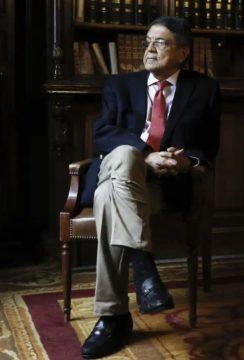 Sergio Ramírez, Nicaragua’s best-known living writer, hero of the Sandinista revolution, and former vice-president of the volcanic Central American nation, has lived through both tougher times and duller publicity tours.
Even so, the past few days have been – as he puts it, with a degree of understatement – “an odd experience”.
Ramírez always knew his latest novel, Tongolele no sabía bailar (Tongolele Didn’t Know How to Dance), would cause a stir in his homeland. But he confesses to feeling “surprised, bewildered and assaulted” when the regime of his erstwhile comrade, President Daniel Ortega, issued a warrant for his arrest last week, accusing him, among other things, of conspiracy, money laundering, inciting violence and hatred, and undermining national integrity.
To banish any lingering doubts about the government’s extraordinary antipathy towards the 79-year-old author and his works, Nicaraguan customs officers also impounded all copies of the new book on arrival.
More here.
High School Students from India, Pakistan, UK, & Brazil Debate Religion in 1959
Gilgamesh Dream Tablet to be formally handed back to Iraq
Alison Flood in The Guardian:
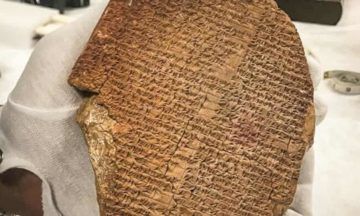 A 3,600-year-old tablet showing part of the Epic of Gilgamesh will be formally handed back to Iraq by the US on Thursday.
The tablet, known as the Gilgamesh Dream Tablet, shows parts of a Sumerian poem from the Epic of Gilgamesh, one of the world’s oldest known religious texts. It is believed to have been looted from a museum in Iraq in 1991, and “fraudulently” entered the US in 2007, according to Unesco, the United Nations’ cultural body. It was acquired by Christian arts and crafts retailer Hobby Lobby for display in its museum of biblical artefacts in 2014, and seized by the US Department of Justice in 2019.
The formal handover ceremony will take place at the Smithsonian Institution in Washington DC on 23 September. “This exceptional restitution is a major victory over those who mutilate heritage and then traffic it to finance violence and terrorism,” said Unesco director-general Audrey Azoulay, who will speak at the Washington ceremony. “By returning these illegally acquired objects, the authorities here in the United States and in Iraq are allowing the Iraqi people to reconnect with a page in their history.”
More here.
Taking the ‘Shame Part’ Out of Female Anatomy
Rachel Draper in The New York Times:
 Allison Draper loved anatomy class. As a first-year medical student at the University of Miami, she found the language clear, precise, functional. She could look up the Latin term for almost any body part and get an idea of where it was and what it did. The flexor carpi ulnaris, for instance, is a muscle in the forearm that bends the wrist — exactly as its name suggests. Then one day she looked up the pudendal nerve, which provides sensation to the vagina and vulva, or outer female genitalia. The term derived from the Latin verb pudere: to be ashamed. The shame nerve, Ms. Draper noted: “I was like, What? Excuse me?”
It grew worse. When her teacher handed her a copy of the “Terminologia Anatomica,” the international dictionary of anatomical terms, she learned that the Latin term for the vulva — including the inner and outer labia, the clitoris and the pubic mound — was pudendum. Translation: the part to be ashamed of. There was no equivalent word for male genitals.
That’s when she really got fired up.
Anatomy as a science had its start in 16th-century Italy, as the purview of learned men. At the time it was a stretch to find a female corpse, let alone a female anatomist. Little wonder, then, that some words might sound a little off to modern ears. What surprised Ms. Draper was that this one had made it through 500 years of revisions and updates — and virtually no one knew what it meant.
More here.
Tuesday Poem
One more … story he said … In a restaurant … in Amsterdam
a young woman came in
speaking Arabic I said you are Iraqi
she said I haven’t eaten for three days
I said what do you mean she said
I need to turn turn myself in
this was a strange language to me
a different logic Come and sit I said
food brought out she ate finally
spoke her husband now in Istanbul
they’d escaped Iraq he was taxi driver
sold his car paid $5,000 to Turkish driver
to send her Istanbul to Amsterdam
a big truck crates of fruit and vegetables
had a tiny space in the middle kept her
there gave her food and water supposed to last
seven days lasted four strange language
mouth of the truck she was stuck
in one position for seven days could not
move crates of figs pallets cracked
blocked lodged then they just dropped her
in the middle of Amsterdam right then she was
hoping waiting turn myself in my husband not
far behind strange language to me I did not
understand turn myself in in the middle
of Amsterdam do you speak speak
by Phillip Metres
from To See the Earth (Imagination).
Cleveland State University Poetry Center, 2008
On The Art of Ouattara Watts
Kaelen Wilson-Goldie at Artforum:
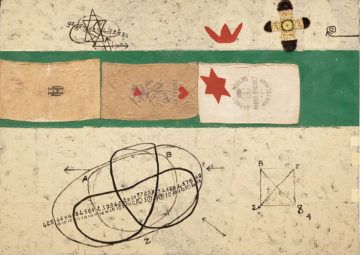 MYTHOLOGIES RARELY SERVE the artists who inspire them. Ouattara Watts has now entered his fifth decade of painting. His oeuvre consists of the large-to-monumental canvases he has been making prodigiously for forty-five years, alongside lesser-known watercolors, gouaches, drawings, and collages. Over time, he has developed an expansive and wildly complex visual language. It is also unabashedly joyful, even beautiful, insisting on a universal purpose for painting. More than a body, his is a forest of works, too vast, dense, and important to be detoured by an origin story. And yet the origin story persists, making a circuitous route around but rarely through the work and confounded, perhaps, by some minor confusion over the artist’s name: He was born Bakari Ouattara (in the Ivorian capital Abidjan), nicknamed Ouatts (in his youth) and later Ouatt (in Paris), became known as Ouattara Watts (in New York), and is referred to (almost everywhere) as simply Ouattara.
Inventive and searching, formally dexterous and deeply spiritual, his paintings deserve to be better known.
more here.
Harvest Moon
Nina MacLaughlin at The Paris Review:

In dreams, they anticipated the moon. They anticipated flinging themselves away from the earth up to the glowing pearl in night space. They’d been dreaming this for a long time, who knows how long. The moon, earth’s shadowy white sister, is the ultimate dream object. Even if not dreamed of directly, the moon is dreamtime’s overseer, companion; it’s the quiet warden of the night mind. Lyndon B. Johnson watched the Russian satellite move across the sky and knew: “Second in space is second in everything.” In 1961, John F. Kennedy said, “I believe that this nation should commit itself to achieving the goal, before this decade is out, of landing a man on the moon and returning him safely to the earth.” And thus, we who are earthbound began “to act as though we were dwellers of the universe,” Arendt writes. Perhaps we always have been, but now we have the tools to see.
more here.
Abuse At The Royal Ballet
Luke Jennings at the LRB:
 When the Royal Ballet returned to Covent Garden earlier this year after fourteen months of cancelled shows and empty auditoriums, its public announcements were upbeat. The new season (which has just opened) would include world premieres by Wayne McGregor, Christopher Wheeldon and Kyle Abraham, alongside classic ballets by Kenneth MacMillan and Frederick Ashton. In May and June, ahead of the full reopening, the company streamed an online programme featuring choreographers closely associated with the Royal Ballet. One name was conspicuous by its absence: Liam Scarlett, the former Royal Ballet artist-in-residence. In March 2020, following accusations of inappropriate behaviour over the previous decade, the company had severed ties with him. Other companies followed suit. In April this year it was announced that Scarlett, who was 35, had died. An inquest opened in May and revealed that he had been ‘admitted to Ipswich Hospital on 12 April due to a cardiac arrest following an attempted hanging’. The inquest will conclude in November.
more here.
Sunday, September 19, 2021
The Perpetual Hygiene Regime and the STEMification of the Intellectuals
Justin E. H. Smith in his Substack Newsletter:
 Recently I was sent an article about “Glocalqueering in Singapore”, which had something to do with the ways in which queer communities in that strict city-state move in creative ways between the local and the global. The article struck me as ridiculous, and suitable for the mocking spirit in which it was sent to me. Yet when I think about the actual subject, I have to admit I find it interesting, and I want to know more. I find everything interesting, pretty much, including the queer communities of Singapore, and yet I find articles of this sort exasperating.
Why is that so? It seems to me that it is not the subject in question, but rather the rendering of the author’s observations of an entire form of life in the pseudoscientific terms of an “abstract” accompanied by “keywords”, reducing that form of life to data, that somehow makes the whole venture seem fraudulent to me.
More here.
A new mathematical theory unlocks the mysteries of slumber
Van Savage and Geoffrey West in Aeon:
 Humans have long wondered why we sleep. A well-rested prehistoric mind probably pondered the question, long before Galileo thought to predict the period of the pendulum or to understand how fast objects fall. Why must we put ourselves into this potentially endangering state, one that consumes about a third of our adult lives and even more of our childhood? And we don’t do it grudgingly – why do we, along with dogs, lions and virtually every other animal, apparently enjoy it? Unlike measuring the period of the pendulum, scientists would have to wait much longer to obtain reliable answers, since it’s not so easy to sleep while strangers watch. Doing so involves building sleep disorder clinics for humans and elaborate structures such as platypusariums to observe the REM (rapid eye movement) repose of platypuses.
Over the past few decades, huge amounts of data about the duration of sleep states have been gathered across species, as well as from birth to adulthood in humans. These findings have also been tallied with potential correlates such as melatonin, brain size, metabolic rate, lifespan, and sleep-promoting genes and neurons. Even so, until very recently we’ve lacked a quantitative theory that can predict, for example, why mice sleep roughly 10 times more per day than whales; why baby humans sleep roughly twice as long as adults; why REM and total sleep times change much faster as a baby grows in size than they do with similar size differences across species; and why temperature affects sleep times in cold-blooded animals such as fruit flies.
More here.
Omar Little and moral complexity
Kenan Malik in Pandaemonium:
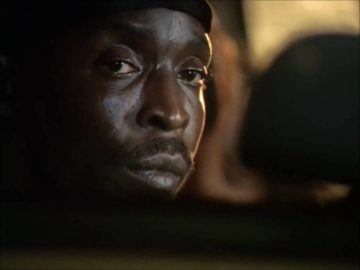 It’s not often that a shotgun-wielding thief and killer comes to be seen as possessing a moral core. But then it’s not often that you have a character like Omar Little. Or an actor like Michael K Williams to bring him to life. Or a TV series like The Wire that allowed both character and actor to breathe.
The death last week of Williams, possibly of a drugs overdose, has robbed us of one of the most subtle, supple actors of our time. He was outstanding in a number of roles, from Boardwalk Empire to Bessie, from The Night Of to The Road. But it was his portrayal of Omar Little that truly lives in the memory.
The Wire was one of those TV shows that broke the rules of what TV should be, in terms of tone, narrative and pacing, “a television show that thinks it’s a novel”, as the New York Times suggested. But it was much more than that. There are few works in any medium that have more successfully burrowed beneath the skin of our age, exposing that spot where race, class, power and despair coalesce to entrap the human spirit and curdle the American Dream.
More here.
Why We Must Monitor the Sale of Surveillance Tech
Jack Poulson in The American Prospect:
 When I left Stanford to join Google as an AI research scientist, I “went across the street,” as the saying went. I had been a young assistant professor, first at Georgia Tech and then at Stanford, doing research that was partially funded by the Defense Advanced Research Projects Agency (DARPA). At one point, I brought up the ethical issues of researching surveillance technology with the DARPA program manager, but frankly, raising ethical concerns in such a competitive environment felt a bit like labeling myself a troublemaker.
I was ready to move away from defense work, get recognized for software development, and—yes—make enough money to move out of my small, spider-infested apartment on Alma that shook every time the Caltrain went by.
Since then, I’ve learned that digging deeply into public records—combined with a modicum of data science—can lead to greater accountability and transparency.
In 2018, news broke that Google was secretly helping the Pentagon build artificial intelligence to ramp up its drone surveillance program through “Project Maven.” My instinct was that it would be hypocritical for me to complain, given that DARPA had partly funded my previous job.
More here.
100 years of the culture war
Frank Furedi in Spiked:
 For almost two decades, I have been attempting to understand the origins and drivers of the culture war that has now engulfed the West. Many paint it as a continuation of the age-old conflict between left and right. But that is misleading. If anything, today’s cultural conflicts, be they arguments over statues or gender identity, coincide with the erosion of traditional ideological differences. Indeed, we have capitalists today who no longer defend capitalism, and an identity politics-obsessed left that is thoroughly hostile towards the working class – especially those who have white skin. The categories of left and right simply do not mean what they used to. And they certainly do not help us make sense of the culture war.
One reason why the culture war is so difficult to understand is that its main protagonists rarely lay out their cause systematically. There is no explicit philosophy or ideology of culture war. Indeed, as I argue in my new book, 100 Years of Identity Crisis: Culture War Over Socialisation, the culture war is driven by an ideology without a name. That is what I set out to explore – the historical origins and main objectives of this nameless ideology.
As I soon discovered, this ideology originated in the late 19th century in the most unlikely of places – namely, the nursery. The first clash in the culture war took place over the question of how children should be raised and educated. And it was this conflict over the socialisation of young people over 100 years ago that unleashed the forces that have led to today’s battles over identity and cultural values.
More here.
How Colm Tóibín Burrowed Inside Thomas Mann’s Head
D. T. Max in The New Yorker:
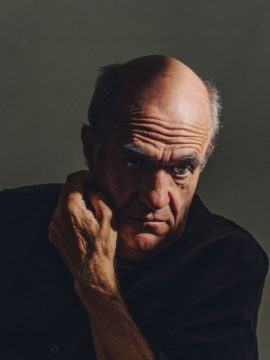 The Irish writer Colm Tóibín is a busy man. Since he published his first novel, “The South,” at thirty-five, in 1990, he has written eleven more books of fiction. He has also published three reported books, three collections of essays, dozens of introductions to other writers’ work, prefaces to art catalogues, an opera libretto, plays, poems, and so many reviews that it’s surprising when a week goes by and he hasn’t been in at least one of the New York, London, or Dublin papers. When I asked Tóibín—the name is pronounced “cuh-lem toe-bean”—how many articles he had written, he could only guess. “I suppose thousands might be accurate,” he said, adding that his level of output used to be more common among writers: “Anthony Burgess, whom I knew slightly, used to write a thousand words a day. He produced a great amount of literary journalism, as well as the novels.” But, unlike Burgess, Tóibín gravitates to assignments demanding considerable diligence. Reviewing a recent biography of Fernando Pessoa, by Richard Zenith, Tóibín read the eleven-hundred-page text and three translations of Pessoa’s “The Book of Disquiet.” Tóibín sometimes assimilates his subject to the point that the writer in question begins to sound like one of his own characters. His Pessoa essay, published in August in the London Review of Books, begins, “As he grew older, Fernando Pessoa became less visible, as though he were inexorably being subsumed by dreams and shadows.”
More here.