
Farrell Evans in History:
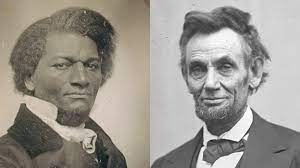 In the middle of the 19th century, as the United States was ensnared in a bloody Civil War, President Abraham Lincoln and abolitionist Frederick Douglass stood as the two most influential figures in the national debate over slavery and the future of African Americans. They met together three times in the White House, and while Douglass was at first harshly critical, he ultimately came to view Lincoln as “emphatically the Black man’s president: the first to show any respect for their rights as men.”
The first time they met, in August 1863, Douglass was perhaps the most famous Black man in the world. Since escaping from slavery to the North in 1838, he had written two bestselling autobiographies that recounted his journey from a Maryland plantation to lecture halls all over the world as a leading anti-slavery crusader, journal publisher and champion for African American rights. With the Civil War in full stride, Douglass was advocating for the equal treatment of Black Union soldiers. In March, he had issued his famous “MEN OF COLOR to ARMS! broadside calling for Black men to enlist in the Union army. Two of his sons had joined the 54th Massachusetts Black regiment.
More here. (Note: At least one post throughout the month of February will be devoted to Black History Month. The theme for 2022 is Black Health and Wellness)
 Patrick Blanchfield in Late-Lite:
 Mona Ali in Phenomenal World:
 Peter E. Gordon in The New Statesman:
 Chances are, if you haven’t been living under a pandemic-shaped rock of ascetic withdrawal from the real world, you will have heard of S Hareesh. His debut novel, Meesha, translated from the Malayalam into English as Moustache, won the JCB Prize for Literature in 2020. India’s 2020 official entry to the Academy Awards, Jallikattu, was based on one of Hareesh’s short stories from the collection
  The case of Elizabeth Hardwick is vexing in these ways and more. She was one of the supreme women of letters in postwar America. The scope of her achievement, much of it accomplished in occasional writings undertaken across six decades, has only begun to come into view with the appearance in 2017 of her Collected Essays. (A volume of Uncollected Essays is to follow this spring.) She chronicled the transformations of American life and culture across seven decades, traced the progress of American literature from its beginnings here and in Europe, connected those roots and parallel strands to the present in essays of idiosyncratic synthesis, and realized those ideas in her own fictions. She was a singular stylist and an essential writer of her time.
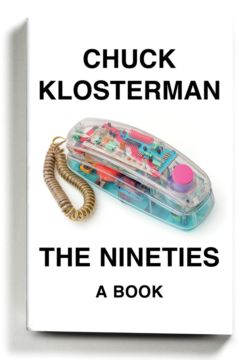 The era has lately been a source of curiosity, its aesthetic mined by
 The BLM movement was founded on the 13th July 2013, by Alicia Garza; Patrisse Cullors and Opal Tometi. The movement was made to promote anti-racism and advocacy, it is often interpreted in the incorrect way by people who do not recognise how Black people are often victims of demonisation as well as criminalisation. This often results in people making ignorant comments that make it clear that the purpose of the movement was taken out of context: ‘ ALL LIVES MATTER ‘ they incessantly yell; ‘ Why is it always about race? Can’t you just get over it??’ they say way too passive-aggressively not knowing the true meaning of what we’re fighting for. We are fighting for the lives that were taken for reasons that only remain superficial, we are fighting for the next generation of people who go looked just like George Floyd, Breonna Taylor, Atatiana Jefferson, Stephon Clark, Michelle Cusseaux and the others that have died. They were killed for reasons that will only remain skin deep, and this time, it will not be in vain or go unnoticed.
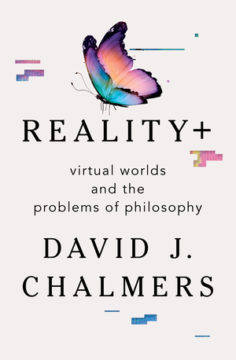 But, of course, there is no reason for believing any of this; and it seems far more likely that the process of replacing one’s neurons with computer chips would be little more than a very slow process of suicide, producing not the same behaviors as would a living mind, but only progressive derangement and stupefaction, culminating in an inert mass of diffusely galvanized circuitry. After all, any sober phenomenology of the full range of mental acts discloses a host of necessarily unified features that are almost by definition irreducible to a mere integration of diverse mechanical parts and discrete functions, and that no process of computation could reproduce: subjectivity as an indissoluble privacy; the unified and simultaneous field of apprehension belonging to that subjectivity; qualitative consciousness; intentionality and its intrinsic teleology; the indeterminate openness of the mind to novelty and even to fundamental revisions of its conceptual paradigms, which no computational algorithm could simulate; the immediate physical sense of self; the psychological sense of identity; judgments of value, such as “good” or “true” or “beautiful”; the prior and constant disposition of the mind toward these values, which seems to be the necessary motive of all movements of intellect and will toward the world; creative violations of rules that nevertheless make “sense” to us; and so on.
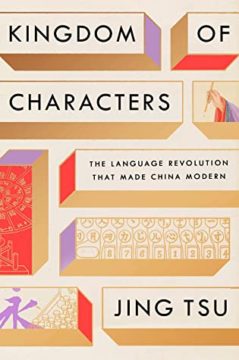 Despite its long and extensive literary heritage, and despite being the home of some of the earliest printed books, Qing-dynasty China found itself at a profound disadvantage in the new global information order that evolved in the 19th century as part of the intertwined processes of colonial expansion and globalisation. Foreign powers subordinated China through the deployment of advanced maritime technologies and weaponry. The Qing empire found itself hampered in its efforts to respond by the nature of its written language. Knowledge is power, goes the saying, but not if knowledge cannot be organised, retrieved, transmitted and reproduced.
 One morning in January, 2020, a group of curators and officials from the Museum of Food and Drink headed out to the industrial edge of Queens to assess the status of their most high-profile acquisition to date: the Ebony Test Kitchen. The kitchen, originally situated on the tenth floor of the Johnson Publishing Company Building, in downtown Chicago, tested recipes for Ebony magazine’s famed “Date with a Dish” cooking column, which became a touchstone of African American cuisine. “This kitchen, it’s like—I don’t even know if calling it the Black Julia Child’s kitchen does it justice, but it is that important,”
  In the late eighteenth century, while in hiding from his fellow French revolutionaries, the philosopher and mathematician Nicolas de Condorcet posed a question that continues to occupy scientists to this day. “No doubt man will not become immortal,” he wrote in Sketch for a Historical Picture of the Progress of the Human Mind, “but cannot the span constantly increase between the moment he begins to live and the time when naturally, without illness or accident, he finds life a burden?”
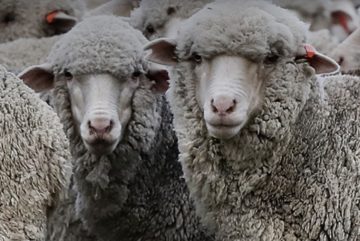 If you care about animals, you should eat them. It is not just that you may do so, but you should do so. In fact, you owe it to animals to eat them. It is your duty. Why? Because eating animals benefits them and has benefitted them for a long time. Breeding and eating animals is a very long-standing cultural institution that is a mutually beneficial relationship between human beings and animals. We bring animals into existence, care for them, rear them, and then kill and eat them. From this, we get food and other animal products, and they get life. Both sides benefit. I should say that by ‘animals’ here, I mean nonhuman animals. It is true that we are also animals, but we are also more than that, in a way that makes a difference.
 Joanna Lumley, one of the judges the year it won, found the book ‘indefensible’. Decades later, Booker winner