
Elie Dolgin in Nature:
 Salwa Sebti was growing impatient. In 2014, she and her colleagues at the University of Texas Southwestern (UTSW) Medical Center in Dallas had begun tracking mice that had a genetically enhanced ability to detoxify their cells. The goal was to test the anti-ageing effects of boosting autophagy, the biological housekeeping process by which cells rid themselves of damaged components. But it was almost two years — a timespan roughly equivalent to 70 years in humans — before the mice showed any clear signs of health improvements.
It was worth the wait. The animals’ hearts and kidneys had less tissue scarring than usual; spontaneous cancers were kept at bay; and the mice lived approximately 10% longer. As the data finally poured in, Sebti recalls thinking to herself: “Oh wow, we have a strong phenotype.”
Other scientists had previously reported similar age-defying benefits of enhanced autophagy in worms and flies. But the UTSW study was breaking new ground. Spearheaded by Beth Levine — a pioneering autophagy researcher who died of cancer in 2020 — and co-led by two of her former postdocs, Sebti and Álvaro Fernández, it was the first definitive demonstration that boosting the autophagy machinery could promote longevity and well-being in a mammal1.
More here.
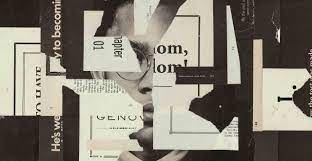 Of constant fascination for me are the ways in which literature employs skin color to reveal character or drive narrative—especially if the fictional main character is white (which is almost always the case). Whether it is the horror of one drop of the mystical “black” blood, or signs of innate white superiority, or of deranged and excessive sexual power, the framing and the meaning of color are often the deciding factors. For the horror that the “one-drop” rule excites, there is no better guide than William Faulkner. What else haunts “The Sound and the Fury” or “Absalom, Absalom!”? Between the marital outrages incest and miscegenation, the latter (an old but useful term for “the mixing of races”) is obviously the more abhorrent. In much American literature, when plot requires a family crisis, nothing is more disgusting than mutual sexual congress between the races. It is the mutual aspect of these encounters that is rendered shocking, illegal, and repulsive. Unlike the rape of slaves, human choice or, God forbid, love receives wholesale condemnation. And for Faulkner they lead to murder.
 IN MAY OF 2012
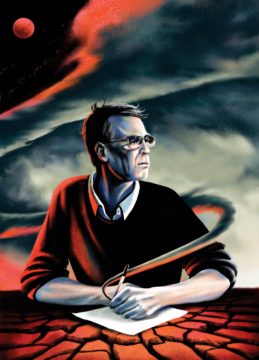 Many of Robinson’s twenty-one science-fiction novels are ecological in theme, and this coming summer he will publish “
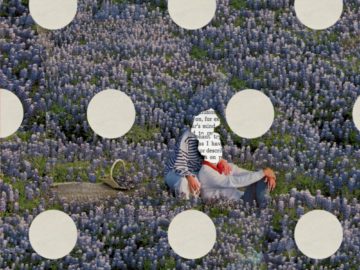 What the face mask is to American society, the essay is to American literature: deceptively slight, heroically versatile, centuries old but lately a subject of great interest — not because it’s doing anything new, but because everything else is falling apart.
 A great deal of public discussion in recent weeks has suggested that “endemicity”—a state where the virus continues to circulate in the population like scores of other respiratory viruses, with more predictability albeit probably still with seasonal surges—is around the corner. The Europe office of the World Health Organization (WHO), for example, recently stated that the continent may be entering the “
 During the first pandemic lockdowns, thousands of vivid dreams were suddenly shared across the internet and among friends. Though some of them had to do directly with COVID, many were simply intense and mysterious, in the way dreams often are. Yet for some reason, people felt newly impelled to convey them to others. The dreams were soon compiled into databases, written up in newspaper articles, and eventually integrated into scientific studies. This phenomenon may turn out to be a significant event in the history of the social imagination. For thousands of years, and in many cultures, talking about dreams has been considered hugely important. But in modernity, dreams have been regularly denigrated. In the mainstream, at least, they have been written off as superstitious, flighty, or boring. Then suddenly, in the pandemic, a great mass of people, mobilized across the internet, felt (at least for a few months) otherwise. There has probably never been such a sudden and expansive efflorescence of public dream sharing in modern history.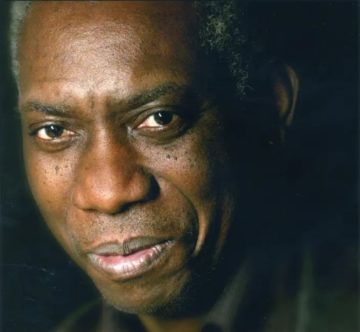
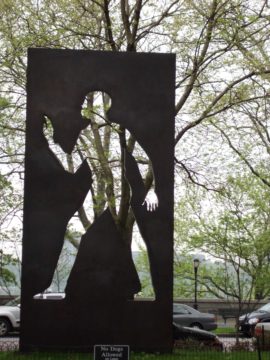 Shadow and Act contains Ralph Ellison’s real autobiography—in the form of essays and interviews—as distinguished from the symbolic version given in his splendid novel of 1952, Invisible Man Some of the twenty-odd items in it were written as early as 1942, and not all of them have been published before. One or two were rejected by liberal periodicals, apparently because Ellison insisted on saying that Negro American life was not everywhere as hellish or as inert or as devastated by hatred and self-hatred as it was sometimes alleged; it is not unlikely that liberal criticism will be equally impatient with this new book. Most of the pieces, were, however, written after Invisible Man and in part are a consequence of it. They may even help to explain the long gap of time between Ellison’s first novel and its much awaited successor. There have been other theories about this delay: for example, an obituary notice by Le Roi Jones who, in a recent summary of the supposedly lethal effect of America upon its Negro writers, referred to Ellison as “silenced and fidgeting away in some college.” But he has not been silent, much less silenced—by White America or anything else. The experiences of writing Invisible Man and of vaulting on his first try “over the parochial limits of most Negro fiction” (as Richard G. Stern says in an interview), and, as a result, of being written about as a literary and sociological phenomenon, combined with sheer compositional difficulties, seem to have driven Ellison to search out the truths of his own past. Inquiring into his experience, his literary and musical education, Ellison has come up with a number of clues to the fantastic fate of trying to be at the same time a writer, a Negro, an American, and a human being.
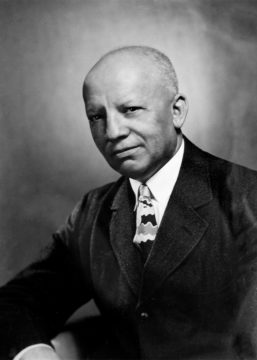 In his book “Fugitive Pedagogy: Carter G. Woodson and the Art of Black Teaching,” Jarvis R. Givens, assistant professor at the Harvard Graduate School of Education and the Suzanne Young Murray Assistant Professor at the Radcliffe Institute for Advanced Study, tells the little-known story of Woodson, a groundbreaking historian and the founder of Black History Month. The Gazette spoke with Givens about Woodson, who popularized Black history and joined efforts with a legion of African American teachers during the Jim Crow era to celebrate the contributions of Black people in the nation’s history. This interview was edited for clarity and length.
 If the great campaigners for free speech of the past, such as Baruch Spinoza or Mary Wollstonecraft or Frederick Douglass, were alive today, “they would surely declare the 21st century an unprecedented golden age”. So suggests Jacob Mchangama in his
  In a time
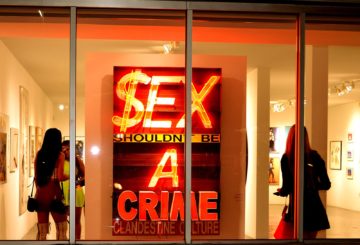 Do laws criminalizing prostitution violate the Constitution? Probably. Until recently, such a proposition would have been as absurd as
 “If a fat person behaves badly in an artistic context, then they are doubly misbehaving. Being fat is a transgression in itself. . . . An obese person’s simple existence constitutes misbehaving,” Susiraja once remarked in an interview. The impropriety she mentions runs rampant throughout her self-portraiture. Part of this is fueled by her talent for turning commonplace items—food, toys, women’s shoes, boring underwear—into uncanny and even oddly visceral props. Take Happy Meal, 2011, in which various lengths of apple peel delicately grace the top of the artist’s plump bare foot, calling to mind old scabs, skin ulcers; or Let’s Call, 2016, a picture of Susiraja hunched over, an orange rotary telephone shoved between her legs and trapped in the crotch of a hideous pair of pantyhose that have been pulled down around her knees. The phone makes me think of a miscarried infant—the long, coiled cord of the handset, which is draped over the artist’s neck, feels more than a little umbilical.
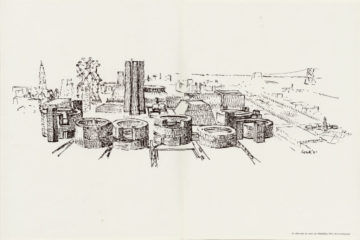 One day, as a small boy, I was copying the portrait of Napoleon. His left eye was giving me trouble. Already I had erased the drawing of it several times. My father leaned over and lovingly corrected my work. I threw the paper and pencil across the room, saying “now it is your drawing, not mine.” Two cannot make a single drawing. I am sure the most skillful imitation can be detected by the originator. The sheer delight in the act of drawing has its way in the drawing and that also is a quality that the imitator can’t imitate. The personal abstraction, the rapport between subject and the thought also are unimitatable.