
Bryan Lufkin in BBC:
 Finding a life partner is considered a major milestone – one that requires deliberation and careful assessment. We want someone whose long-term plans match our own: someone to whom we’re attracted, someone with whom we feel comfortable sharing our home, finances and, maybe, children. This person is our life partner, after all – naturally, we assume we’ll take care with the decision.
But it turns out we may be less selective about whom we spend our lives with than we think. Research shows hidden biases mean we’ll give people a chance, even if they don’t quite meet our criteria. And when we do pick a partner, we’re driven by a psychological tendency called “progression bias” to stay in the relationship, rather than end it.
In other words, we’re hard-wired to be in a romantic relationship, say psychologists, despite trends among young people to shun marriage in favour of a calculated approach to singlehood. Yet, even as the combination of evolutionary instincts and societal pressures steer us towards the coupled life, being aware of our progression bias could help us understand why we pick the partners we do – and why we stay with them.
 Alain Supiot in the New Left Review:
 An Interview with Olúfẹ́mi Táíwò in The Drift:
 In December, Chief Justice John Roberts released his year-end report on the federal judiciary. According to a
  I
I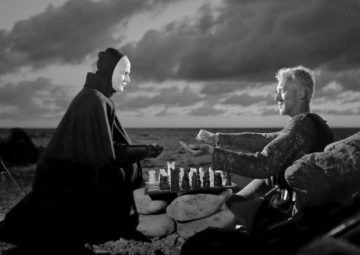 We’re in a room on the ground floor of a hotel, the bed facing a wall of curtained windows that in turn faces the street. It is nighttime. Rain is coming down, steadily, reflectively, a stream of passersby visible through the curtains, which are sheer. Everyone is moving in the same direction, bent slightly forward and holding an umbrella, from left to right, the good direction, from past to future, the opposite of where Death leads the knight and the squire and the monk and the smith and the mute in their final dance against the backdrop of time in Ingmar Bergman’s The Seventh Seal. The umbrella is the canopy of the heavens; the rain is never going to let up. We can see the passersby but they can’t see us, though Eric has turned a light on above his side of the bed.
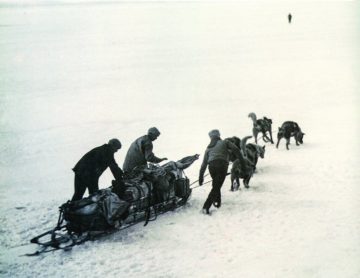 Here is a test. Scott, Shackleton, Mawson, Amundsen — who comes next? As surely as “10” follows the pattern 2, 4, 6, 8, by almost any measure “Fiennes” is the name that should come after the other four synonymous with Antarctic exploration. To give him his full moniker, Sir Ranulph Twisleton-Wykeham-Fiennes has probably man-hauled sledges farther, endured more blizzards and lost more fingertips to frostbite than the rest of them put together.
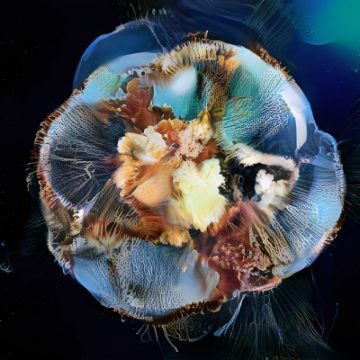 The creature appears to be, at first glance, a parrot, with bright feathers in yellow, red, green, and blue. But another look, and one sees that it’s shaped more like a duck, or perhaps two ducks melded into one. What looks like an eye might really be the wing of a butterfly. The more closely one looks at the image, the more the creature is unrecognizable; it dissolves into a strange jumble of component parts, which seem to add up to nothing, and then cohere once again into something both familiar and unknown.
 SHE CALLED HERSELF a minor writer. “I’m no Tolstoy,” said this woman whose parents named her after a character from War and Peace. One wishes Natalia Ginzburg hadn’t apologized for her gifts. Wishes that she had luxuriated in her standing as one of Italy’s finest postwar writers. The fact that her various novels, novellas, and essays are flying back into print—some freshly translated—thirty years after her passing is not unrelated to the extravagant success of the other Italian, the one whose books have become the stuff of prestige television. Ginzburg, alas, has no HBO series attached to her name, but surely her estate profits from the fumes of Ferrante fever. As publishers scramble to chart distinguished genealogies of Italian women writers, we are invited to “discover” Ginzburg’s work in essays like this one. As though it had not been hiding in plain sight for decades.
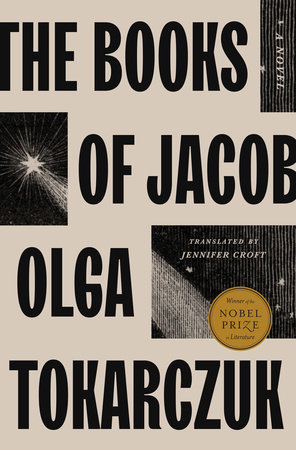 The Polish writer Olga Tokarczuk was, in 2019, a youthful
  Being a human is tricky. There are any number of unwritten rules and social cues that we have to learn as we go, but that we ultimately learn to take for granted. Camilla Pang, who was diagnosed with autism spectrum disorder at age eight, had a harder time than most, as she didn’t easily perceive the rules of etiquette and relationships that we need to deal with each other. But she ultimately figured them out, with the help of analogies and examples from different fields of science. We talk about these rules, and how science can help us think about them.
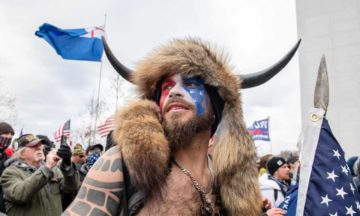 According to a number of
 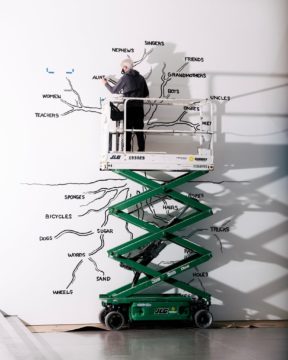 David Byrne is all about connectedness these days. “Everybody’s