
Sean Wilentz in Lapham’s Quarterly:
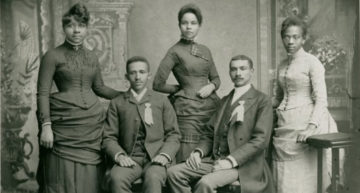 From the moment it appeared in April 1903, The Souls of Black Folk caused a sensation. Among black readers, James Weldon Johnson later claimed, it had the greatest impact of any book since Uncle Tom’s Cabin. William James, W.E.B. Du Bois’ undergraduate mentor at Harvard, dispatched a copy to his brother Henry, who privately praised it (a little backhandedly) as “the only ‘Southern’ book of any distinction published in many a year.” In Germany, Max Weber, whose lectures Du Bois attended while a student in Berlin, pronounced it a “splendid” effort and went to work finding a translator. Within two months, Du Bois’ American publishers had to arrange for a third printing, as the book became the subject of discussion in periodicals across the country, with the conspicuous exception of most white Southern newspapers and those controlled by the friends and supporters of Du Bois’ antagonist, Booker T. Washington. For a collection of mainly reworked, previously published essays on race relations and the Negro by a young black sociologist and historian at Atlanta University, it was an extraordinary success, unprecedented in the history of American letters.
The flashpoint of controversy was the book’s third essay, “Of Mr. Booker T. Washington and Others.” Du Bois had once been an admirer of Washington—he had praised him for his famous Atlanta Compromise speech urging racial accommodation in 1895—but he had moved in a more radical direction over the previous five years. Du Bois’ objections were political: he was scornful of Washington’s circumspection about racial equality. But they were also cultural. Like Washington, Du Bois was dismayed by the debased condition of the Negro masses, barely one generation out of slavery, but Washington’s view was tainted by a fundamental pessimism about the worth of black people’s cultural resources.
More here. (Note: At least one post throughout the month of February will be devoted to Black History Month. The theme for 2022 is Black Health and Wellness)
 The recent
  Modern particle physics is a victim of its own success. We have extremely good theories — so good that it’s hard to know exactly how to move beyond them, since they agree with all the experiments. Yet, there are strong indications from theoretical considerations and cosmological data that we need to do better. But the leading contenders, especially supersymmetry, haven’t yet shown up in our experiments, leading some to wonder whether anthropic selection is a better answer. Michael Dine gives us an expert’s survey of the current situation, with pointers to what might come next.
 “Can you see me?” In the age of video calls, this has become a common question. But when posed to philosopher David Chalmers, it takes on a deeper significance. Regarding the basic version of virtual reality (VR) in which we’re having our conversation, Chalmers suggests that “some very conservative philosophers would say no, I am merely seeing a pattern of pixels on a screen and I’m not seeing you behind it.” But Chalmers has a different view: “Yes, I’m seeing you perfectly,” he replies, covering both meanings with his answer. His seemingly simple claim has implications not just for the possibilities of virtual reality, but the nature of actual reality, too.
 Lee wanted to make Crouching Tiger, Hidden Dragon as a movie that was by China, for China, while the country was at this turning point. But though it was embraced around the world, it failed to meet that criterion of the holy grail production, since it was of little interest to audiences in China. There, moviegoers were watching True Lies because it was the kind of action-packed spectacular their own country’s filmmakers couldn’t produce. Crouching Tiger, Hidden Dragon, which had seemed so novel in America, was old hat to Chinese moviegoers reared on kung fu.
 S
S
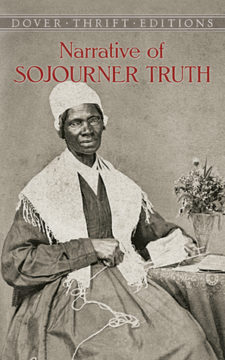 One of the most famous and admired African-American women in U.S. history, Sojourner Truth sang, preached, and debated at camp meetings across the country, led by her devotion to the antislavery movement and her ardent pursuit of women’s rights. Born into slavery in 1797, Truth fled from bondage some 30 years later to become a powerful figure in the progressive movements reshaping American society.
 Since the declaration of Martin Luther King, Jr.,’s birthday as a federal holiday, our country has celebrated the civil-rights movement, valorizing its tactics of nonviolence as part of our national narrative of progress toward a more perfect union. Yet we rarely ask about the short life span of those tactics. By 1964, nonviolence seemed to have run its course, as Harlem and Philadelphia ignited in flames to protest police brutality, poverty, and exclusion, in what were denounced as riots. Even larger and more destructive uprisings followed, in Los Angeles and Detroit, and, after the assassination of King, in 1968, across the country: a fiery tumult that came to be seen as emblematic of Black urban violence and poverty. The violent turn in Black protest was condemned in its own time and continues to be lamented as a tragic retreat from the noble objectives and demeanor of the church-based Southern movement.
 I recently encountered a man who goes by the rather unusual name of Davecat, and who describes himself using the even more unusual labels of ‘robosexual’ and ‘iDollator’. He prefers the company of life-size dolls over human partners. He’s done plenty of media, alongside his RealDoll ‘wife’ Sidore Kuroneko and their silicone-skinned live-in companions, serving as an open and articulate example of people who buy and use sex dolls.
 Gautam Pemmaraju in Fiftytwo.
 Paul Romer over at his his website:
 This week’s reading list is curated by PEN America’s World Voices Festival team and features a mix of classic and contemporary novels, essay collections, and poetry collections. It includes the searing prose of James Baldwin’s 1963 bestseller The Fire Next Time, in which he tells his nephew how to navigate the injustices he will face as Black man in America. We also highlight Nic Stone’s Dear Martin, published more than 50 years later but which exposes the same threats of racial violence that still plague our country and threaten young Black men.