
Jennifer Szalai at the NYT:
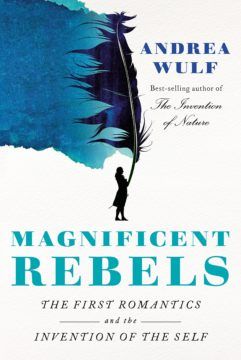 The grand title of Andrea Wulf’s new book is wonderfully sneaky — at least that’s how I chose to read it, considering that “Magnificent Rebels” happens to recount plenty of unmagnificent squabbling among a coterie of extremely fallible humans.
Wulf’s exuberant narrative spans a little more than a decade, when a group of poets and intellectuals clustered in the German university town of Jena in the last years of the 18th century and became known as the “Young Romantics.” This “Jena Set” undoubtedly saw themselves as magnificent rebels — gloriously free spirits bent on centering the self, in all of its sublime subjectivity, and throwing off the shackles of a stultifying, mechanistic order. But what gives Wulf’s book its heft and intrigue is how such lofty ideals could run aground on the stubborn persistence of petty rivalry and self-regard.
more here.
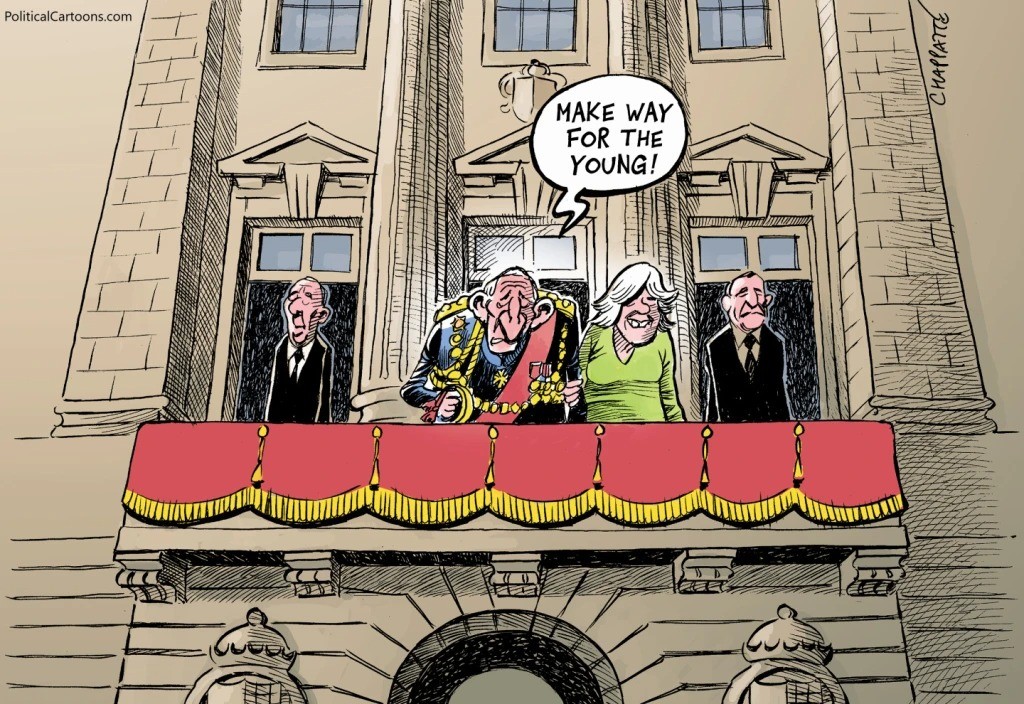
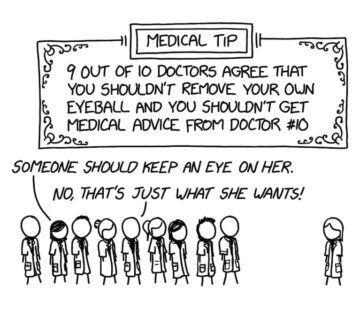 Several decades ago, it took a stand-up comedian like Steven Wright to work in shades of the brilliantly surreal when
 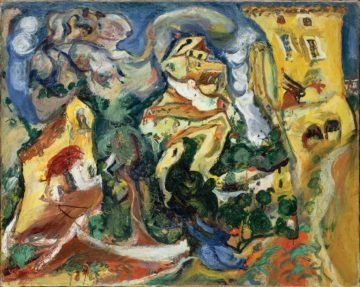 The idea of an “avant-garde” tends to inspire complex emotions, oscillating between excitement at its glamour and scorn at its pretensions. The term carries an association of being daring, experimental, unconventional; the main body of practice or opinion that it is in “advance” of is usually figured as a monolith of dull orthodoxy. But the label also easily attracts a lightly ironical coating, in which those so designated are held to be exhibiting an excess of self-consciousness or even self-congratulation, pluming themselves on innovations that others suspect are merely willful or modish. An avant-garde likes to present itself as insurgent and radical, yet the logic of the metaphor suggests that a new group will soon be coming along to replace it. Today’s avant-garde is always liable to congeal into tomorrow’s orthodoxy.
 As a medical entomologist who’s worked with mosquitoes for more than 40 years, I’m often asked why some people seem to be mosquito magnets while others are oblivious to these blood-feeding pests buzzing all around them.
 The Middle East was ahead of its time—and certainly ahead of the West—on at least one thing: existential debates over culture, identity, and religion. During the heady, sometimes frightening days of the Arab Spring, the region was struggling over some of the same questions Americans are contending with today. What does it mean to be a nation? What do citizens need to agree on in order to be or become a people? Must the “people” be united, or can they be divided?
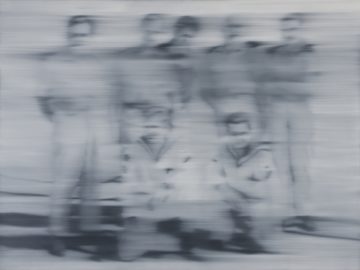 In criticism as in war, the law of proportionate response enjoys only occasional observance.
 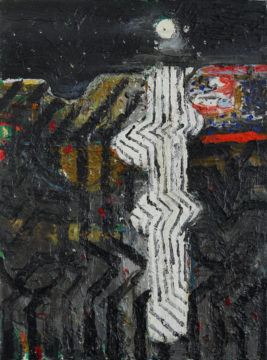 If Guston was labeled an Abstract Expressionist for his nonobjective takes on Monet, Walker could fairly be described as an Abstract Romanticist for his nonobjective takes on John Constable, to whose paintings Walker was introduced as a child in Birmingham, England. In the catalogue, French describes his training at the Birmingham School of Art in the late 1950s as “rigorously traditional” and tells of the artist’s profound confusion upon discovering a Malevich canvas that impressed him by capturing all the emotion that he had experienced regarding Rembrandt’s Jewish Bride. Early on he realized that technique did not amount to feeling.
 T
T Matthew Weiss dreams of the day when his oncology practice will operate very differently. A surgeon at the Northwell Health System in New York who treats pancreatic cancer—one of the deadliest malignancies known—he doesn’t have a lot of choices when it comes to saving his patients. Some people with pancreatic tumors die within a few weeks and others fight longer, but only
 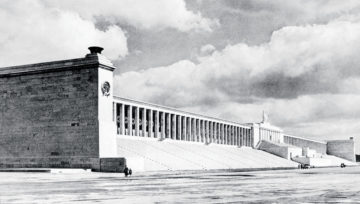 Initial detractors called Minimalism “cold” and “inhuman,” and subsequent opponents deemed it “masculinist” and “totalitarian.” I still see these responses as emotionally reactive or formally reductive or both, and, like several other critics, I have stressed the phenomenological dimension of Minimalism, its engagement with the body and the space of the viewer, in part to counter such readings. Nonetheless, they did represent the sentiments of many observers, and some of these accounts also point to the historical problem at issue here, even if, to my mind, they misconstrue it in doing so.11 For what was taken as “inhuman” in Minimalist practice is better understood as “antihumanist,” a position that was largely shared by Conceptual artists. This antihumanism was active, for example, when, in another well-known conversation from 1966, Frank Stella and Donald Judd claimed to jettison European “rationalism,” and when Bochner insisted a year later that Conceptualists sought to bracket all considerations of style and metaphor.12 Not only a local reaction against late Abstract Expressionism, this rejection, widespread among artists, writers, and philosophers of the time, targeted a humanism that had had no effective answer for fascism, the Holocaust, or the Bomb and that continued to fail in the face of American imperialism in Southeast Asia and elsewhere.
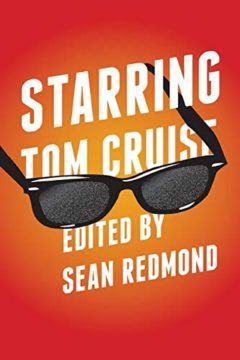 On my first viewing of Top Gun: Maverick, I was moved to tears. Many men who I’ve spoken to about the film have admitted to crying while they watched it. I cried, despite my awareness that I was being aggressively manipulated by a work of vainglorious, sentimental, and stupid propaganda for the US military. This is the only Cruise film which has moved me in this way. Between the aerial stunts, Top Gun: Maverick is a film about coming to terms with the death of the father: Cruise’s Maverick finds himself stuck in the complex situation of grieving for his peer, Iceman (Val Kilmer), who had become his surrogate father-protector, while simultaneously navigating his own role as a surrogate father-protector to Rooster (Miles Teller), the son of the man whose death he caused in the film’s prequel. Kilmer is only two years older than Cruise, but in Top Gun: Maverick he is coded as older and wiser, almost a mentor, due to his seniority in rank. Cruise/Maverick’s peers have aged around him, but he remains stuck in perpetual adolescence. This is a recent example of a long trend: Cruise’s filmography is filled with troubled relationships between absent or disappointing fathers and the sons who suffer. There is certainly scope for speculation about the influence the difficult relationship with his own father has had on the roles Cruise chooses and shapes.
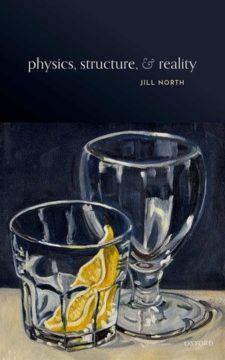 This is a meticulous and deliberate and beautiful book.
 According to professor emeritus Andrew Hacker of Queens College of the City University of New York, less than five percent of Americans will ever use any higher math at all in their jobs, including not only calculus but algebra, geometry, and trigonometry. And less than one percent will ever use calculus on the job. Born in 1929 and holding a PhD from Princeton, Hacker taught college political science for decades and has also been a math professor. His book
  The brutal