Ode to the Soccer Ball Sailing Over a
Barbed-Wire Fence
…….. Tornillo. Has become the symbol of what may be the longest U.S. mass
……. detention of children not charged with crimes since the World War II
…….. internment of Japanese Americans. —Robert Moore, Texas Monthly
Praise Tornillo: word for screw in Spanish, word for jailer in English,
word for three thousand adolescent migrants incarcerated in a camp.
Praise the three thousand soccer balls gift-wrapped at Christmas,
as if raindrops in the desert inflated and bounced through the door.
Priase the soccer games rotating with a whistle every twenty minutes,
so three thousand adolescent migrants could take turns kicking a ball.
Priase the boys and girls who walked a thousand miles, blood caked
in their toes, yelling in Spanish and a dozen Mayan tongues on the field.
Praise the first teenager, brain ablaze like chili pepper Christmas lights,
to kick a soccer ball high over the chain-link and barbed wire-fence.
Praise the first teenager to scrawl a name and number on the face
of the ball, then boot it all the way to the dirt road on the other side.
Praise the smirk of teenagers at the jailer scooping up fugitive
soccer balls, jabbering about the ingratitude of teenagers at Christmas.
Praise the soccer ball sailing over the barbed-wire fence, white
and black like the moon, yellow like the sun, blue like the world.
Praise the soccer ball fling to the moon, flying to the sun, flying to other
worlds, flying to Antigua, where Starbucks buys coffee beans.
Praise the soccer ball bounding off the lawn at the White House,
thudding off the president’s head as he waves to absolutely no one.
Praise the piñata of the president’s head jellybeans pouring from his ears,
enough to feed three thousand adolescents incarcerated at Tornillo.
Praise Tornillo: word in spanish for adolescent migrant internment camp,
abandoned by jailers in the desert, liberated by a blizzard of soccer balls.
by Martín Espada
from Floaters
W.W. Norton, 2021

 My everyday experiences as a chemistry professor at an American university in 2021 bring back memories from my school and university time in the USSR. Not good memories—more like Orwellian nightmares. I will compare my past and present experiences to illustrate the following parallels between the USSR and the US today: (i) the atmosphere of fear and self-censorship; (ii) the omnipresence of ideology (focusing on examples from science); (iii) an intolerance of dissenting opinions (i.e., suppression of ideas and people, censorship, and Newspeak); (iv) the use of social engineering to solve real and imagined problems.
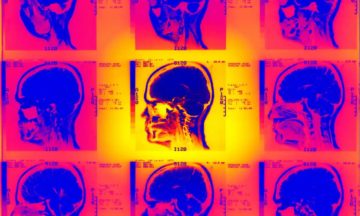 Moheb Costandi’s title is taken from Nietzsche’s philosophical masterpiece Thus Spoke Zarathustra: “The awakened and knowing say: body am I entirely, and nothing more; and soul is only the name for something about the body.” The radical rejection of mind-body dualism expressed in this sentence is shared today by most neuroscientists, who believe that the mind is a product of the brain. Indeed, this “neurocentric” view has been widely accepted and, writes Costandi, “the idea that we are our brains is now firmly established”.
 The official campaign for the 2024 Republican Presidential nomination is barely three weeks old, but there is one clear takeaway so far:
  David Waldstreicher in Boston Review:
 Katherine Franke in The Nation (Photo by Jim Watson / AFP via Getty Images):
 Mona Ali , Anna Gelpern, Avinash Persaud, Rishikesh Ram Bhandary, Brad Setser, and Adam Tooze in Phenomenal World’s The Polycrisis:
 T
T Kathy Acker — proto-punk, tough-stemmed flower, ransacker of texts, literary heir to William S. Burroughs and Gertrude Stein, sex worker, loather of establishments, striver for maximum impudence — was born into a soft life on Manhattan’s East Side in 1947.
 The Irish writer Gavin McCrea was supposed to be writing the third in a loose trilogy of novels about the development of communism, following
  A study surveying more than 3.4 million people has found nearly 4,000 genetic variants related to the use of alcohol and tobacco, scientists reported Wednesday (Dec 7) in
  Artificial intelligence (AI) is
  I was recently reading an old article by string theorist Robbert Dijkgraaf in Quanta Magazine entitled “