
Love Poem
My clumsiest dear, whose hands shipwreck vases,
At whose quick touch all glasses chip and ring,
Whose palms are bulls in china, burs in linen,
And have no cunning with any soft thing
Except all ill-at-ease fidgeting people:
The refugee uncertain at the door
You make at home; deftly you steady
The drunk clambering on his undulant floor.
Unpredictable dear, the taxi drivers’ terror,
Shrinking from far headlights pale as a dime
Yet leaping before apoplectic streetcars—
Misfit in any space. And never on time.
A wrench in clocks and the solar system. Only
With words and people and love you move at ease;
In traffic of wit expertly maneuver
And keep us, all devotion, at your knees.
Forgetting your coffee spreading on our flannel,
Your lipstick grinning on our coat,
So gaily in love’s unbreakable heaven
Our souls on glory of spilt bourbon float.
Be with me, darling, early and late. Smash glasses—
I will study wry music for your sake.
For should your hands drop white and empty
All the toys of the world would break.
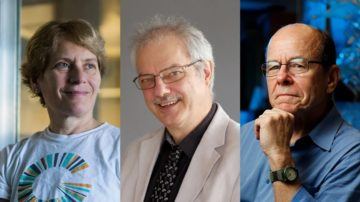 Three chemists who pioneered a useful technique called click chemistry to join molecules together efficiently have won this year’s Nobel Prize in Chemistry.
 Love hungers for knowledge. For someone newly in love, nothing is better than learning about the beloved, nothing better than revealing yourself to them in turn. “The talk of lovers who have just declared their love,” writes Iris Murdoch in The Bell (1958), “is one of life’s most sweet delights. . . . Each one in haste to declare all that he is, so that no part of his being escapes the hallowing touch.”
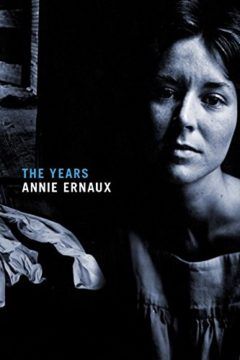 “I have always wanted to write the sort of book that I find it impossible to talk about afterward, the sort of book that makes it impossible for me to withstand the gaze of others,” writes Annie Ernaux’s narrator near the end of her 1998 autofiction, Shame. Ernaux takes the sentiment further in the opening lines of her 2008 book, The Possession: “I have always wanted to write as if I would be gone when the book was published. To write as if I were about to die—no more judges.”
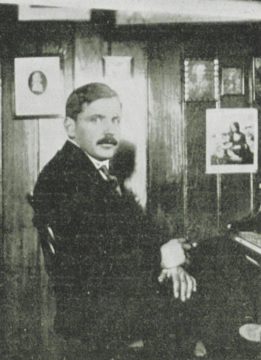 The Swiss composer Othmar Schoeck, who lived from 1886 to 1957, is little known outside his native land, but his moments of fame have been as striking as they are strange. For one thing, Schoeck gained the admiration of several leading writers of the twentieth century. Hermann Hesse ranked Schoeck’s songs alongside those of Schubert and Schumann; James Joyce considered him a rival to Stravinsky; Thomas Mann also thought highly of him. A further quiver of notoriety followed in the nineteen-seventies, when, as Calvin Trillin
  O
O F
F IT WAS JUST THE KIND
 D
D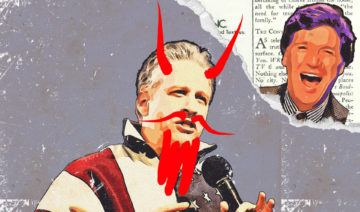 Jon Stewart has a dream where he walks out onto the brightly lit set of a new TV show. He has worked for years to build this show. It’s the answer to everything wrong with the news media.
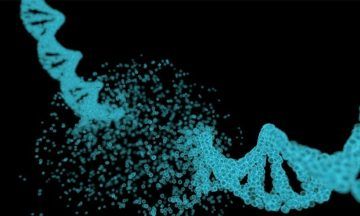
 For the first time, a Nobel Prize recognized the field of anthropology, the study of humanity. Svante Pääbo, a pioneer in the study of ancient DNA, or aDNA, was awarded the 2022
  The
The 
 E
E