
Fugitive Beauty
The term “fugitive beauty” came
to me in a letter. A friend’s wife
had used it in conversation. My friend
is a painter who studied in Paris.
I sought his opinion on poetry.
Fugitive beauty, evanescent, fleeting,
as if it implied a criminality
I did not understand.
Did all art start that way —
alone, furtive, so coiled
in its incubation that it feared
possible success or failure?
Fugitive, running away,
not standing with the norm, the herd,
not strong enough
to be judged?
Or did it mean beauty as Keats meant it?
“Truth is beauty, beauty truth” —
a raw truth, or a new dimension of beauty,
a new adjective
to describe eagles soaring.
no parameters,
like prisoners breaking out.
Out there by itself,
not great, not mediocre,
but flying in its own space
against all normalcy, blasting off
to its own truthfulness,
its own freedom.
by George De Gregorio
from Rutherford Red Wheelbarrow Poetry Anthology, 2008
 Analytic philosophers avoided the subject of meaning in life till relatively recently. The standard explanation is that they associated it with the meaning of life question they considered bankrupt. But it’s surely also because the subject conflicts with some of the core tendencies of the analytic tradition. “What gives point to life?” is a sweeping question that invites the synoptic approach associated with continental philosophy, not the divide-and-conquer method favored by Anglo-Americans. The question also wears its angst on its sleeve, making it an awkward fit with the dispassionate mode employed in the mainstream academy.
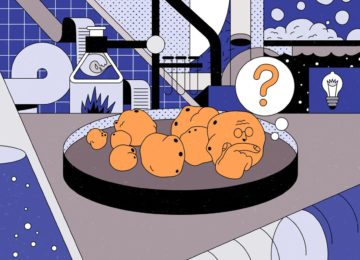 In Alysson Muotri’s laboratory, hundreds of miniature human brains, the size of sesame seeds, float in Petri dishes, sparking with electrical activity.
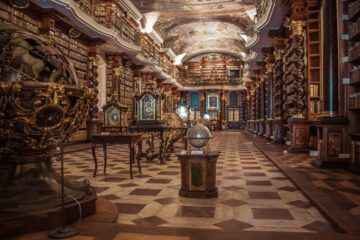 In November of 1660, at Gresham College in London, an invisible college of learned men held their first meeting after 20 years of informal collaboration. They chose their coat of arms: the royal crown’s three lions of England set against a white backdrop. Their motto: “Nullius in verba,” or “take no one’s word for it.” Three years later, they received a charter from King Charles II and became what was and remains the world’s preeminent scientific institution: the Royal Society.
 Researchers who grew a brain cell culture in a lab claim that they taught the cells to play a version of
  The energy crisis incited by Russia’s war in Ukraine has triggered intense debates in many countries about whether the windfall profits that energy companies are now making should be taxed. While this question concerns all companies that produce coal, gas, or oil, the focus currently is on electricity producers. Since a high gas price is driving up electricity prices across the board, suppliers with power plants that use other fuels or renewables can reap extremely high profits. And the immense burden of rising electricity prices on consumers has ratcheted up political pressure to tax “unjustified” profits.
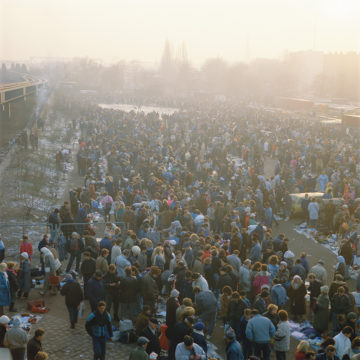 WOLFGANG TILLMANS HAS CREATED an image of contemporary Europe that a lot of people carry around in their heads. Not the Colosseum or the Arc de Triomphe or even the Eiffel Tower, but easyJet, English, Berghain. These keywords are both the technologies and the coordinates of Tillmans’s practice, the atmosphere and infrastructure that support his work, though they are not necessarily visible in his pictures. And yet he has created images—indeed, icons—that are somehow correlates for them, that use these things as scaffolding. I know this is a big claim to make about an artist, given that the profession today no longer has much to do with the way things look. The task of imaging has largely been left to the stylist, the executive, and the influencer. But by leveraging photography’s many lives (as art, as document, as fashion editorial, as reportage, and as publicity), Tillmans has been able to thread the needle through an increasingly vast network of image production, and its sites of display, in order to create a new kind of image—a moving image not simply in the affective sense, but in the circulatory one, too. His images get around, change shape. They are promiscuous. We can call them images in motion.
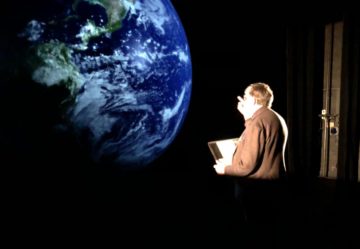 ONE MAN ALONE
 “You know you’re a nerd when you store DNA in your fridge.”
 T
T In 2015, The New York Times Book Review posed the question “Whatever happened to the Novel of Ideas?” to the writers Pankaj Mishra and Benjamin Moser. On the question of “whether philosophical novels have gone the way of the dodo bird,” Mishra answered in the affirmative and—not a writer who shies away from generalizations—charged that the culprit was the MFA program. “America’s postwar creative-writing industry,” Mishra claimed, has “hindered literature from its customary reckoning with the acute problems of the modern epoch” and “boosted instead a cult of private experience.”
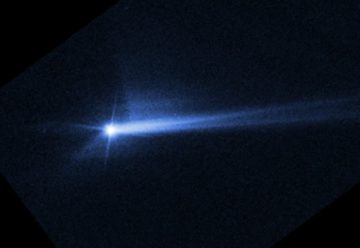 Humans have for the first time proved that they can change the path of a massive rock hurtling through space. NASA has announced that the spacecraft it slammed into an asteroid on 26 September succeeded in altering the space rock’s orbit around another asteroid — with better-than-expected results.
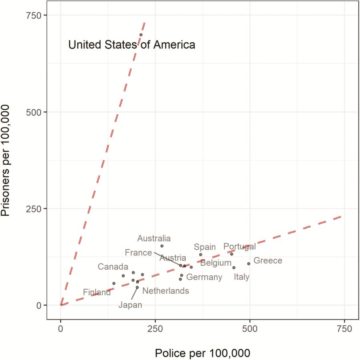 A new paper,
  As I write this I suddenly realize that All Souls’ Day, November 1, might have been a more timely date for the publication of this article, but alas, that is one of the (very few) inconveniences of not being a religious man. Life is life, however, and certain truths do not always dawn on us in a timely fashion; they come when they come. And in the end, there is so much more to be pondered in November, the month that Herman Melville always associated with melancholy, as he so succinctly expressed it at the beginning of Moby-Dick, through the voice of Ishmael, his narrator who said that “whenever it is a damp, drizzly November in my soul… I account it high time to get to sea as soon as I can,” since the sea was his “substitute for pistol and ball.”
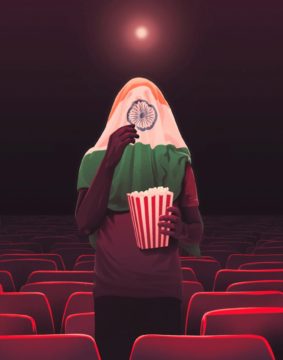 Filmmaking thrives in plenty of other cities in India, but “Bollywood” has become shorthand for Indian cinema as a whole, and for the thousand or so movies that the country releases annually. For nearly a century, Bollywood has also worn the warm, self-satisfied gloss of being a passion that unifies a country of divisions. Not only are its audiences as mixed as India itself, filmmakers will say, but Bollywood is a place where caste and religion don’t matter. The most piously presented proof of this is the fact that, in a Hindu-majority country, a Muslim man named Shah Rukh Khan has been the supreme box-office star for decades.