Editorial in The New England Journal of Medicine:
 For more than two decades, colonoscopy has been recommended as one of several available options for colorectal cancer screening, and it has been the predominant form of screening for colorectal cancer used in the United States. However, the best evidence to support its use has been limited to data from cohort studies, which have estimated that this type of screening has been associated with a 40 to 69% decrease in the incidence of colorectal cancer and a 29 to 88% decrease in the risk of death from this disease.1 Unlike randomized, controlled trials, which have provided support for fecal occult blood testing and sigmoidoscopy,2 cohort studies probably overestimate the real-world effectiveness of colonoscopy because of the inability to adjust for important factors such as incomplete adherence to testing and the tendency of healthier persons to seek preventive care.
This evidence gap is addressed by the landmark Nordic-European Initiative on Colorectal Cancer (NordICC) trial, the results of which are now reported in the Journal by Bretthauer et al.3 This pragmatic trial involved nearly 85,000 men and women who were randomly assigned either to receive an invitation to undergo screening colonoscopy or to receive usual care (i.e., no screening). In the intention-to-screen analysis, colonoscopy was found to reduce the risk of colorectal cancer over a period of 10 years by 18% (risk ratio, 0.82; 95% confidence interval [CI], 0.70 to 0.93). However, the reduction in the risk of death from colorectal cancer was not significant (risk ratio, 0.90; 95% CI, 0.64 to 1.16).
More here.
 The breathtaking palette of colours seen in nature is the fuel that drives many of us to become biologists, and is the reason why some researchers try to understand the biological basis of animal and plant coloration
 The issue is that Newton’s laws work about twice as well as we might expect them to. They describe the world we move through every day – the world of people, the hands that move around a clock and even
  Spring came early this year in the high mountains of Gilgit-Baltistan, a remote border region of Pakistan. Record temperatures in March and April hastened melting of the Shisper Glacier, creating a lake that swelled and, on May 7, burst through an ice dam. A torrent of water and debris flooded the valley below, damaging fields and houses, wrecking two power plants, and washing away parts of the main highway and a
 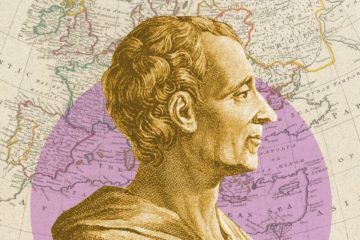 One of the most enduring ideas in economics is that free markets bring peace between countries. It comes from the notion that commerce drives humans to follow their mutual material interests rather than make destructive war due to passions.
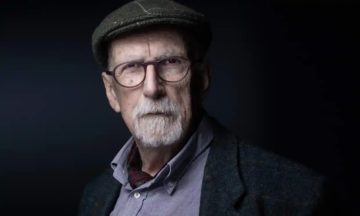 The French thinker Bruno Latour, known for his influential research on the philosophy of science has died aged 75.
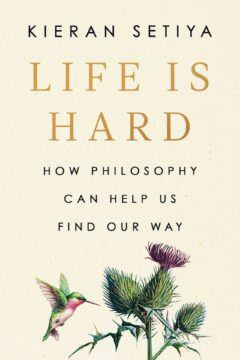 HAVE YOU NOTICED lately that everything is shit? Things were very shitty the year before last, they became even shittier last year, and now everything is just indescribably shit. As a species, we’ve been stuck with this aspect of the human condition for around 300,000 years. But the question of how to respond to it intellectually and emotionally arises with fresh urgency in each new generation. And in the face of each fresh piece of shit. Traditionally, one role of philosophy has been to aid us in this task. Friar Lawrence advises Romeo, banished from his city and the arms of his girl, to sip “Adversity’s sweet milke, Philosophie.” However, over the past couple of centuries, with the transformation of philosophy into an academic discipline, its connection with self-help has largely been severed. The aim of Kieran Setiya’s new book Life Is Hard is to recapture philosophy’s ancient mission of “helping us find our way” in the face of life’s afflictions.
 The girls and women of Iran are just bitchin’ brave, flipping the bird at its Supreme Leader in a challenge to one of the most significant revolutions in modern history. Day after dangerous day, on open streets and in gated schools, in a flood of tweets and brazen videos, they have ridiculed a theocracy that deems itself the government of God. The average age of the protesters who have been arrested is just fifteen, the Revolutionary Guard’s deputy commander
 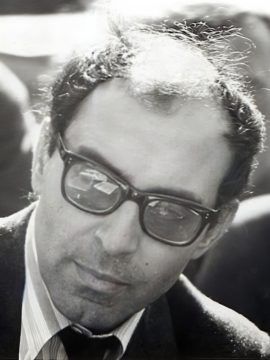 Fredric Jameson in Sidecar:
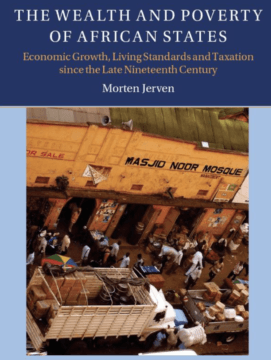 Alden Young in Phenomenal World:
 Blake Smith in American Affairs:
 I
I One of the funny things about adolescence is that the world can seem enormous, brimming with possibility, while at the same time the urgency to define oneself — fastidiously curating likes and dislikes, ruthlessly sorting people according to their musical tastes — can make the world feel extremely small.