
Rafia Zakaria in The Baffler:
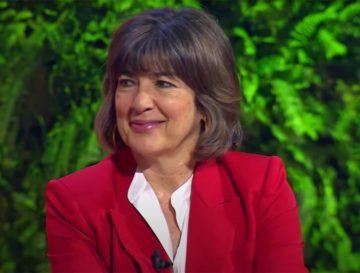 IT WAS JUST THE KIND of cringe moment that makes you want to forswear cable news forever. A few days after the death of twenty-two-year-old Mahsa (Zhina) Amini in Tehran, celebrated CNN anchor Christiane Amanpour was slotted to interview Iranian president Ebrahim Raisi, who was in New York City to make an address to the United Nations. At the appointed time of the conversation, Raisi was a no-show. According to Amanpour, an aide to the president then approached her and asked her to put on a headscarf out of respect and observance of the months of Muharram and Safar (sacred months in the Islamic calendar). Amanpour said that she refused, noting that she had never worn the hijab when interviewing his predecessor. Her refusal to wear the headscarf, she says, is why the Iranian president canceled the interview. “It’s an unprecedented request,” she stated on her broadcast on September 22.
More here.
 D
D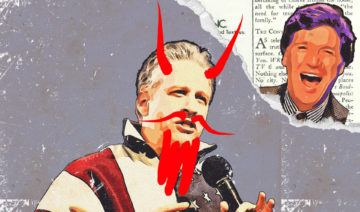 Jon Stewart has a dream where he walks out onto the brightly lit set of a new TV show. He has worked for years to build this show. It’s the answer to everything wrong with the news media.
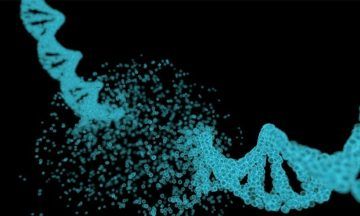
 For the first time, a Nobel Prize recognized the field of anthropology, the study of humanity. Svante Pääbo, a pioneer in the study of ancient DNA, or aDNA, was awarded the 2022
  The
The 
 E
E The public, it is assumed, knows little about science: they are ignorant not just of scientific facts but of scientific methodology, the distinctive way scientific research is conducted. Moreover, this ignorance is supposed to be the primary source of widespread anti-science attitudes, generating fear and suspicion of scientists, scientific innovations, and public policy that is said to “follow the science.” The consequences are on wide display, from opposition to genetically modified foods to the anti-vax movement.
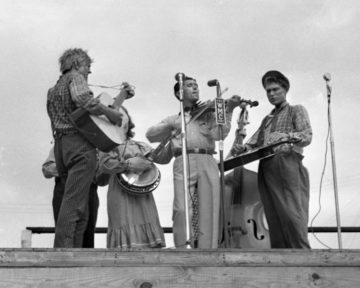 For open-eared pop music fanatics of the seventies, Circle was a gateway album that revealed vistas. It spoke of a world beyond the sonic eruptions of rock-and-roll, yet one that could exist peaceably alongside it. The unassuming splendor of the music I heard that night in Central Park, particularly the marvelous flatpicking and straight-from-the-hills singing of Watson and the offhand brilliance of Scruggs’s banjo playing—indeed, the seemingly effortless, stirringly unselfconscious virtuosity of both men—brought to life the pleasures of a new idiom, one I still cherish. It was the joy already embedded in that momentous album come to life.
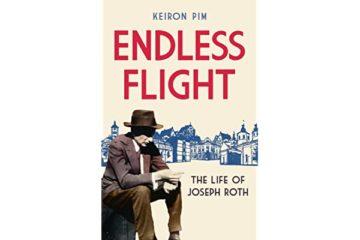 In 1938, Joseph Roth sat across the street watching the demolition of the Paris hotel he called home. He drank, he smoked and he wrote a short, sharp, lyrical piece describing how, ‘because the hotel is shattered and the years I lived in it have gone, it seems bigger’. On the last remaining wall he could still see the blue and gold wallpaper of what had been his room. After it had been torn down, he drank and joked with ‘the destroyers’, until the significance of the moment hit him: ‘You lose one home after another … terror flutters up, and it doesn’t even frighten me any more. And that’s the most desolate thing of all.’ This is pure Roth, nostalgia vying with irony, gallows humour saving him from despair. Writing was for him a form of survival: ‘I can only understand the world when I’m writing, and the moment I put down my pen, I’m lost.’
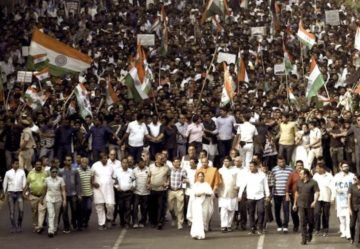 Suketu Mehta
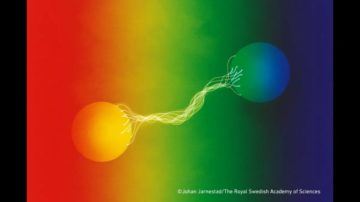 For generations, scientists argued over whether there was truly an objective, predictable reality for even quantum particles, or whether quantum “weirdness” was inherent to physical systems. In the 1960s, John Stewart Bell developed an inequality describing the maximum possible statistical correlation between two entangled particles: Bell’s inequality. But certain experiments could violate Bell’s inequality, and these three pioneers — John Clauser, Alain Aspect, and Anton Zeilinger — helped make quantum information systems a bona fide science.
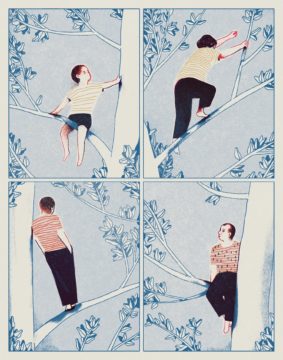 Try to remember life as you lived it years ago, on a typical day in the fall. Back then, you cared deeply about certain things (a girlfriend? Depeche Mode?) but were oblivious of others (your political commitments? your children?). Certain key events—college? war? marriage? Alcoholics Anonymous?—hadn’t yet occurred. Does the self you remember feel like you, or like a stranger? Do you seem to be remembering yesterday, or reading a novel about a fictional character?
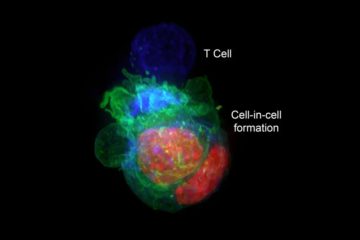 In a surprise discovery, researchers found that cells from some types of cancers escaped destruction by the immune system by hiding inside other cancer cells.