Dixie Burge in Big Band Swing:
 “Oscar Levant is a character who, if he did not exist, could not be imagined.” These words were used by Levant’s great friend, S. N.(“Sam”)Behrman, to describe him. No truer words were ever spoken! In his lifetime, Oscar Levant flourished as (and subsequently gave up each, one by one) gifted composer, concert pianist, radio personality, movie star, successful recording artist, best-selling author, talk-show host and quiz show panelist. Whew! It was what he described as his Noel Coward Principal he managed “to break off his jobs at a certain interval.” He appeared in thirteen movies, including “An American In Paris”, “The Band Wagon”, “Humoresque” and the George Gershwin biograpy, “Rhapsody in Blue”, in which he played “an unsympathetic part… myself.”
…Levant was an astonishingly gifted concert pianist who, in his heyday of the 1940’s and early-to-mid 1950’s, earned more money than any other pianist in America. In the 1930’s, before he gained his real fame, Levant was dubbed “the wag of Broadway” by Michael Mok in the New York Post. In the 1940’s, at the height of his fame as a wit and bad boy, he was known as “the enfant terrible.” In the 1950’s and ‘60’s, after mental illness and drug abuse had taken their toll, Levant was known as “America’s favorite neurotic.” He sporadically appeared on The Tonight Show with Jack Paar to talk candidly about those subjects, being the first well-known personality to do so. He coined a now-famous phrase: “There is a fine line between genius and insanity. I have erased that line.” Author Christopher Isherwood described Levant as a character created by Dostoevsky someone “completely unmasked at all times.”
…“It’s not what you are – it’s what you don’t become that hurts.” Oscar Levant
More here.

 “August Blue” is Levy’s eighth novel, and since her 20s, she has been refining her ability to evoke feeling through writing rather than to narrate it. Her work is deeply influenced by art forms that express the embodied experience, like cinema and dance. “The body in the world,” she said. “How difficult. It is my subject.”
 In January 2023, when ChatGPT was
  A flat, rounded shell. A tail that’s folded under the body. This is what a crab looks like, and apparently what peak performance might look like — at least according to
  We synthesized the vast, contradictory scholarly literature on gender bias in academic science from 2000 to 2020. In the most prestigious journals and media outlets, which influence many people’s opinions about sexism, bias is frequently portrayed as an omnipresent factor limiting women’s progress in the tenure-track academy. Claims and counterclaims regarding the presence or absence of sexism span a range of evaluation contexts. Our approach relied on a combination of meta-analysis and analytic dissection. We evaluated the empirical evidence for gender bias in six key contexts in the tenure-track academy: (a) tenure-track hiring, (b) grant funding, (c) teaching ratings, (d) journal acceptances, (e) salaries, and (f) recommendation letters. We also explored the gender gap in a seventh area, journal productivity, because it can moderate bias in other contexts. We focused on these specific domains, in which sexism has most often been alleged to be pervasive, because they represent important types of evaluation, and the extensive research corpus within these domains provides sufficient quantitative data for comprehensive analysis. Contrary to the omnipresent claims of sexism in these domains appearing in top journals and the media, our findings show that tenure-track women are at parity with tenure-track men in three domains (grant funding, journal acceptances, and recommendation letters) and are advantaged over men in a fourth domain (hiring). For teaching ratings and salaries, we found evidence of bias against women; although gender gaps in salary were much smaller than often claimed, they were nevertheless concerning.
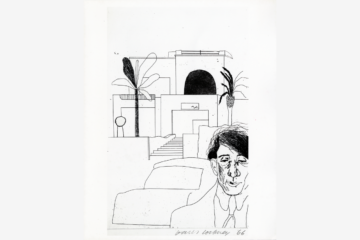 Cavafy did not cut an imposing figure. His bearing—along with his poetry, his philosophy, and his historiographical perspective—might best be
  In 1988—that is, before any hallmark style threatened to dominate her practice—Trockel identified the “constants” that fueled her protean vision as “woman, inconsistency, reaction to fashionable trends.” Woman, broadly speaking, is the focus of three of the remaining four galleries on level one. Devoted mostly to the artist’s early years, the trio of dark, densely installed rooms include numerous canonical works featuring such key motifs as blown eggs, hot plates, and corporate logos. Consider Sabine, 1994, a digital print that depicts a naked brunette in sunglasses poised precariously on a small stove in a humble kitchen. Rhyming her subject’s pose with that of the Crouching Aphrodite, Trockel injects a mordant note into the misogynistic scenario. When installed at the MMK at the apex of a tall triangular gallery, Sabine literally acts out its governing thematics: constraint and confinement. The video Mr. Sun, 2000, projected on a hanging screen nearby, is more abject: As the camera crawls lasciviously over a gleaming stove, Brigitte Bardot’s voice croons, “Stay awhile, Mr. Sun.” Dominating the adjacent wall is a large knit painting, Made in Western Germany, 1987, the eponymous anglophone trademark repeated serially across its surface. Coined in 1973 to guarantee the high quality of products manufactured in the FDR (as opposed to the GDR) for an international market, the logo symbolizes the Wirtschaftswunder, the postwar economic miracle during which Trockel came of age in the Rhineland.
 Researchers have failed to find a uniform marker for aging. The aging process seems to be different for different individuals; it is varied, chaotic, and idiosyncratic. There is probably no single cause, but many causes have been proposed: collagen breakdown, UV light, oxidation, inflammation, insulin resistance, glycation, free radicals, accumulation of DNA copying errors, telomere shortening, accumulation of waste products, heterochromatin loss, and many others. I suspect that many of these factors are contributory and that they interact with each other.
 The largest ever study of primates has unveiled surprises about humanity and our closest relatives, providing insight into which genes do, and don’t, separate us from other primates. The huge international study has also yielded new data for a wide range of disciplines, including human health, conservation biology and behavioural science.
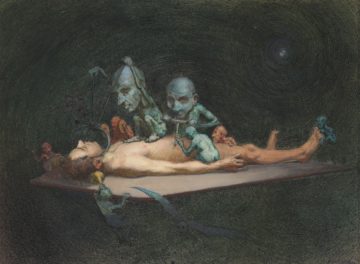 Those who sipped or sniffed ether and chloroform in the 19th century experienced a range of effects from these repurposed anaesthetics, including preternatural mental clarity, psychological hauntings, and slippages of space and time. Mike Jay explores how the powerful solvents shaped the writings of Guy de Maupassant and Jean Lorrain — psychonauts who opened the door to an invisible dimension of mind and suffered Promethean consequences.
 Is this the real life? Is this just fantasy?
 Dreams of a guaranteed income are longstanding, but they leapt back into the public imagination in the wake of the dismal recovery from the 2008 financial crash, endorsed by a diverse array of figures on both the left and right. In 2020 presidential candidate Andrew Yang briefly managed to catapult himself into the media spotlight by pitching an eye-catching “
 “The big debate among memory theorists over the last hundred years has been about whether human and animal is relational or absolute. The relational school argues that our memory system stores information about the relations between objects and ideas, but not necessarily details about the objects themselves. This is also called the constructivist view, because it implies that, lacking sensory specifics, we construct a memory representation of reality out of these relations (with many details filled in or reconstructed on the spot). The constructivists believe that the function of memory is to ignore irrelevant details, while preserving the gist. The competing theory is called the record-keeping theory. Supporters of this view argue that memory is like a tape recorder or digital video camera, preserving all or most of our experiences accurately, and with near perfect fidelity.
 In 2014, Christine and the Queens’ French album début, “Chaleur Humaine” (“Human Warmth”), became a runaway hit; the following year, a self-titled version appeared in the U.S., with many of the lyrics reworked into English. The songs had infectious hooks and shimmering electronic instrumentation. Back then, Letissier used feminine pronouns, but he was already casting off the strictures of gender. The opening song of the début album, “iT,” was a danceable tune in which bright drops of synthesizer rained into caverns of pulsating bass. The lyrics were a priapic fantasy: “I’ll rule over all my dead impersonations / ’Cause I’ve got it / I’m a man now.” I saw Christine and the Queens perform in 2015, in New York, and recall how hard-earned those declarations seemed to be. Christine—petite, lithe, androgynous—seemed at ease in a dark suit, standing at the front of the stage or dancing in a wash of blue light. But there were moments when the line between Letissier’s different selves blurred. During one rapturous wave of applause, he teared up, then apologized for the lapse, admitting, “I wanted to be fierce.”