
David Bentley Hart in The Lamp:
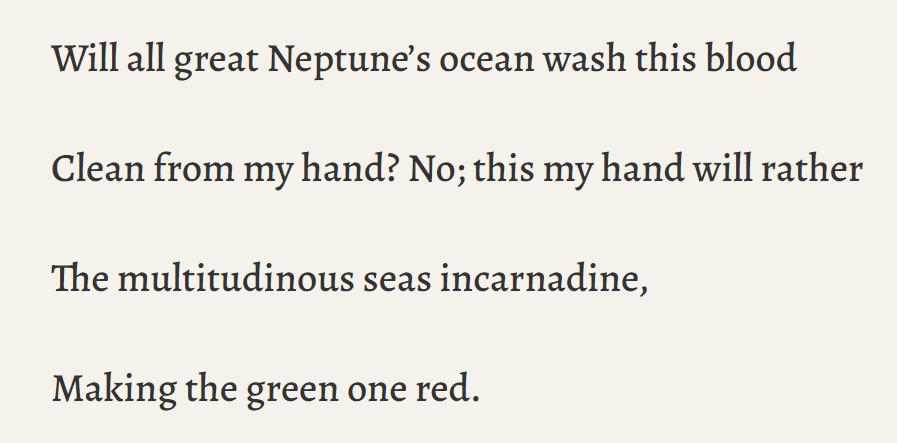 Every great national prose, in just about any tongue, reaches its high meridian only by way of a prolonged and constant negotiation of just this tension between beauty and sublimity—between the decorative and the august, or between the splendid and the lucid. And this comes only at the end of long epochs of development. To be able to balance expressiveness and reticence, or to know when to cast that balance away, requires tact and ingenuity and taste on the part of writers; but it also requires a language of sufficient maturity. This is why prose of any consequence invariably arrives far later in a culture’s history than does great poetry. Poetry entered the world almost as early as words did; it is the first flowering of language’s intrinsic magic—its powers of invocation and apostrophe, of making the absent present and the present mysterious, of opening one mind to another. It comes most naturally to languages in their first dawn, when something elemental—something somehow pre-linguistic and not quite conscious—is still audible in them. Prose, however, evolves only when that force has been subdued by centuries upon centuries of refinement, after unconscious enchantment has been largely mastered by conscious artistry, and when the language has acquired a vocabulary of sufficient richness and a syntax of sufficient subtlety, and has fully discovered its native cadences.
More here.
 Escape behavior offers useful insight into the brain’s inner workings because it engages nervous system networks that originated in the early days of evolution. “From the moment there was life, there were species predating on each other and therefore strong evolutionary pressure for evolving behaviors to avoid predators,” says neuroscientist Tiago Branco of University College London.
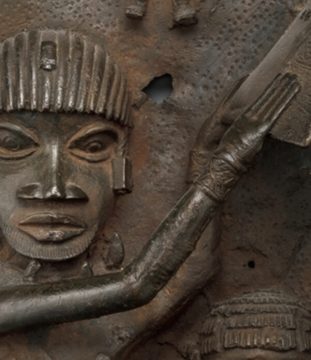 We should expunge, forever, the epithet ‘precolonial’ or any of its cognates from all aspects of the study of Africa and its phenomena. We should banish title phrases, names and characterisations of reality and ideas containing the word.
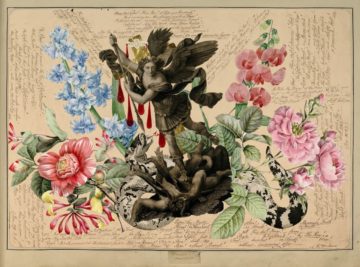 The game is rigged. It is rigged like capitalism is rigged. There is no puppet master, no conspiracy, only a field where advantages, to begin with, are distributed unequally. You can beat the long odds, but you have long odds to beat; a team of scholars has been working for almost 10 years to detail exactly how the rigging works. Juliana Spahr and Stephanie Young, later joined by Claire Grossman, began by noticing that poetry readings they regularly attended were held in “mainly white rooms.” They wanted to know why. To find out, they would need to widen their purview. The wider they went, the hungrier they became to understand who gets to succeed as a writer in the United States today. They wanted to reveal the system, to see all of it.
 I
I The field is all but clear now, and it seems safe to say that the two most important long-form journalists this country produced in the second half of the last century were Joan Didion and Janet Malcolm. Their differences are more evident than their similarities: the cold Los Angeles burn of Didion’s work, the measured New York ambiguity of Malcolm’s. Still, perhaps it’s no accident that both were white women, marginalized by definition, yet not so strictly that it prevented either from slipping into the mainstream as witness, as recorder. Both were born in 1934, and both died in 2021. A world goes with them.
 Herman Mark Schwartz in Progressive International:
 Justin E. H. Smith in Unherd:
 Jeremy Walton in Sidecar (image credit: Stable Diffusion):
 Daniel Driscoll in Phenomenal World’s Polycrisis (image credit: Stable Diffusion):
 T
T Rome, 1950: The diary begins innocently enough, with the name of its owner, Valeria Cossati, written in a neat script.
 When British brain surgeon Henry Marsh sat down beside his patient’s bed following surgery, the bad news he was about to deliver stemmed from his own mistake. The man had a trapped nerve in his arm that required an operation – but after making a midline incision in his neck,
  Animals that produce many offspring tend to have short lives, while less prolific species tend to live longer. Cockroaches lay hundreds of eggs while living less than a year. Mice have dozens of babies during their year or two of life. Humpback whales produce only one calf every two or three years and live for decades. The rule of thumb seems to reflect evolutionary strategies that channel nutritional resources either into reproducing quickly or into growing more robust for a long-term advantage.