
Stephen Akey at The Hedgehog Review:
 A carefully administered and properly controlled dosage of a hallucinogen, their studies attest, can accomplish in a single, not-to-be-repeated session what years of psychotherapy and regimens of antidepressant medications often fail to achieve.
I believe it. Nowhere, however, in the outpouring of recent literature on the subject, have I encountered any significant discussion of what most struck me in my limited experience of psychotropic drugs. The visions I encountered and the perceptions I took away were every bit as intense, rapturous, frightening, and transformative as sober physicians and wild-eyed advocates claim them to be. They were also—and this doesn’t get talked about much—astonishingly banal. If “Lucy in the Sky with Diamonds” was one frame of reference for me, another was the poster art of late sixties California acid rock. I had been given a privileged glimpse into the collective unconscious and it looked like a dayglo poster for the Jefferson Airplane at Fillmore West circa 1967.
more here.
 A boyfriend just going through the motions. A spouse worn into the rut of habit. A jetlagged traveler’s message of exhaustion-fraught longing. A suppressed kiss, unwelcome or badly timed. These were some of the interpretations that reverberated in my brain after I viewed a
  Forty years ago the literary theorist Peter Brooks made a name for himself by championing a then-unfashionable argument: we understand ourselves through stories. Narrative, he wrote in his landmark 1984 book Reading for the Plot, is “the principal ordering force” by which we make meaning out of our lives.
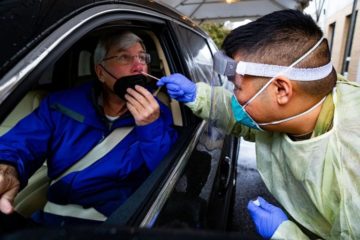 New year, new variant. Just as scientists were getting to grips with the
 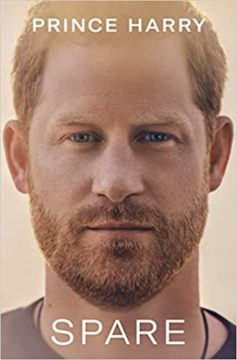 I was the
 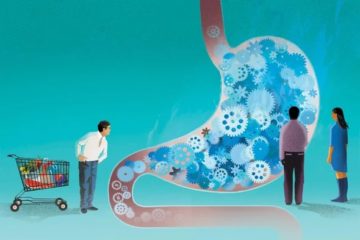 It was my daughter Clara’s seventh birthday party, a scene at once familiar and bizarre. The celebration was an American take on a classic script: a shared meal of pizza and picnic food, a few close COVID-compliant friends and family, a beaming kid blowing out candles on a heavily iced cake. With roughly 380,000 boys and girls around the world turning seven each day, it was a ritual no doubt repeated by many, the world’s most prolific primate singing “Happy Birthday” in an unbroken global chorus.
 I was nineteen, maybe twenty, when I realized I was empty-headed. I was in a college English class, and we were in a sunny seminar room, discussing “For Whom the Bell Tolls,” or possibly “The Waves.” I raised my hand to say something and suddenly realized that I had no idea what I planned to say. For a moment, I panicked. Then the teacher called on me, I opened my mouth, and words emerged. Where had they come from? Evidently, I’d had a thought—that was why I’d raised my hand. But I hadn’t known what the thought would be until I spoke it. How weird was that?
 Last year I spoke to a long list of leading scientists and doctors for a piece I was reporting. Of all the things they shared with me, one quote stood out:
 Some time ago, I fell into conversation with a colleague about what we had been reading lately, and the person suggested that I absolutely must give Henry James’s “The Ambassadors” a try.
 The US Department of Agriculture (USDA) has granted a conditional license for a vaccine created by Dalan Animal Health, a US biotech company, to help protect honeybees from American foulbrood disease.
 German leaders’ vigorous efforts over the last year to better equip the Bundeswehr—and thus prove their commitment to the security of Europe—have been described as a dramatic turning point in postwar German history. Chancellor Olaf Scholz himself used such language last February to justify his pledge to take out an unprecedented €100 billion loan, which he referred to as a “special fund” for “necessary investments and armament projects.” Unwilling to leave any doubt about his commitment to strengthening the armed forces, Scholz announced that annual defense budget increases would follow. Speaking to parliament three days after the war began, Scholz justified this orgy of defense spending by arguing that the Russian invasion marked a “watershed in the history of our continent.” The claim must be understood in reference to the elephant in the German historical imagination: World War II. “Many of us,” the chancellor
  Two-time Palme d’Or winner, Ruben Ostlund’s sadistic comedy Triangle of Sadness is a provocative and biting class satire of wealth and beauty privilege that plays out like a social psychology experiment. This ship-borne narrative offers a carnivalesque analysis of the ultra-rich wealth hoarders and beauty influencers and arrives at the apparent theme of the savagery of human nature. Structured into three parts, the film is held together by model couple Carl (Harris Dickinson) and Yaya (the late Charlbi Dean). Originally titled Sans filter, which translates to “Without Filter,” this film utilizes grotesque and scatological humor to lampoon social hierarchies and class divide induced by the capitalist society.
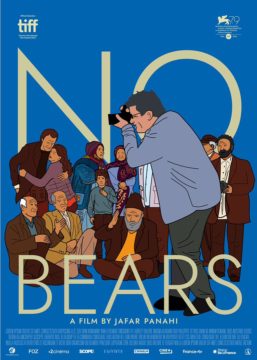 PANAHI IS A FILMMAKER
 In a 1947 article for this magazine, the essayist and historian Bernard DeVoto warned of the “forever-recurrent lust to liquidate the West.” “Almost invariably the first phase was a ‘rush,’ ” he wrote. “Those who participated were practically all Easterners whose sole desire was to wash out of Western soil as much wealth as they could and take it home.” For DeVoto, the New Deal offered a chance for more sustainable and locally beneficial uses of Western resources, but, in the end, Eastern capital was “able to direct much of this development in the old pattern.”