The wolves reintroduced to Yellowstone National Park in 1995 are some of the best-studied mammals on the planet. Biological technician and park ranger Rick McIntyre has spent over two decades scrutinising their daily lives, venturing into the park every single day. Where his previous books focused on three notable alpha males, it is ultimately the females that call the shots and make the decisions with lasting consequences. This book is a long overdue recognition of the female wolf and continues this multigenerational saga.
If wolf 21, the subject of the second book, was the most famous male wolf in Yellowstone, then his granddaughter 06 (named after her year of birth, 2006) can safely be called the most famous female wolf. This fourth book picks up where the third book ended, covering the period 2009–2015. It tells 06’s life story, her untimely death, and the fate of one of her daughters.
Magdalena Pacholska at the Cambridge University Press:
Military artificial intelligence (AI)-enabled technology might still be in the relatively fledgling stages but the debate on how to regulate its use is already in full swing. Much of the discussion revolves around autonomous weapons systems (AWS) and the ‘responsibility gap’ they would ostensibly produce. This contribution argues that while some military AI technologies may indeed cause a range of conceptual hurdles in the realm of individual responsibility, they do not raise any unique issues under the law of state responsibility. The following analysis considers the latter regime and maps out crucial junctions in applying it to potential violations of the cornerstone of international humanitarian law (IHL) – the principle of distinction – resulting from the use of AI-enabled military technologies. It reveals that any challenges in ascribing responsibility in cases involving AWS would not be caused by the incorporation of AI, but stem from pre-existing systemic shortcomings of IHL and the unclear reverberations of mistakes thereunder. The article reiterates that state responsibility for the effects of AWS deployment is always retained through the commander’s ultimate responsibility to authorise weapon deployment in accordance with IHL. It is proposed, however, that should the so-called fully autonomous weapon systems – that is, machine learning-based lethal systems that are capable of changing their own rules of operation beyond a predetermined framework – ever be fielded, it might be fairer to attribute their conduct to the fielding state, by conceptualising them as state agents, and treat them akin to state organs.
Any close follower of the British media should not have been surprised that after Prince Harry fell in love with Meghan Markle, the biracial American actress, years of vitriolic, even racist coverage followed. Whipping hatred and spreading lies — including on issues far more consequential than a royal romance — is a specialty of Britain’s atrocious but politically influential tabloids.
People like me, uninterested in celebrities, shouldn’t dismiss the brouhaha around Harry’s memoir as mere celebrity tittle-tattle. He has made credible, even documented claims that his own family refused to stand up against their ugly, sustained attacks against Meghan. In other words, it appears that Britain’s most revered institution, funded by tens of millions in taxpayer funds annually, plays ball with one of its most revolting institutions.
At the very least, it seems clear by now where some senior members of the royal family position themselves in all this.
Crystal Mackall remembers her scepticism the first time she heard a talk about a way to engineer T cells to recognize and kill cancer. Sitting in the audience at a 1996 meeting in Germany, the paediatric oncologist turned to the person next to her and said: “No way. That’s too crazy.”
Today, things are different. “I’ve been humbled,” says Mackall, who now works at Stanford University in California developing such cells to treat brain tumours. The US Food and Drug Administration approved the first modified T cells, called chimeric antigen receptor (CAR)-T cells, to treat a form of leukaemia in 2017. The treatments have become game changers for several cancers. Five similar products have been approved, and more than 20,000 people have received them. A field once driven by a handful of dogged researchers now boasts hundreds of laboratory groups in academia and industry. More than 500 clinical trials are under way, and other approaches are gearing up to jump from lab to clinic as researchers race to refine T-cell designs and extend their capabilities. “This field is going to go way beyond cancer in the years to come,” Mackall predicts.
I do not know if the world has lied I have lied I do not know if the world has conspired against love I have conspired against love The atmosphere of torture is no comfort I have tortured Even without the mushroom cloud still I would have hated Listen I would have done the same things even if there were no death I will not be held like a drunkard under the cold tap of facts I refuse the universal alibi
Like an empty telephone booth passed at night and remembered like mirrors in a movie palace lobby consulted only on the way out I wait for each one of you to confess
by Leonard Cohen from Selected Poems, 1956-1968 Viking Press, 1968
Herbert Read (right) with curator William George Constable in Lexington, Massachusetts, in 1965. (Doncooke2 / Wikimedia Commons)
In a natural society there will be no precious or privileged beings called artists,” Herbert Read declares in his 1941 essay To Hell With Culture. “There will only be workers.” The eightieth anniversary of this essay’s publication provides an excuse to return to Read and consider him and the relevancy of his work today.
Read is often described as a contradictory figure: a bow-tied, softly spoken pacifist; an art critic open to automated processes but nostalgic for the medieval crafts guilds; a philosopher who stressed the importance of workers owning the means of production but who was far from an orthodox Marxist.
While being an early adopter of Nietzsche made him a Europeanizer of British criticism, he also stuck closely to the traditional objects of art history while continental counterparts expanded their analyses to include cities and social movements. Generally friendly toward him, George Orwell wrote that Read’s “open-mindedness has been his strength and weakness.”
Here, I argue that computational thinking and techniques are so central to the quest of understanding life that today all biology is computational biology. Computational biology brings order into our understanding of life, it makes biological concepts rigorous and testable, and it provides a reference map that holds together individual insights. The next modern synthesis in biology will be driven by mathematical, statistical, and computational methods being absorbed into mainstream biological training, turning biology into a quantitative science.
Two years ago this week, the leader of the Russian opposition, Alexei Navalny, flew into Moscow knowing that he faced certain arrest and imprisonment. It was an extraordinary act of courage and leadership. He had only just recovered from an attempt on his life after collapsing on a plane poisoned with what was later found to be the nerve agent novichok. He was not meant to survive.
“There was no way he wouldn’t have gone back to Moscow,” the investigative journalist Maria Pevchikh tells me. “That wasn’t even on the table.” As the head of investigations for the Anti-Corruption Foundation (FBK), the organisation founded by Navalny, Pevchikh worked alongside him for a decade and was with him in Siberia when he was poisoned.
“We prepared for it very well,” she says of Navalny’s absence. And then hesitates. “It’s just a very noticeable loss. We’re fully functioning, probably better than before. But we lost a lot of our spirit. We do our work because we’re angry.”
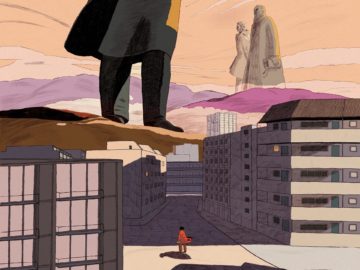
The first and only time I visited Ukraine was in 2019. My book “The Possessed”—a memoir I had published in 2010, about studying Russian literature—had recently been translated into Russian, along with “The Idiot,” an autobiographical novel, and I was headed to Russia as a cultural emissary, through an initiative of pen America and the U.S. Department of State. On the way, I stopped in Kyiv and Lviv: cities I had only ever read about, first in Russian novels, and later in the international news. In 2014, security forces had killed a hundred protesters at Kyiv’s Independence Square, and Russian-backed separatists had declared two mini-republics in the Donbas. Nearly everyone I met on my trip—journalists, students, cultural liaisons—seemed to know of someone who had been injured or killed in the protests, or who had joined the volunteer army fighting the separatists in the east.
As the visiting author of two books called “The Possessed” and “The Idiot,” I got to hear a certain amount about people’s opinions of Dostoyevsky. It was explained to me that nobody in Ukraine wanted to think about Dostoyevsky at the moment, because his novels contained the same expansionist rhetoric as was used in propaganda justifying Russian military aggression. My immediate reaction to this idea was to bracket it off as an understandable by-product of war—as not “objective.”
Ants live in a world of odor. Some species are completely blind. Others rely so heavily on scent that ones that lose track of a pheromone trail march in a circle, until dying of exhaustion. Ants have such a refined sense of smell, in fact, that researchers are now training them to detect the scent of human cancer cells.
A study published this week in the journal Proceedings of the Royal Society B: Biological Sciences highlights a keen ant sense and underscores how someday we may use sharp-nosed animals — or, in the case of ants, sharp-antennaed — to detect tumors quickly and cheaply. That’s important because the sooner that cancer is found, the better the chances of recovery. “The results are very promising,” said Baptiste Piqueret, a postdoctoral fellow at the Max Planck Institute for Chemical Ecology in Germany who studies animal behavior and co-wrote the paper. He added, however: “It’s important to know that we are far from using them as a daily way to detect cancer.”
Turning toward the contemporary allows Burke to undertake firsthand observation, learning in the process that antiporn and sex-positive conferences share an affinity for dreary airport hotels. She masterfully profiles individuals involved in the porn wars, writing with empathy and nuance as she speaks with performers, conservative women, and a young “recovery coach” entrepreneur who parlayed his experience with porn addiction (a hotly contested concept, as Burke notes, with competing parties flinging lawsuits at one another constantly) into a career. None of these people collapses into caricature, and Burke allows ambivalence to hang productively in the air. A woman who produced material for Kink.com has come to accept that some of her audience was “rapists or aspiring rapists,” but she doesn’t renounce her work. One young woman who became a performer after majoring in women’s studies endured sexual harassment and career sabotage from her agent before a horrifying European shoot, in which she was pressured into a double anal scene despite never having had anal sex, leaving her in an urgent care facility with an infected rectum. As Burke unblinkingly narrates this, we prepare for the inevitable twist of her rebirth as an antiporn speaker; instead, she remains in the industry, jaded, critical, and now independent on OnlyFans, but still protective of sex work as a labor sector.
However cantankerous or stubborn Crosby was offstage, when performing, he was seized by a kind of silent joy. You could see it spreading across his face, loosening his features. Music softened him. In his later years, he wore a white mustache, long frizzy hair, and an omnipresent red beanie (knitted by his wife, Jan). He looked like someone who might sell you some garden compost. He looked salty. Performing was the one thing that seemed to reliably animate and excite him.
One of my favorite of Crosby’s vocal performances is a demo of “Everybody’s Been Burned,” a Byrds song from 1967. The tone is somewhere between Nick Drake in his Warwickshire bedroom and Frank Sinatra on a barstool, sloshing a gin Martini. It’s a generous, humane song, about how terrifying it is to go on after loss:
Everybody has been burned before Everybody knows the pain Anyone in this place Can tell you to your face Why you shouldn’t fall in love again
“When the people are not free they are no longer people, they are objects.” …………………………………—Roshi Bob
Nationalist Opera
It was a party Built for the miniscule elite Lost among acres of scuffed marble, wanderers Newspapers & schoolwork People knew To speak in surreal, mechanical hyperbole Government, of course Monuments, behemoths Of relative luxury I know what you want to ask I want to take the truth to the world Down in the city, loudspeakers Disappearing into a hidden gulag Centuries ago The monks appeared Every morning in the lobbies or our hotels A minder was beside them The monks followed us out into the parking lot
by Amanda Calderon from Poetry, July/August 2014 pub: Poetry Foundation
I first met Charles Simic in 1994 at a dinner to celebrate the Harvard Review’s special issue dedicated to Simic. I had written an essay for the issue titled “He Who Remembers His Shoes” that focused on several of his poems and so was invited to this dinner and seated next to him. While we were eating, a small black ant started crawling across the white table cloth. Simic became mesmerized by this ant. We both wondered if the ant was going to “make it” to the other side, and then, suddenly, our waiter appeared and swept it up. Simic almost wept. (I later learned that ants were his favorite insect.) What an object lesson it was for me in Simic’s compassion for the smallest creatures, what Czesław Miłosz called “immense particulars.” I stayed in touch with Simic off and on after this night, inviting him to read at the M.F.A. program I cofounded in 2001. Simic declined at first, saying he was “too pooped” after a reading tour in Europe, but then agreed to come in 2005. He read at The Fells, John Hayes’ elegant estate overlooking Lake Sunapee in New Hampshire which New England College rented for the occasion. The indelible image of him with the lake and gardens behind him has stayed with me ever since.
On November 21, I interviewed Simic on Zoom after several failed attempts to meet with him in Strafford, New Hampshire, where he lived. He was already having health issues, then but assured me that he was well enough—and eager—to chat. For an hour and twenty minutes we talked about everything from his local dump to his childhood in Belgrade during World War II.
So you have some information — how are you going to share it with and present it to the rest of the world? There has been a long history of organizing and displaying information without putting too much thought into it, but Edward Tufte has done an enormous amount to change that. Beginning with The Visual Display of Quantitative Information and continuing to his new book Seeing With Fresh Eyes: Meaning, Space, Data, Truth, Tufte’s works have shaped how we think about charts, graphs, and other forms of presenting data. We talk about information, design, and how thinking about data reflects how we think about the world.
Being professionally heterodox has probably made it easier to make a name for myself, but it comes with its own set of hangups. There’s a tendency to sort anyone who steps outside of the usual partisan lines into the same bucket, despite the fact that defying orthodoxy should theoretically not consign you to any particular opinion at all. Typically, this pigeonholing is the work of people who are very much orthodox something, usually orthodox liberal Democrats – they’ll claim that anyone who is not exactly what they are is therefore necessarily the opposite of what they are, which is usually a conservative Republican. This is how you get people claiming that Matt Taibbi is a “far-right” journalist. (To add another layer to this onion, by saying that Taibbi is not a far-right journalist, in the eyes of some I have just marked myself as far-right myself.) This dynamic also exists on the right; the conservative Christian David French is frequently called a liberal by his many enemies on the right. None of this is particularly surprising. The orthodox tend to think only in terms of dueling orthodoxies, and if they’re sure you’re not a Yook, you must be a Zook. So it goes.

 The wolves reintroduced to Yellowstone National Park in 1995 are some of the best-studied mammals on the planet. Biological technician and park ranger Rick McIntyre has spent over two decades scrutinising their daily lives, venturing into the park every single day. Where his previous books focused on three notable alpha males, it is ultimately the females that call the shots and make the decisions with lasting consequences. This book is a long overdue recognition of the female wolf and continues this multigenerational saga.
 Military artificial intelligence (AI)-enabled technology might still be in the relatively fledgling stages but the debate on how to regulate its use is already in full swing. Much of the discussion revolves around autonomous weapons systems (AWS) and the ‘responsibility gap’ they would ostensibly produce. This contribution argues that while some military AI technologies may indeed cause a range of conceptual hurdles in the realm of individual responsibility, they do not raise any unique issues under the law of state responsibility. The following analysis considers the latter regime and maps out crucial junctions in applying it to potential violations of the cornerstone of international humanitarian law (IHL) – the principle of distinction – resulting from the use of AI-enabled military technologies. It reveals that any challenges in ascribing responsibility in cases involving AWS would not be caused by the incorporation of AI, but stem from pre-existing systemic shortcomings of IHL and the unclear reverberations of mistakes thereunder. The article reiterates that state responsibility for the effects of AWS deployment is always retained through the commander’s ultimate responsibility to authorise weapon deployment in accordance with IHL. It is proposed, however, that should the so-called fully autonomous weapon systems – that is, machine learning-based lethal systems that are capable of changing their own rules of operation beyond a predetermined framework – ever be fielded, it might be fairer to attribute their conduct to the fielding state, by conceptualising them as state agents, and treat them akin to state organs.
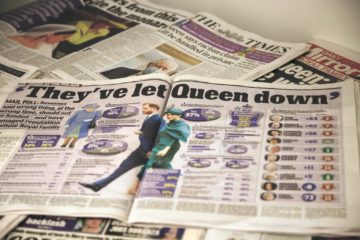 Any close follower of the British media should not have been surprised that after Prince Harry fell in love with Meghan Markle, the biracial American actress, years of vitriolic, even racist coverage followed. Whipping hatred and spreading lies — including on issues far more consequential than a royal romance — is a specialty of Britain’s atrocious but politically influential tabloids.
 Crystal Mackall remembers her scepticism the first time she heard a talk about a way to engineer T cells to recognize and kill cancer. Sitting in the audience at a 1996 meeting in Germany, the paediatric oncologist turned to the person next to her and said: “No way. That’s too crazy.”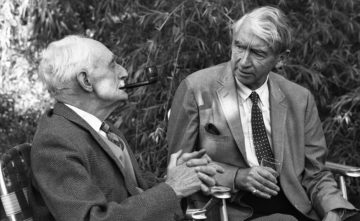
 Here, I argue that computational thinking and techniques are so central to the quest of understanding life that today all biology is computational biology. Computational biology brings order into our understanding of life, it makes biological concepts rigorous and testable, and it provides a reference map that holds together individual insights. The next modern synthesis in biology will be driven by mathematical, statistical, and computational methods being absorbed into mainstream biological training, turning biology into a quantitative science.
 Two years ago this week, the leader of the Russian opposition, Alexei Navalny,
 The first and only time I visited Ukraine was in 2019. My book “The Possessed”—a memoir I had published in 2010, about studying Russian literature—had recently been translated into Russian, along with “The Idiot,” an autobiographical novel, and I was headed to Russia as a cultural emissary, through an initiative of pen America and the U.S. Department of State. On the way, I stopped in Kyiv and Lviv: cities I had only ever read about, first in Russian novels, and later in the international news. In 2014, security forces had killed a hundred protesters at Kyiv’s Independence Square, and Russian-backed separatists had declared two mini-republics in the Donbas. Nearly everyone I met on my trip—journalists, students, cultural liaisons—seemed to know of someone who had been injured or killed in the protests, or who had joined the volunteer army fighting the separatists in the east.
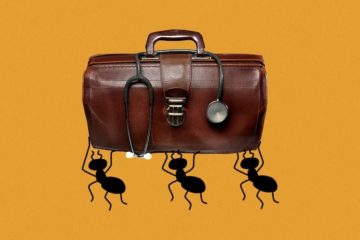 The ant oncologist will see you now.
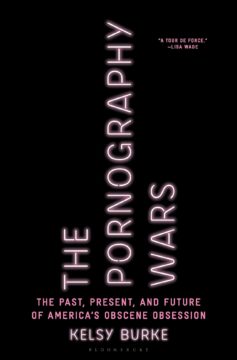 Turning toward the contemporary allows Burke to undertake firsthand observation, learning in the process that antiporn and sex-positive conferences share an affinity for dreary airport hotels. She masterfully profiles individuals involved in the porn wars, writing with empathy and nuance as she speaks with performers, conservative women, and a young “recovery coach” entrepreneur who parlayed his experience with porn addiction (a hotly contested concept, as Burke notes, with competing parties flinging lawsuits at one another constantly) into a career. None of these people collapses into caricature, and Burke allows ambivalence to hang productively in the air. A woman who produced material for Kink.com has come to accept that some of her audience was “rapists or aspiring rapists,” but she doesn’t renounce her work. One young woman who became a performer after majoring in women’s studies endured sexual harassment and career sabotage from her agent before a horrifying European shoot, in which she was pressured into a double anal scene despite never having had anal sex, leaving her in an urgent care facility with an infected rectum. As Burke unblinkingly narrates this, we prepare for the inevitable twist of her rebirth as an antiporn speaker; instead, she remains in the industry, jaded, critical, and now independent on OnlyFans, but still protective of sex work as a labor sector.
 However cantankerous or stubborn Crosby was offstage, when performing, he was seized by a kind of silent joy. You could see it spreading across his face, loosening his features. Music softened him. In his later years, he wore a white mustache, long frizzy hair, and an omnipresent red beanie (knitted by his wife, Jan). He looked like someone who might sell you some garden compost. He looked salty. Performing was the one thing that seemed to reliably animate and excite him.
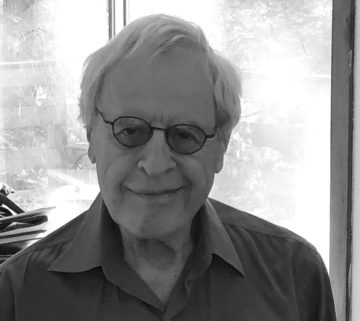 I first met Charles Simic in 1994 at a dinner to celebrate the Harvard Review’s special issue dedicated to Simic. I had written an essay for the issue titled “He Who Remembers His Shoes” that focused on several of his poems and so was invited to this dinner and seated next to him. While we were eating, a small black ant started crawling across the white table cloth. Simic became mesmerized by this ant. We both wondered if the ant was going to “make it” to the other side, and then, suddenly, our waiter appeared and swept it up. Simic almost wept. (I later learned that ants were his favorite insect.) What an object lesson it was for me in Simic’s compassion for the smallest creatures, what Czesław Miłosz called “immense particulars.” I stayed in touch with Simic off and on after this night, inviting him to read at the M.F.A. program I cofounded in 2001. Simic declined at first, saying he was “too pooped” after a reading tour in Europe, but then agreed to come in 2005. He read at The Fells, John Hayes’ elegant estate overlooking Lake Sunapee in New Hampshire which New England College rented for the occasion. The indelible image of him with the lake and gardens behind him has stayed with me ever since.
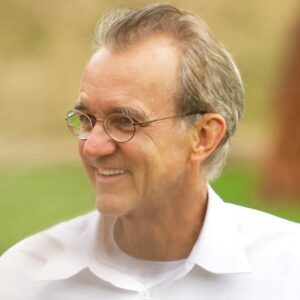 So you have some information — how are you going to share it with and present it to the rest of the world? There has been a long history of organizing and displaying information without putting too much thought into it, but Edward Tufte has done an enormous amount to change that. Beginning with
  Being professionally heterodox has probably made it easier to make a name for myself, but it comes with its own set of hangups. There’s a tendency to sort anyone who steps outside of the usual partisan lines into the same bucket, despite the fact that defying orthodoxy should theoretically not consign you to any particular opinion at all. Typically, this pigeonholing is the work of people who are very much orthodox something, usually orthodox liberal Democrats – they’ll claim that anyone who is not exactly what they are is therefore necessarily the opposite of what they are, which is usually a conservative Republican. This is how you get people claiming that Matt Taibbi is a “far-right” journalist. (To add another layer to this onion, by saying that Taibbi is not a far-right journalist, in the eyes of some I have just marked myself as far-right myself.) This dynamic also exists on the right; the conservative Christian David French is frequently called a liberal by his many enemies on the right. None of this is particularly surprising. The orthodox tend to think only in terms of dueling orthodoxies, and if they’re sure you’re not a Yook, you must be a Zook. So it goes.