
Category: Recommended Reading
Professionalize the police
Noah Smith at Noahpinion:
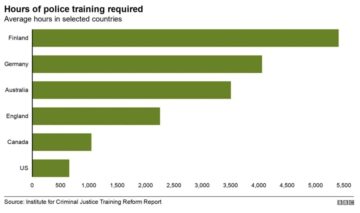 The video of the fatal beating of Tyre Nichols by Memphis police has sparked protests across the country. It’s highly unlikely that this will turn into a national conflagration like the one after the killing of George Floyd in 2020, but it shows that general anger against police brutality remains widespread. And it once again raises the question of what to do about the problem.
Three years ago, activists’ main slogan was “defund the police” (quickly altered from the original “abolish the police”, though many insisted the meaning was the same). This slogan and the idea behind it were a disastrous failure. Even in the initial rush of anti-police fervor after the Floyd protests, cities found it extremely hard to muster the political will to cut police budgets or conduct mass layoffs of police officers. Then a massive wave of murders spread across the country, and Americans remembered that yes, police are very important for reducing violent crime. Pro-cop politicians like New York City Mayor Eric Adams were elected, and by 2021, even Black Americans — traditionally more likely to be the victims of police brutality — wanted more spending on policing in their neighborhoods.
But the death of “defund the police” doesn’t mean that the popular desire — or the need — for police reform has vanished.
More here.
Iggy Pop, Part 2 | Broken Record
American Outback
Leath Tonino at the New England Review:
 Here are three details I enjoy about Ace, my buddy who resides in Boulder, Utah, a speck of a town (population two hundred thirtyish) that floats atop the creamy cross-bedded Navajo Sandstone, the gargantuan petrified dunes of an Early Jurassic erg: he’s devoted the bulk of two decades to trekking the GSENM hinterlands—heating water with a twiggy fire, sipping tea, casting consciousness to the stars, reeling consciousness back in, striking camp, pushing forward; he’s eager to direct attention to the Latin phrase Solvitur ambulando (“It is solved by walking”) engraved on his pocketknife and, furthermore, assumes the phrase’s “it” requires no explanation; he’s got dogs on the rug farting and a pot of tomato sauce on the stove bubbling when—excited, hungry, fatigued from the drive (Boulder was the last municipality in the lower forty-eight to receive mail by mule and remains a long haul from anywhere)—Sophia and I arrive.
more here.
Intuition’s Ear: On Kira Muratova
Timmy Straw at The Paris Review:
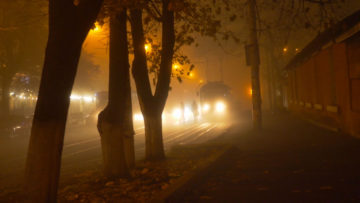 1990’s The Asthenic Syndrome takes us to Odesa, too, but this is an Odesa at the fraying edge of a Soviet time-space where, significantly, we never see the sea. The film is shot in places that suggest a borderland, an edge, a wobble: construction sites, mirrors, photographs, headstones, film screenings, cemeteries, a dog pound, a hospital ward, a soft-porn shoot. This in-between sense is temporal, as well: Muratova notes that she “had the great fortune of working in a period between the dominance of ideology and the dominance of the market, a period of suspension, a temporary paradise.” As with the asthenic syndrome itself (a state between sleeping and waking), the film is a realization of inbetweenness, an assembly of frictions and crossover states we feel through form: through Muratova’s use of juxtaposition; through her uncanny overpatterning of echoes and coincidences; through the shifts of register between documentary and opera. The film doesn’t proceed so much as weave itself in front of us, in a dazzling ivy pattern of zones and occurrences. You could call it late-Soviet baroque realism.
more here.
The Navy’s Dolphins Have a Few Things to Tell Us About Aging
Emily Anthes in The New York Times:
 SAN DIEGO — White caps were breaking in the bay and the rain was blowing sideways, but at Naval Base Point Loma, an elderly bottlenose dolphin named Blue was absolutely not acting her age. In a bay full of dolphins, she was impossible to miss, leaping from the water and whistling as a team of veterinarians approached along the floating docks. “She’s always really happy to see us,” said Dr. Barb Linnehan, the director of animal health and welfare at the National Marine Mammal Foundation, a nonprofit research organization. “She acts like she’s a 20-year-old dolphin.”
But at 57, Blue is positively geriatric, one of the oldest dolphins in the U.S. Navy Marine Mammal Program. So the doctors had come to check on her heart. Dr. Linnehan unpacked a dolphin-friendly electrocardiogram and bent over the edge of the dock, where Blue had surfaced. Then she carefully pressed four rubber suction cups, each containing a Bluetooth-enabled electrode, onto the dolphin’s slippery skin.
More here.
Tuesday Poem
One Art
The art of losing isn’t hard to master;
so many things seem filled with the intent
to be lost that their loss is no disaster.
Lose something every day. Accept the fluster
of lost door keys, the hour badly spent.
The art of losing isn’t hard to master.
Then practice losing farther, losing faster:
places, and names, and where it was you meant
to travel. None of these will bring disaster.
I lost my mother’s watch. And look! my last, or
next-to-last, of three loved houses went.
The art of losing isn’t hard to master.
I lost two cities, lovely ones. And, vaster,
some realms I owned, two rivers, a continent.
I miss them, but it wasn’t a disaster.
—Even losing you (the joking voice, a gesture
I love) I shan’t have lied. It’s evident
the art of losing’s not too hard to master
though it may look like (Write it!) like disaster.
by Elizabeth Bishop
from One Art
Farrar Straus Giroux,1994
Sunday, January 29, 2023
Glossolalia: An Apex of Babble
John Sperry in Guernica:
 In a small apartment downtown, a group of people has gathered. There’s maybe a hundred of them, men and women, and they’re not exactly sure why they’ve gathered. Then, suddenly, a sound like the rushing of a violent wind comes down from the heavens and fills the whole house. Helpless, they watch as tongues of fire descend from the clouds, and then these tongues begin to move toward them, before finally coming to sit on their own tongues. The people try to speak with each other, to communicate their astonishment or terror or ecstasy, but each one is speaking in tongues, speaking in languages they’ve never spoken before or since. And then, sometime later, everyone involved is spectacularly martyred.
Or at least that’s the story I’m told as a child. The story is called “Pentecost,” and the people gathered are the apostles. At that time, I didn’t understand that the phrase tongue of fire just means a flame, so I assumed that the poor apostles watched an army of actual human tongues descend from the sky, all pink and wet and squirmy and lit up like candles, and then their own tongues caught fire. I pictured the apostles standing around slack-jawed, afraid of burning the roofs of their mouths.
More here.
Behind Wall Street’s Huge Gamble on Cancer Drugs
Peter Andrey Smith in Undark:
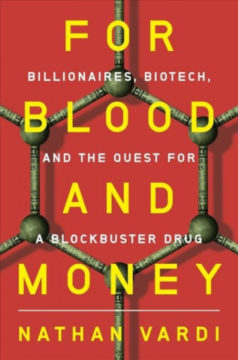 In 2011, Ahmed Hamdy, a clinical researcher, sat in a parking lot in Sunnyvale, California. On his mind: a brand-new anti-cancer drug that, true to Silicon Valley parlance, seemed poised to change the world. Only Hamdy had just been fired as chief medical officer earlier that day from a startup named Pharmacyclics.
The scene of a dejected doctor, head in his proverbial hands, opens Nathan Vardi’s “For Blood and Money: Billionaires, Biotech, and the Quest for a Blockbuster Drug” and it’s the first sign that Vardi won’t just spin the story of a phenomenally successful business out to remake an entire industry as a thrilling triumph. Nor is it a morality tale featuring a scandalously overhyped business. Rather, Hamdy comes off as an earnest diplomat whose setback reflects the grim realities of the biotech revolution and how secretive investors can make — and unmake — lifesaving drugs.
More here.
Inside Mexico’s Largest Detention Center: A Q&A with Belén Fernández
Todd Miller at The Border Chronicle:
 In her great new book, titled Inside Siglo XXI: Locked Up in Mexico’s Largest Detention Center, author and journalist Belén Fernández writes about this underdiscussed part of the U.S. border from the on-the-ground perspective of the Tapachula immigration prison, where she was detained. In the book, and in the below interview, Belén describes how she ended up behind bars and what she witnessed and experienced, including the friendships and solidarity she had with other detainees. As she writes, “There may not be human rights in Siglo XXI, but there’s lots of humanity.” Belén has this unique ability to write in a personal, detailed, and heart-wrenching way that is often also bitingly hilarious. She also has a penchant for coupling deep geopolitical analysis of state power, particularly that of the United States, with its absurdity, often in the same sentence.
More here.
Colonialism, Contagion, and Terror, 1817-2020
Tarek Younis in the LSE Review of Books:
 The timing of Anjuli Fatima Raza Kolb’s Epidemic Empire is opportune, not just because her discussion of epidemics strikes a chord in our post-COVID era. Rather, it is the book’s ability to communicate the significance of epidemics for national security, exposing that thin line which divides the virus in the body from the body as a virus.
Certainly, some bodies are conceived of as viruses more than others. From various colonial administrations across history to the contemporary ‘War on Terror’, Raza Kolb traces the Global North’s reliance on illness metaphors in making sense of and managing racialised (post-)colonial subjects. Epidemics play a central rhetorical device in this regard. And while contemporary security practices are replete with medical metaphors, Raza Kolb charts their legacy across (post-)colonial history.
Raza Kolb draws significantly on Edward Said’s mode of recognising Orientalism’s discursive construction of Islam and Muslims as regressive, savage and — as central to the book — toxic. Epidemic Empire thus draws primarily on written texts and literary works to build a convincing argument about the historical significance of illness metaphors.
More here.
Balkrishna Doshi (1927 – 2023) Architect
Arthur Duncan (1925 – 2023) Tap Dancer
Conversations: Emily Dickinson and E.C. Krupp
From Lapham’s Quarterly:
 Emily Dickinson:
The Brain – is wider than the Sky –
For – put them side by side –
The one the other will contain
With ease – and You – beside –
The Brain is deeper than the sea –
For – hold them – Blue to Blue –
The one the other will absorb –
As Sponges – Buckets – do –
The Brain is just the weight of God –
For – Heft them – Pound for Pound –
And they will differ – if they do –
As Syllable from Sound –
E.C. Krupp:
We have arrived at an interesting juncture. We may not be able to sort out the universe, but our attempts to do so may help us sort out our minds. Cosmic order is a product of the processing that goes on in our brains. The human brain has a job to do: it must make sense of the world. The real genius of the brain is its ability to simplify the world, to reduce it to the ingredients essential for our survival, and to rescue us from the madness of information overload.
More here.
Alfred Leslie (1927 – 2023) Painter
Oy, A.I.
Jaron Lanier in Tablet:
 You are reading a Jewish take on artificial intelligence. Normally I would not start a piece with a sentence like that, but I want to confuse the bots that are being asked to replicate my style, especially the bots I work on. It used to be that we’d gather our writings in a library, then everything went online. Then it got searchable and people collaborated anonymously to create Wikipedia entries. With what is called “AI” circa 2023 we now use programs to mash up what we write with massive statistical tables. The next word Jaron Lanier is most likely to place in this sentence is calabash. Now you can ask a bot to write like me.
My attitude is that there is no AI. What is called AI is a mystification, behind which there is the reality of a new kind of social collaboration facilitated by computers. A new way to mash up our writing and art.
But that’s not all there is to what’s called AI. There’s also a fateful feeling about AI, a rush to transcendence. This faux spiritual side of AI is what must be considered first. As late as the turn of the 21st century, a nerdy, commercial take on computer technology was that it was the one public good everyone could agree on. Like today, liberals and conservatives fought with seemingly supernatural venom. But we all agreed it was great when kids learned to program and computers got faster.
These days, a lot of us are mad at Big Tech, including me, and I’ve been at the center of it for decades. But at the same time, the part of us that loves tech has gotten way more intense and worshipful. Is there a contradiction? Welcome to humanity.
More here.
Sunday Poem
Sleeping Faces
Tonight the first fall rain washes away my sly distance.
I have decided to blame no one for my life.
This water falls like a great privacy.
Letters sink into the dark,
the desk sinks away, leaving an intelligence
slowly turning to talk of its own suffering.
The muttering of thunder is a gift
that reverberates in the roof of the mouth.
Another gift is a child’s face in a dark room
I see as I check the house during the storm.
My life is blessing, a triumph, a car racing through the rain.
by Robert Bly
from Jumping Out of Bed
White Pine Press, 1987
Saturday, January 28, 2023
Bolsonaro’s Long Shadow
 Nara Roberta Silva in The Baffler:
THE MOB MET LITTLE RESISTANCE. For hours, thousands ran rampant through the halls of power, breaking windows and furniture, destroying art, stealing firearms and documents, defecating on the floor—a chaotic expression of an intensely held belief that South America’s largest democracy had failed them. Luiz Inácio Lula da Silva, inaugurated one week earlier to a third term, was not, in their view, Brazil’s legitimate president; that title belonged to Jair Bolsonaro.
The January 8 insurrection certainly did not arise from nowhere. Bolsonaro never formally conceded, nor did he attend the inauguration. His allies adopted an ambiguous tone when referring to the elections and the transition of power, allusively presenting Lula’s victory—by a historically narrow margin—as a sham. Blockades on highways in the immediate aftermath of the run-off in October and subsequent encampments in front of military headquarters across the country revealed the consolidation of reactionary dissent. Indeed, that thousands stormed the gleaming modernist government buildings in Brazil’s capital on January 8 came as no surprise; it was simply the most virulent manifestation of anti-democratic forces long at play in the country.
Bolsonaro first came into the national spotlight during the impeachment of Lula’s successor, Dilma Rousseff, in 2016. An MP and former army captain, Bolsonaro delivered a speech paying tribute to the late Colonel Brilhante Ustra, a torturer during the country’s military dictatorship. In the event, several of Bolsonaro’s fellow legislators ignored the specific allegations of misconduct lodged against Rousseff when justifying their votes to impeach and used the floor to criticize the president’s economic and social policies, showing that the case indeed addressed other interests. Rousseff’s removal from power on legally precarious grounds brought an end to thirteen years of Workers’ Party rule—and marked a turning point in a crisis of democracy initiated in the massive demonstrations of 2013.
More here.
Does Our Sustainable Future Start in the Mine?
 Julie Michelle Klinger in Boston Review:
Rare earth elements have reemerged in the news as U.S. anxieties over economic interdependence with China grow. New revelations about social and environmental violence in supply chains, most recently in Myanmar, surface under headlines that have circulated since 2009. They often suggest that rare earth elements are only used for green energy and, thus, that green energy is solely responsible for the devastation wrought by rare earth mining.
Over the past decade, this narrative has profoundly shaped the debate around renewable energy infrastructure and our prospects for mitigating the climate emergency in line with Paris climate goals or Intergovernmental Panel on Climate Change (IPCC) guidelines. At the same time, massive efforts are underway globally to diversify rare earth supply chains and movements against green colonialism accelerate apace with movements to remove regulatory checks on industry and fast-track mining operations. The debate over where and how the rare earth mining and refining industry is built outside of China is contentious and polarizing, but the intensity of the debate is a sign of progress. We are now confronting the tough questions around mineral acquisition, no longer content to merely decry the injustice of offshoring environmental harm. To reach a brighter, greener future, communities in the Global North are exploring what it means to be more responsible for their mineral needs.
The concern about rare earth supply chains as a “dirty secret” for green energy is misleading, the unfortunate result of environmental justice concerns deployed in bad faith to protect the fossil-fueled status quo. Though the social and environmental concerns are valid, they are not solely tied to renewable energy. Rare earth elements are used in every major form of energy generation. In fact, since the 1960s, petroleum refining was the largest single domestic use of rare earth elements in the United States, and it has only recently been edged out by magnets.
More here.
Militarized Adaptation

Mona Ali in The Polycrisis:
When NATO held its two-day summit in Madrid in June 2022, the Spanish government deployed ten thousand police officers to cordon off entire parts of the city, including the Prado and the Reina Sofia museums, to the public. A day before the summit began, climate activists staged a “die-in” in front of Picasso’s Guernica at the Reina Sofia, in protest against what they identified as the militarization of climate politics. That same week, the US Supreme Court had removed federal protections for abortion rights, clamped down on the US Environmental Protection Agency’s ability to curb greenhouse gas emissions, and expanded the right to carry concealed weapons in the United States. In contrast to the chaos at home, at the summit, President Joe Biden’s team projected a revivified notion of hegemonic stability.
Primarily a transatlantic military alliance, NATO represents the concentration of global power in the North Atlantic. In its self-described 360-degree approach to integrated deterrence—involving cyber-tech and “interoperability” between Allied defense systems—NATO is a twenty-first century Benthamite panopticon, under whose gaze lies the rest of the world. In the name of upholding democratic values and institutions, NATO has assigned itself the role of global crisis manager. Its extra territorial mandate now spans addressing “conflict-related sexual violence” to climate adaptation.
More here.