Enjoying the content on 3QD? Help keep us going by donating now.
Category: Recommended Reading
Legendary Mikhail Baryshnikov Solos
Enjoying the content on 3QD? Help keep us going by donating now.
Is Trump the President of Europe?
Zaki Laïdi at Project Syndicate:
EU leaders “jokingly call me the president of Europe,” Donald Trump claimed at a recent press conference. As bizarre as that sounds, it does have a slight ring of truth. For seven months, Europe has desperately sought to placate the US president, usually with groveling displays of sycophancy designed to play to Trump’s unbridled narcissism.
Accordingly, when Trump recently grumbled some encouraging remarks about supporting Ukraine, European leaders saw it as the hard-won result of their self-abasement strategy. But when Trump made more ominous remarks, they rushed to the White House. Either way, it is Trump calling the shots, because European leaders refuse even to countenance a rupture with the United States.
But kowtowing to Trump will not make him any less unpredictable. His capriciousness is not just a personality trait; it is a modus operandi. Trump seeks to instill insecurity in others, so that they cannot organize a potent or coherent response.
More here.
Enjoying the content on 3QD? Help keep us going by donating now.
Mikhail Baryshnikov’s 15 Months at New York City Ballet
Marina Harss at the Hudson Review:
From the moment Baryshnikov landed in New York he was hungry to learn new roles and to have works created for him. In quick succession, he performed Frederick Ashton’s La Fille mal gardée, Roland Petit’s Le Jeune Homme et la Mort, John Butler’s Medea, Antony Tudor’s Shadowplay, Michel Fokine’s Le Spectre de la Rose, Jerome Robbins’ Other Dances, Alvin Ailey’s Pas de Duke, a total of about two dozen new roles in two years according to the book Baryshnikov at Work. His most significant collaboration was with the modern-dance choreographer Twyla Tharp, who created Push Comes to Shove, a work in which he revealed a new, vaudevillian side, around Baryshnikov’s talents. This ballet provided the audience with the first inkling of Baryshnikov’s new “American” persona. In 1977 and early 1978, he also débuted in two essential male roles by Balanchine: Prodigal Son and Apollo. Neither début took place at New York City Ballet, nor did he learn the choreography or receive coaching from Balanchine.
Still, during his first four years in the US, during which he was based at American Ballet Theatre, the bulk of his performances was in the same nineteenth-century repertoire he had been dancing in Russia—a raft of Giselles and Coppélias and Bayadères.
more here.
Enjoying the content on 3QD? Help keep us going by donating now.
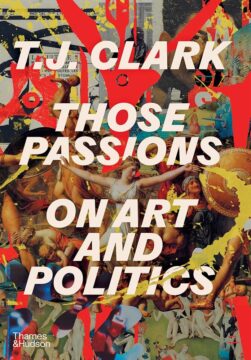
A Scandal in Königsberg, 1835–1842
John Banville at Literary Review:
It was in the summer of 1835 that a report landed, with what was surely an ominous thud, on the desk of Carl Sigmund Franz Freiherr vom Stein zum Altenstein – the book is worth reading for the names alone – the Prussian minister of church affairs, based in Berlin, which was a very long way from Königsberg, capital of East Prussia. Königsberg’s renown derived chiefly from the presence at the city’s university, the Albertina, of the philosopher Immanuel Kant. After his death in 1804, however, the Albertina ‘lapsed into the status of a sleepy provincial college’. The diminution of the intellectual tone in the city may account for some of the religious excesses that Clark recounts.
One of the most excessive figures was Johann Heinrich Schönherr. Although he died in 1826, he was the force that in the following decade set the ‘small vortex of turbulence’ awhirl. The son of a grenadier in the Prussian army, Schönherr was set to learn a trade but yearned for higher things. In time, he became a self-made preacher and religious thinker and developed a theory that all of creation sprang from the conjunction of two primal, egg-shaped entities, one composed of light, the other of water.
more here.
Enjoying the content on 3QD? Help keep us going by donating now.
Sunday, September 7, 2025
Donald Trump Wants to Remake the Global Financial System
An interview with Mona Ali in Jacobin:
John-Baptiste Oduor: Donald Trump’s push for the firing of Federal Reserve Board of Governors member Lisa Cook has led many to worry that this might be a precursor to a more direct attack on central bank independence. Could you explain what the origin of central bank independence is and what the arguments for it are?
Mona Ali: In a quotidian sense, central bank independence refers to the ability of central bankers to make decisions regarding monetary policy without political interference. As Jerome Powell, chair of the Federal Reserve Board of Governors, likes to emphasize: Fed decisions are solely “data-driven.” Independence implies impartiality. A couple years ago, a member of the Fed’s board of governors earnestly explained to an audience of central banking experts that the Fed’s apolitical stance meant that “we don’t talk about politics; we don’t discuss politics.” The same Fed official then went on to emphasize the Fed’s “complete freedom of operation” in conducting monetary policy.The first attribute (independence from politics) supposedly legitimizes the second (immense power). The Fed isn’t a democratic institution. It is an independent agency. Its board members aren’t elected officials and, in that sense, not accountable to the public. Governor Cook and her colleagues are presidential appointees confirmed by the US Senate. Their terms of service — fourteen years — are shorter only than those of federal and Supreme Court judges.
The Federal Reserve Act describes that the mandate of the board and the Federal Open Market Committee (FOMC, the body that decides the federal funds rate) is to make decisions to uphold the “long-run growth” of money and credit in ways that are aligned with the “long-run potential” of the macroeconomy — to advance maximum employment, price stability, and “moderate long-term interest rates.” The repetition of the phrase “long-run” may seem curious but in emphasizing the long-run horizon, Fed policymakers aim to send the message that they are not swayed by the electoral cycle.
More here.
Enjoying the content on 3QD? Help keep us going by donating now.
Sympathy for the Devil: Faust, the ’60s, and the Tragedy of Development
Marshall Berman in Dissent:
Modern bourgeois society . . . a society that has conjured up such gigantic means of production and exchange, is like the sorcerer who is no longer able to control the powers of the nether world that he has called up by his spells.
—Marx and Engels, The Communist Manifesto, 1848
Why is there always trouble when we sing this song?
—Mick Jagger, while singing “Sympathy for the Devil” at Altamont in 1969
A Trip to the Underworld
I can remember very vividly the time when the tragedy of Doctor Faust became real for me. It started the day before the great march on the Pentagon, when I ran into an old teacher of mine on upper Broadway. It was a lovely Indian summer day, and we stopped in front of the West End Bar for a dialectical chat. I was 26, just out of graduate school with a newly minted Ph.D., immersed in my first teaching job, finally out in the world and on my own, “a grown-up” at last. And yet, even as I felt newly grown, I was also enjoying a new youthfulness, for it was the annus mirabilis of 1967, and I was wonderfully drunk on the spirit of the times. As my big red flowery tie flapped in the wind, and my newly long hair blew back in my face, and all the wildlife of Broadway streamed around me, I felt happier than ever to be alive. My old teacher asked me how I liked being a professor; I said that while I loved teaching I didn’t take very well to the professorial role, but identified myself far more closely with “the kids”; he shook his head, smiled his famous ironic smile, said, “Oh, dear,” and we were off—off on one of those generational arguments about what “the kids” were up to, where they were leading our country and our culture, where it would all end. Who doesn’t remember those arguments? We can already feel nostalgia for them; they were the real sound of the ’60s.
More here.
Enjoying the content on 3QD? Help keep us going by donating now.
China’s Independent Media
Li Jun in The Ideas Letter:
Before Russia invaded Ukraine in early 2022, Nana (a pseudonym), a Chinese woman with an office job in Europe, was a happy twentysomething, content to lead a quiet life. She liked to travel and do her friends’ makeup. She had no interest in becoming an online influencer. Her Instagram page was set to private mode, and she shared selfies only with people she knew. Her account on Weibo, a Chinese X-like platform, had 30 followers.
The pro-war stance of her Chinese friends led Nana to sympathize with Ukraine, a country she had once visited, and aggressive pro-Russia propaganda on Chinese social media annoyed her. She began translating videos and articles about the situation in Ukraine to share on Weibo—a decision that changed her life.
Two years later, her followers had grown to over 200,000. By then, she had rallied supporters to fund the supply of drones for Ukrainian forces: Pro-Ukraine bloggers in China dubbed that plan “Roast Goose” (the words “goose” and “Russia” sound similar in Chinese). Using donations from fans and other Chinese people who sought her out, she delivered more than 400 drones to the Ukrainian military over three years. In May 2024, during the visit of President Vladimir Putin of Russia to China, her account was taken down.
In times of crisis, some people are willing to pay a higher price to seek out accurate information and fight censorship. And censorship also often fails then. Russia’s full-on attack of Ukraine in early 2022 was one such moment for liberal Chinese citizens like Nana. After the war broke out, mainstream Chinese social media, especially short-video platforms, overwhelmingly pushed Russia’s militant nationalism. Many Chinese interpreted this as signaling a potential shift in national priorities: away from the traditional focus on what the leaders of the Chinese Communist Party call “peace and development” toward the pursuit of unification with Taiwan by force. But pro-Ukraine and pro-West liberal bloggers such as Nana also emerged then.
More here.
Enjoying the content on 3QD? Help keep us going by donating now.
Darkness On the Edge of Town
Enjoying the content on 3QD? Help keep us going by donating now.
Absolute Darkness: A curious disorientation
Lydia Davis in The Yale Review:
An unusual experience started me thinking even more closely about degrees of darkness, the nature of darkness, and darkness as a physical thing. I had attended a meeting in an isolated building down a country road with woods beyond. The meeting was over, and it was time to go home. Our cars were parked a few hundred yards away from the building. My friend J., wearing a light blue sweater, went out the door first. I left the building a minute later and stopped short. Looking in the direction of the cars, I saw nothing. I saw nothing at all but solid darkness, a wall of darkness. It must have been a cloudy night, because the sky was dark. The closest house, across the road, was dark.
J., though she had no light, had walked ahead anyway into the darkness. Now she called to me that she couldn’t see and didn’t know where she was. I couldn’t see either. I looked toward her voice and saw only the faintest dim patch where she was—her sweater against the dark. I knew the landscape, so I knew that she was headed away from the cars and into a field of grass.
More here.
Enjoying the content on 3QD? Help keep us going by donating now.
Sunday Poem
Robert E. Lee and I Have a Staring Contest
And a white person says racism is dead
and a white person jokes about slavery
and a white person lives unbothered
and a white person screams about immigrants
and a white person asks if I speak African
and a white person touches what is not theirs
and all I see are white people taking what is not theirs
and a white person bumps into me
and a white person walks through me
but I can’t stop staring at Robert
and I can’t stop crying
and I can’t stop help feeling like . . .
By M. Kamara
from Split This Rock
Enjoying the content on 3QD? Help keep us going by donating now.
Friday, September 5, 2025
Renowned for his pessimism, Arthur Schopenhauer was nonetheless a connoisseur of very distinctive kinds of happiness
David Bather Woods at Aeon:
In an exchange of letters throughout 1807, mother and son entered tense negotiations over the terms of Arthur’s release. Johanna would be supportive of Arthur’s decision to leave Hamburg in search of an intellectually fulfilling life – how could she not? – including using her connections to help pave the way for his university education. But on one condition: he must leave her alone. Certainly, he must not move to be near her in Weimar, and under no circumstances would she let him stay with her.
What her line of 13 December doesn’t reveal is that Johanna simply couldn’t tolerate Arthur: ‘All your good qualities,’ she wrote on 6 November, ‘become obscured by your super-cleverness and are made useless to the world merely because of your rage at wanting to know everything better than others … If you were less like you, you would only be ridiculous, but thus as you are, you are highly annoying.’ He was, in short, a boorish and tiresome know-it-all.
If people found Arthur Schopenhauer’s company intolerable, the feeling was mutual.
More here.
Enjoying the content on 3QD? Help keep us going by donating now.
Embracing A World Of Many AI Personalities
Phil Nolan at Noema:
In popular culture, AI is depicted as alternately a friend, slave, murderer, master or companion — from the malicious “Entity” in “Mission Impossible” films to the alluring voice of a lover in “Her.” But it is a singular artificial intelligence — a compelling “other.”
But what if each of these personas existed simultaneously? After all, we don’t live in a world with just one AI model. There are now dozens of widely used models and hundreds of less common ones. Indeed, our world is already crowded with numerous artificial intelligences, each with its own distinct personality and motivations.
Humans have always anthropomorphized animals, automobiles and ships. Some writers have argued it’s wrong to anthropomorphize AI, since software doesn’t think or feel like we do. But our tendency to anthropomorphize AI might be hardwired into our brains. Instead of fighting it, we should embrace it so that we can better understand and work with an emerging technology that is increasingly likely to showcase personality characteristics.
More here.
Enjoying the content on 3QD? Help keep us going by donating now.
Exposing Why Farmers Can’t Legally Replant Their Own Seeds
Enjoying the content on 3QD? Help keep us going by donating now.
India’s Book Ban in Kashmir Is a War on Memory
Sajad Hameed and Rehan Qayoom Mir at Jacobin:

The bookshops in Lal Chowk, in Srinagar — the summer capital of India-administered Kashmir — had been, as usual, places of quiet and repose. But on August 7, police officers started raiding stores, pulling titles from shelves and questioning sellers. By then, the news had already spread online: the Jammu and Kashmir administration had banned twenty-five books. In the hours and days that followed, booksellers scrambled to check their inventories.
These books included works by Booker Prize winner Arundhati Roy, along with writers like Sumantra Bose and historian Hafsa Kanjwal. For many, the ban was more than an administrative order; it was another sign of how the Indian government tightens its hold on ideas and words — especially in Kashmir, where the Narendra Modi–led BJP government controls Kashmir directly through Lieutenant Governor Manoj Sinha.
The stated purpose of the raids, according to police, was “to identify, seize, and forfeit any literature that propagates or systematically disseminates false narratives, promotes secessionist ideologies,” or “otherwise poses a threat to the Sovereignty and Unity of India.”
Ironically, the ban only increased interest in the books.
More here.
Enjoying the content on 3QD? Help keep us going by donating now.
How Ancient Philosophy Can Help Us To Solve Modern Problems
Enjoying the content on 3QD? Help keep us going by donating now.
Poet Lia Purpura on the Art of Noticing
Maria Popova at The Marginalian:
“The tree which moves some to tears of joy is in the eyes of others only a green thing which stands in the way,” William Blake wrote in his most spirited letter. “As a man is, so he sees.”
Because how we look at the world shapes the world we see, every act of noticing is an act of worlding. The Latin root of notice is to begin knowing, to have an instrument of recognition, and yet human consciousness is a prediction machine that recognizes only what it already knows, sees what it expects to see, lensed through its anticipations and past experience. “Right now, you are missing the vast majority of what is happening around you,” cognitive scientist Alexandra Horowitz wrote about the science of looking. “To see takes time, like to have a friend takes time,” Georgia O’Keeffe wrote a century earlier about the art of seeing.
It does not come easily to us, true noticing — that transmutation of looking into seeing. We must apprentice ourselves to it daily. It is our life’s work.
more here.
Enjoying the content on 3QD? Help keep us going by donating now.
How Music Criticism Lost Its Edge
Kelefa Sanneh at The New Yorker:
When I was growing up, a critic was a jerk, a crank, a spoilsport. I figured that was the whole idea. My favorite characters on “The Muppet Show” were Statler and Waldorf, the two geezers who sat in an opera box, delivering instant reviews of the action onstage. (One logically unassailable judgment, from Statler: “I wouldn’t mind this show if they just got rid of one thing . . . me!”) On television, the film critics Gene Siskel and Roger Ebert structured their show so that at any time at least one of them was likely to be exasperated, possibly with the other one. On MTV, the rock critic Kurt Loder was a deliciously subversive presence, giving brief news reports with an intonation that conveyed deadpan contempt for many of the music videos the network played. And the first music review I remember reading was in Rolling Stone, which rated albums on a scale of one to five stars, or so I thought. In 1990, the début solo album by Andrew Ridgeley, who had sung alongside George Michael in the pop duo Wham!, was awarded only half a star. The severity and precision of the rating seemed hilarious to me, though probably not to Ridgeley, who never released another record.
more here.
Enjoying the content on 3QD? Help keep us going by donating now.
A Stranger Everywhere
Nicholas Buccola in The American Scholar:
In his 2005 book, Democracy Matters, Cornel West calls James Baldwin “this black American Socrates.” I’ve always liked this description of Baldwin. He was a man, after all, who—like Socrates—implored us to “drive to the heart of every answer and expose the question that it hides.” But there are also ways in which the comparison fails. Socrates, at least as he is presented to us by Plato, seems almost superhuman. He can drink all night with his interlocutors, and when the whole lot of them are passed out or gone away, he can walk off, seemingly unfazed. When the incredibly gorgeous and hungry Alcibiades tries to seduce him, Socrates has the iron will to resist. Whatever the truth of these stories, they describe a Socrates who does not fit well with Baldwin, someone who was all too human.
More here.
Enjoying the content on 3QD? Help keep us going by donating now.
Stem Cells Age Faster in Space
Andrea Lius in The Scientist:
According to Einstein’s theory of relativity, time passes more slowly in space. As a result, astronauts would experience a delay in aging. However, scientists found that space travel may have the opposite effect by accelerating aging in human cells, likely due to the extreme physiological stresses it imposes on the body.
“Space is the ultimate stress test for the human body,” said Catriona Jamieson, a stem cell biologist at the University of California, San Diego, in a statement. Recently, Jamieson’s team discovered that spaceflight accelerates aging in human blood-forming stem cells.1 The researchers found that stem cells that spent about a month in space had a reduced self-renewal capacity and showed signs of molecular aging. Their results, published in Cell Stem Cell, demonstrate the possible dangers of spending extended time in space.
More here.
Enjoying the content on 3QD? Help keep us going by donating now.