
Marleen Rozemond at Notre Dame Philosophical Reviews:
 Samuel Kaldas’s book is an extremely welcome addition to the growing literature on the Cambridge Platonists. These philosophers have suffered from significant neglect by historians of philosophy, but as a result of the recent interest in lesser known early modern thinkers, this has been changing. Two questions are central to Kaldas’s book: (1) Is the term “Cambridge Platonists” an apt label for the philosophers in question? And (2) What is their significance in the history of philosophy? Contrary to some scholars (19-20), Kaldas convincingly argues that the label is warranted for Henry More, Ralph Cudworth, and the less well-known John Smith and Benjamin Whichcote. They shared a significant commitment to various Platonist ideas, and their contemporary critics sometimes accused them of inappropriately Platonizing tendencies. For Kaldas, their main importance lies in their contribution to the history of the philosophy of religion. He compellingly documents their significance in that context, but as I will explain later, they also have a lot to offer in other areas of philosophy.
Their contribution to the philosophy of religion, Kaldas argues, consists in participation in an intense and prominent debate about the Doctrine of Double Predestination (DDP), a central doctrine in Calvinism in mid-17th century England. DDP holds that no human beings deserve salvation due to our intrinsically defective nature, the doctrine of “total depravity”.
more here.
Enjoying the content on 3QD? Help keep us going by donating now.
 The office where Daniel Ksepka was working was overrun with ants. On the wall above the desk were army ants, bull ants, leaf-cutter ants and turtle ants. On a shelf were two honeypot ants that looked as if they had yellow balloons where their stomachs should have been. Kspeka, the curator of science at the Bruce Museum in Greenwich, Conn., did not call an exterminator. There was no need to: None of the ants in the office were real. The ones on the wall were drawings. The honeypot ants were plastic models made on the museum’s 3-D printer in preparation for an exhibition called “
 As time marches on, aging is inevitable. Naturally, a person can accumulate wrinkles, laugh lines, stress, and cellular damage. Of these, damaged cells can take multiple paths: they can undergo programmed death; they can proliferate uncontrollably and become cancer; or they can become senescent cells. They don’t claw their way out of graves, but senescent cells are the body’s biological zombies—damaged, unable to divide, but very much metabolically alive. Instead of dying like normal cells, these “undead” entities can avoid immune system clearance and linger in the brain and other parts of the body. “They are no longer the original cell that they once were,” explained
  Goethe’s philosophical coordinates came initially from Rousseau and Spinoza, two thinkers who appealed to and fortified his own disposition. Rousseau’s concept of amour de soi, the urge for self–preservation, appears in Goethe as the need for individual authenticity. The opposing force, Rousseau’s amour propre, becomes the dead weight of social conventions suppressing whatever is distinctive, original and creative. Hence Goethe’s protagonists are powerful, charismatic personalities who experience society as a ‘prison’, the metaphor used by Werther and Faust. For some, such as Werther, the only way out is death. Others, such as Faust, preserve their essential character, but the struggle to do so leaves victims in its wake. Werther himself, unable to conquer his love for the married Lotte, leaves her and her husband devastated by his suicide. Faust’s egotism inflicts tragedy on his lover Gretchen. Goethe is honest about the cost to others of preserving one’s own authenticity.
 A human cell is a Rube Goldberg machine like no other, full of biological chain reactions that make the difference between life and death. Understanding these delicate relationships and how they go wrong in disease is one of the central fascinations of biology. A single mistake in a gene can bend the protein it makes into the wrong shape. A misshapen protein can’t do its job. And for want of that protein, the organism–you–may start to fall apart.
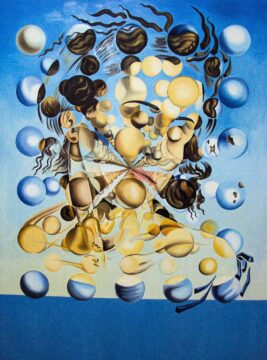 The pillow is cold against your cheek. Your upstairs neighbor creaks across the ceiling. You close your eyes; shadows and light dance across your vision. A cat sniffs at a piece of cheese. Dots fall into a lake. All this feels very normal and fine, even though you don’t own a cat and you’re nowhere near a lake. You’ve started your journey into sleep, the cryptic state that you and most other animals need in some form
  Sports writing can be brilliant; it is one of the most exciting forms, full of suspense and rich with lore. Yet most sports reporting winds up formulaic and pedestrian. This is an arena of high drama and individual challenge, but for the performer, the interest is in the training and the doing, not the words the rest of us try to surround it with. Reporters lean hard on interviews with athletes, yet they only turn chatty when they retire from their sport. While competing, they are intense and focused, utterly uninterested in coming up with quotable sound bites. They are not running for public office. They are running for speed, or swimming, or doing floor routines.
 In the nineteenth century, the invention of anesthesia was considered a gift from God. But post-operative pain relief has continued to rely on opioids, derivatives of opium, the addictive substance employed since
  Political judgment takes place within political time. And political time is less a matter of chronology than of genre. What kind of moment are we living through? Is our system of government undergoing a cyclical swing, an existential transformation, or something in between? Nine months into the second Trump administration, Americans confront three very different answers to these questions.
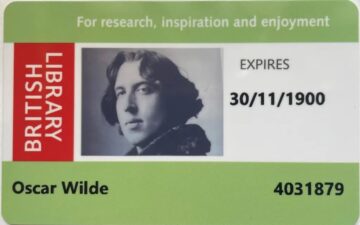 The British Library has honoured late Irish writer Oscar Wilde by reissuing a reader’s card in his name, 130 years after his original was revoked following his conviction for “gross indecency”.