What brain surgery taught me about the fragile gift of consciousness

Eric Markowitz at Big Think:

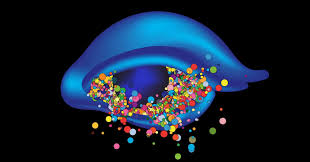
I looked at my wife. Her eyes — soulful, brown, impossibly beautiful — met mine. I had looked into them thousands of times before, but in that moment, I wondered: Had I ever really seen them?

The doctors had just delivered the news of a lesion nestled deep in my cerebellum. If it was cancer — and if I survived surgery — I might have three months to live. There was a sliver of hope it was something else. But the odds weren’t kind.

And yet, hours before surgery, with death still in the room, I didn’t feel fear. I felt something quieter. Stranger. I felt connected. To her eyes. To my breath. To the weight of my feet against the floor. To the wind brushing the window. Even to our cat, oblivious, licking her paws in perfect peace.

More here.

Enjoying the content on 3QD? Help keep us going by donating now.

In groundbreaking study, researchers publish brain map showing how decisions are made

Mindy Weisberger at CNN:

Neuroscientists from 22 labs joined forces in an unprecedented international partnership to produce a landmark achievement: a neural map that shows activity across the entire brain during decision-making.

The data, gathered from 139 mice, encompass activity from more than 600,000 neurons in 279 areas of the brain — about 95% of the brain in a mouse. This map is the first to provide a complete picture of what happens across the brain as a decision is made.

“They have created the largest dataset anyone has ever imagined at this scale,” said Dr. Paul W. Glimcher, chair of the department of neuroscience and physiology and director of the Neuroscience Institute at New York University’s Grossman School of Medicine, of the researchers.

In the field of neuroscience, “this is going to go down in history as a major event,” Glimcher, who was not involved in the new research, told CNN.

More here.

Enjoying the content on 3QD? Help keep us going by donating now.

Polytunity: The Future of Development

Yuen Yuen Ang at The Ideas Letter:

Polycrisis is a descriptor that the establishment can agree on without challenging itself. It abstracts the causes of crises, making them appear as natural convergences rather than the systemic outcomes of extractive and exclusionary orders. And it makes the concept appear global when in fact the voices, experiences, and priorities it reflects are overwhelmingly Eurocentric.

The virality of polycrisis reveals something deeper: the enduring power of elite discourse. Even though the term is empty, its followers amplify it—and the echo reinforces paralysis. If leaders remain content with only naming fear, they will consign themselves to irrelevance.

I see things differently. I call this moment a polytunity—a term I coined in 2024 to reframe disruption not as paralysis but as a once-in-a-generation opportunity for deep transformation. Transformation not only of our institutions, but of our ideas, our paradigm, and the way we think.

More here.

Enjoying the content on 3QD? Help keep us going by donating now.

Tumult and Sympathy: The letters of Oliver Sacks

William Chace in Commonweal:

To think today of the late Oliver Sacks, physician and author, is to bring to mind the extraordinary fellow human beings whose defects and gifts, depicted in Sacks’s books and essays, made the world a bit larger and much more interesting: the twin autistic boys who could instantly recall hundred-digit figures; the man who could not identify the person at whom he was staring in the mirror; the sailor for whom the distant past was detailed and vividly clear but for whom the immediate past had no existence; the woman without an awareness that she had been enclosed for sixty years in a body, her own; and, of course, the scores of victims of the 1920s encephalitis epidemic who had been treated with the new L-DOPA drug, and had recovered for a brief period the awareness of living. All these human exceptions peopled the world of medicine that Sacks created for his readers.

More here.

Enjoying the content on 3QD? Help keep us going by donating now.

Do ADHD Brains Look Different? Science Is Starting to Say Yes

Luis Prada in Vice:

ADHD exists in this odd diagnostic liminal space where we know it’s a thing, but it’s hard to definitively pinpoint it in the physical structures of the brain. MRI studies have given us mixed signals over the years. Some say kids with smaller gray matter volumes in their brains are more likely to develop ADHD, while other researchers claim the exact opposite. But a group of Japanese researchers might finally be providing some cold, hard evidence.

A group of researchers led by Chiba University, [publishing their findings in Molecular Psychiatry], provided some clarity using something called the Traveling-Subject method, or TS for short. The idea is that not all MRI machines are created equal. The ones used in hospitals are different than the ones used in research labs. Different calibrations, different kinds of coils, different software, different quirks that only people with tons of experience on a specific machine know how to work around or use to their advantage. When researchers combine data from different sources that all used different MRI machines and all the factors that influence those specific machines’ quirks and nuances, the results get distorted.

More here.

Enjoying the content on 3QD? Help keep us going by donating now.

Wednesday Poem

And Have I Loved You?

And have I loved you long enough by now?
A nod, a touch, our portion is all spent,
but that is what the grudging years allow.

No one can make an everlasting vow
to love, since only meager time is lent.
So, have I loved you long enough by now?

Experience alone does not endow
strong spirit in a mortal element,
but that is all the grudging years allow.

There is no axiom to teach us how
to bear the mystery of slow descent.
Can I have loved you long enough by now?

Only the trembling hand, the withered brow
remain to show us where the music went,
but that is all the grudging years allow.

In spite of everything, then, let us bow,
begin the dance, defying precedent,
for I have loved you long and long by now,
no matter what the grudging years allow.

by Conrad Geller
from Rattle #43, Spring 2014

Enjoying the content on 3QD? Help keep us going by donating now.

Tuesday, September 9, 2025

The War on Artificial Ice

Louis Anslow at Pessimists Archive:

Artificial meat is under attack: US states like Montana, Mississippi and Alabama have banned it – taking the lead from Florida who outlawed it in 2024. The irony? 180 years ago the sunshine state would pioneer another artificially produced product that was traditionally harvested from nature: ICE

In 1851 physician and Florida resident Dr. John Gorrie was granted a patent for an ice making process – after years of experimenting with artificial cooling methods for medical purposes. This would be the genesis of modern refrigeration systems we all enjoy today.

The notion of ‘manufacturing’ ice through an industrial process likely felt similarly strange as lab grown meat feels today. A product of a natural process suddenly produced through scientific wizardry.

In 1847 Gorrie would astonish guests at an event in Florida by serving wine cooled with artificial ice in the middle of summer – when ice was often scarce. Some scoffed at the notion – with The New York Daily Globe reportedly saying that same year: “There is a Dr. Gorrie, a crank, down in Florida, who thinks he can make ice as good as God Almighty.”

More here.

Enjoying the content on 3QD? Help keep us going by donating now.

The Story Paradox

Andrew Gelman at Statistical Modeling, Causal Inference, and Social Science:

I just read the above-titled book by Jonathan Gottschall. It was really interesting–he convincingly argues that (a) stories are a central part of lives and always will be, and (b) stories are dangerous and we’re living in a world of dangerous stories. The book isn’t perfect–the author is a bit too credulous for my taste in citing dubious social-psychology studies–but no book is perfect, and I got a lot out of it, and now that I’ve read it, I feel pretty much in agreement with its arguments.

Some ideas in the book reminded me of things we’ve discussed before, so I thought I’d share them with you.

On p.56, Gottschall writes, “persuasion isn’t the same as instruction–as taking a blank slate and filling it up. You have to move a mind from one place to another, which means overcoming inertia with some kind of force.”

This reminds me of the idea that Thomas Basbøll and I have raised, that good stories are anomalous and immutable. The “immutable” bit refers to true stories, and it’s the idea that they present some facts, some things that really happened. “Anomalous” refers to the twist in the story, the idea that any good story contains a surprise. That’s why I think of storytelling as predictive model checking (see also here). Gottschall’s “overcoming inertia” sounds to me like what we do in statistics when we encounter data that contradicts our existing model of the world. The existing model is the inertia, and a key insight is that this existing model–this inertia–is always there. It’s central to the story. To the extent that the story is surprising–and I’d argue that every good story has surprises–these are relative to some expectations. A good way to understand a story is to consider the (often implicit) assumptions it’s working against. It’s the revelation that the assumptions are wrong that is the force that persuades.

More here.

Enjoying the content on 3QD? Help keep us going by donating now.

A boring theory of the populist right

Matthew Yglesias at Slow Boring:

Almost all theories in elite discourse about why people vote for right-wing populism posit that deindustrialization or free trade or “neoliberalism” or some other thing that left-wing intellectuals think is bad induces support for political parties on the right.

A simpler explanation is that a significant minority of the public in most Western countries agrees with right-wing cultural politics.

I tend to believe that the latter is true.

For example, many rank-and-file G.O.P. primary voters circa 2015 were a bit more moderate than Republican leaders on topics like Social Security and Medicare but more right-wing on immigration and crime. So when Trump offered that set of issue positions during the primaries, his platform resonated with a lot of voters.

This hypothesis tends to be under-explored in the scholarly literature, I think, because researchers are overwhelmingly left-wing themselves.

More here.

Enjoying the content on 3QD? Help keep us going by donating now.

Transcendence for Beginners

Sarah Bakewell at The Guardian:

Carlisle illustrates the difference with a children’s fable told in Karen Blixen’s Out of Africa. In brief: a man stumbles around in the mud for a while in the middle of the night. He loses his way, changes direction and trips over a few things before going back to bed. Only when he wakes up and sees the scene by daylight does he realise that his footprints have traced out a perfect picture of a stork. The point is that, by living, we create a meaningful picture without knowing it – unless we attain some inkling of that wider view through art or mysticism.

This idea that we “manifest” something in life is explored through the rest of the book. Each essay leads us further up into the conceptual clouds and closer to the idea of transcendence. The Milieu looks at the various wider contexts a life can have – historical or social, for example. Incarnations examines spiritual possibilities as embodied by individuals.

more here.

Enjoying the content on 3QD? Help keep us going by donating now.

Tuesday Poem

On the Death of Jack Lipsitz

As to heaven — since he was no saint,
I’m not sure my father was admitted.
He was the sort, you see, not especially
Given to taking orders. If God
instructed him to butcher his son,
the way Abraham was told, he would
have hesitated, probably offering
An excuse like an arm gone arthritic,
or, having taken me to the mountain,
would have suffered a case of acute
heartburn and been helped home,
burping.

That night he would have whispered
to me: “What is this, killing my son?
the man must have emotional
problems. I hear also he burns cities
supposedly wicked. He must be under
a strain. You have to overlook sometimes.”
and coughing once or twice, would have
fallen asleep.

Had any prophets been around, they
would have preached against his kind.
A man of the belly, they would have said,
giving over his life unto earthly pleasures.
unto suntan and games of chance. A man
never seen in the sanctuaries of the Lord.
but taking himself instead into barbershops,
Movies, haberdasherers, and, sometimes,
a casino. They would lament his slavery
to convention. A man without backbone
from the teachings of The Book.

So when he came to The Gate, perhaps
they would have admitted him, grudgingly,
for after all, he had never engaged in
cruelty, had never forgotten entirely how
to love. They would have warned him though
and cautioned him to keep to the side streets,
out of sight of the righteous men and women
who spread their pious, obedient wings
on the main boulevards.

After a couple of weeks, he would have
gone quietly to find the gin rummy players
who live on the outskirts of Hell.

By Lou Lipsitz
From
Seeking the Hook
Signal Books, Chapel Hill, NC, 1997

Enjoying the content on 3QD? Help keep us going by donating now.

Christian Pacifism And Human Nature

Peter Mommsen at The Point:

Growing up, one of the first things I learned from the Bible was the commandment Thou shalt not kill. This makes sense considering that the religious community I belong to—the Bruderhof—is rooted in Anabaptism, a Christian tradition that, with occasional exceptions, has been pacifist since 1525. (The Anabaptist movement, which also includes the Amish, Mennonites and Hutterites, celebrates its quincentenary this year.) Over the sixteenth century, thousands of Anabaptists were executed as traitors to Christendom by Catholic and Protestant rulers. No doubt that’s why their signature virtue was Gelassenheit—“self-abandonment,” “submission,” “readiness to suffer.” It’s an ethic Nietzsche would have hated.

For a long time, I didn’t like it either, even after taking lifelong vows to become a Bruderhof member as an adult. Christian pacifism irritates because it demands what the biblical scholar Richard Hays calls “the conversion of the imagination”—the overturning of certain assumptions that modernity lives by.

more here.

Enjoying the content on 3QD? Help keep us going by donating now.

A Red-Carpet Star Is Born

Christopher Barnard in The New York Times:

Cole Escola, the actor and playwright, stood before a mirror at a pastel-colored studio in Manhattan’s garment district, holding a spray of white satin flowers in one hand. “The calla lilies are in bloom again,” Escola said, quoting a Katharine Hepburn line from the film “Stage Door.” The actor delivered it in Ms. Hepburn’s signature mid-Atlantic accent. It was the last day of June — the day of the New York City Pride March — and Escola was at the studio of Jackson Wiederhoeft, the designer of the brand Wiederhoeft, for a fitting before a red-carpet appearance: the Broadway premiere of “Oh, Mary!,” a comedic play written by and starring Escola, on Thursday.

In the show, Escola plays a fictionalized version of the former first lady Mary Todd Lincoln, portraying her as an alcoholic and an aspiring cabaret performer desperate to flee the White House and her husband. After it premiered Off Broadway in February, “Oh, Mary!” received a groundswell of raves from critics, generating buzz loud enough for it to twice extend its Off Broadway run before being brought to Broadway this summer.

More here.

Enjoying the content on 3QD? Help keep us going by donating now.

David Baltimore, Renowned Molecular Biologist and Nobel Laureate, Dies at 87

Sahana Sitaraman in The Scientist:

David Baltimore, a celebrated molecular biologist and Nobel laureate, passed away on 6 September 2025 at age 87. Through a career that spanned more than half a century, he influenced the trajectory of many fields in biology, from unraveling the molecular mechanisms of the human immunodeficiency virus to obtaining a deeper understanding of cancer. He published over 600 academic papers throughout his career.

“David Baltimore’s contributions as a virologist, discerning fundamental mechanisms and applying those insights to immunology, to cancer, to AIDS, have transformed biology and medicine,” said Thomas Rosenbaum, a physicist, and current president of the California Institute of Technology (Caltech), in a statement . “David’s profound influence as a mentor to generations of students and postdocs, his generosity as a colleague, his leadership of great scientific institutions, and his deep involvement in international efforts to define ethical boundaries for biological advances fill out an extraordinary intellectual life.”

More here.

Enjoying the content on 3QD? Help keep us going by donating now.

Monday, September 8, 2025

From Stravinsky to Donna Summer: How 20th-Century Classical Music Shaped Pop

Steven Poole in The Guardian:

One of many things I did not expect to learn in this book is that the BBC benefited from Nazi technology. Its standard tape recorder, in use till the 1970s, was called the BTR-2: EMI’s original model, the BTR-1, had been copied from a captured example of the German “magnetophon”, as used by Hitler to record a radio broadcast.

Musicians who liked fiddling with machines, too, benefited from this legacy. Delia Derbyshire, the BBC Radiophonic Workshop pioneer who produced the original Doctor Who theme tune and otherwise particularly enjoyed playing an enamel green lampshade, influenced Paul McCartney’s experiments with tape loops, while Steve Reich hit upon his compositional technique of “phasing” phrases in and out of sync with one another on tape recorders, before training live musicians to do the same.

Many other revolutions occurred in sheds and back rooms. Bob Moog, a musically trained engineer, invented his electronic synthesiser in his garage. Along with other synths such as the Buchla, it was initially used by avant garde classical composers such as the great Karlheinz Stockhausen, then deployed by psychedelic rockers in the 1960s, before eventually Giorgio Moroder used a Moog for the bass part on Donna Summer’s futurist-disco earthquake I Feel Love and all hell broke loose.

More here.

Enjoying the content on 3QD? Help keep us going by donating now.

What Is the Fourier Transform?

Shalma Wegsman in Quanta:

In the early 1800s, the French mathematician Jean-Baptiste Joseph Fourier discovered a way to take any function and decompose it into a set of fundamental waves, or frequencies. Add these constituent frequencies back together, and you’ll get your original function. The technique, today called the Fourier transform, allowed the mathematician — previously an ardent proponent of the French revolution — to spur a mathematical revolution as well.

Out of the Fourier transform grew an entire field of mathematics, called harmonic analysis, which studies the components of functions. Soon enough, mathematicians began to discover deep connections between harmonic analysis and other areas of math and physics, from number theory to differential equations to quantum mechanics. You can also find the Fourier transform at work in your computer, allowing you to compress files, enhance audio signals and more.

“It’s hard to overestimate the influence of Fourier analysis in math,” said Leslie Greengard(opens a new tab) of New York University and the Flatiron Institute.

More here.

Enjoying the content on 3QD? Help keep us going by donating now.