
Jacqueline Detwiler-George at Popular Mechanics:
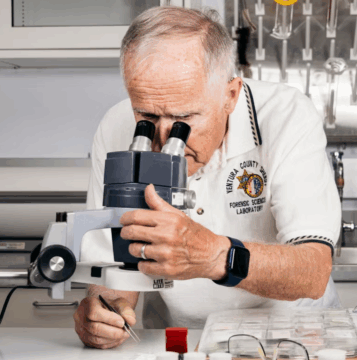 Trace evidence analysis is the most versatile of the crime scene disciplines, requiring a specialist to be ready for whatever comes through the door. Officially, a trace analyst handles anything that doesn’t fit into the other standard crime lab departments, which tend to include body fluids (also known as serology), fingerprints, and ballistics. In reality, it can include analyzing an absurd variety of materials. It could be flame accelerant, explosives, cosmetics, carpet fibers, tree bark, hairs, shoe prints, clothing, dirt, glass fragments, tape, glue, and, yes, glitter.
Part of the reason Jones chose trace was his love for microscopes—today, he owns five. He was the microscope expert at the Ventura lab and remains a member of the Microscopical Society of Southern California, for which he often makes art out of “arranged microstuff” that looks cool at great magnification.
More here.
Enjoying the content on 3QD? Help keep us going by donating now.