Christopher Barnard in The New York Times:
 Cole Escola, the actor and playwright, stood before a mirror at a pastel-colored studio in Manhattan’s garment district, holding a spray of white satin flowers in one hand. “The calla lilies are in bloom again,” Escola said, quoting a Katharine Hepburn line from the film “Stage Door.” The actor delivered it in Ms. Hepburn’s signature mid-Atlantic accent. It was the last day of June — the day of the New York City Pride March — and Escola was at the studio of Jackson Wiederhoeft, the designer of the brand Wiederhoeft, for a fitting before a red-carpet appearance: the Broadway premiere of “Oh, Mary!,” a comedic play written by and starring Escola, on Thursday.
In the show, Escola plays a fictionalized version of the former first lady Mary Todd Lincoln, portraying her as an alcoholic and an aspiring cabaret performer desperate to flee the White House and her husband. After it premiered Off Broadway in February, “Oh, Mary!” received a groundswell of raves from critics, generating buzz loud enough for it to twice extend its Off Broadway run before being brought to Broadway this summer.
More here.
Enjoying the content on 3QD? Help keep us going by donating now.
 David Baltimore
 O
O In the early 1800s, the French mathematician Jean-Baptiste Joseph Fourier discovered a way to take any function and decompose it into a set of fundamental waves, or frequencies. Add these constituent frequencies back together, and you’ll get your original function. The technique, today called the Fourier transform, allowed the mathematician — previously an ardent proponent of the French revolution — to spur a mathematical revolution as well.
 EU leaders “jokingly call me the president of Europe,” Donald Trump
  From the moment Baryshnikov landed in New York he was hungry to learn new roles and to have works created for him. In quick succession, he performed Frederick Ashton’s La Fille mal gardée, Roland Petit’s Le Jeune Homme et la Mort, John Butler’s Medea, Antony Tudor’s Shadowplay, Michel Fokine’s Le Spectre de la Rose, Jerome Robbins’ Other Dances, Alvin Ailey’s Pas de Duke, a total of about two dozen new roles in two years according to the book Baryshnikov at Work. His most significant collaboration was with the modern-dance choreographer Twyla Tharp, who created Push Comes to Shove, a work in which he revealed a new, vaudevillian side, around Baryshnikov’s talents. This ballet provided the audience with the first inkling of Baryshnikov’s new “American” persona. In 1977 and early 1978, he also débuted in two essential male roles by Balanchine: Prodigal Son and Apollo. Neither début took place at New York City Ballet, nor did he learn the choreography or receive coaching from Balanchine.
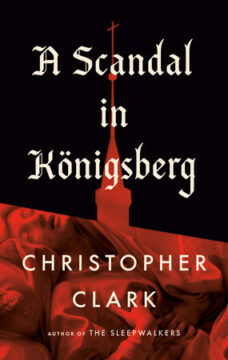 It was in the summer of 1835 that a report landed, with what was surely an ominous thud, on the desk of Carl Sigmund Franz Freiherr vom Stein zum Altenstein – the book is worth reading for the names alone – the Prussian minister of church affairs, based in Berlin, which was a very long way from Königsberg, capital of East Prussia. Königsberg’s renown derived chiefly from the presence at the city’s university, the Albertina, of the philosopher Immanuel Kant. After his death in 1804, however, the Albertina ‘lapsed into the status of a sleepy provincial college’. The diminution of the intellectual tone in the city may account for some of the religious excesses that Clark recounts.
 An unusual experience
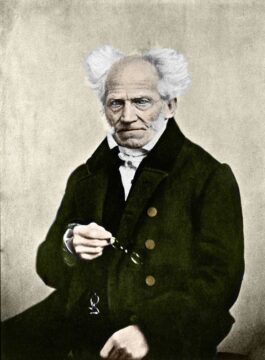 In an exchange of letters throughout 1807, mother and son entered tense negotiations over the terms of Arthur’s release. Johanna would be supportive of Arthur’s decision to leave Hamburg in search of an intellectually fulfilling life – how could she not? – including using her connections to help pave the way for his university education. But on one condition: he must leave her alone. Certainly, he must not move to be near her in Weimar, and under no circumstances would she let him stay with her.
 In popular culture, AI is