
Jane Ciabattari in Literary Hub:
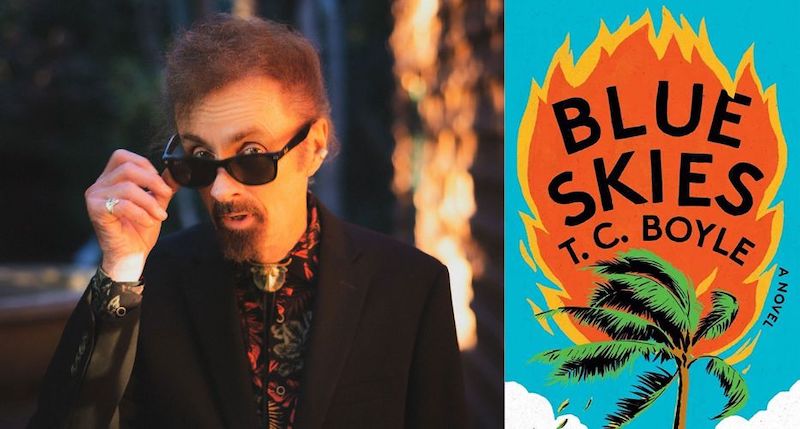 T.C. Boyle lives in Santa Barbara, an area in California that has been steadily ravaged by extreme weather in recent years. His 2011 novel When the Killing’s Done is set there and on the nearby Channel Islands and tracks a conflict set off by an environmental conundrum—the killing off of a predator species in order to preserve an endangered one—which triggered a real-life conflict in 2002.
In his satiric and provocative new novel, Blue Skies, which mirrors Santa Barbara’s drought, wildfires and windstorms, he is once again skewering a contemporary environmental standoff modeled on real life events. Does he continually update the environmental crises around him to inspire his work?
“I do,” he says. “If I feel helpless living a baffling existence on an unfathomable planet in an indifferent universe, my being cries out for redemption, for purpose, for hope, but climate change just compounds the uncertainty and existential misery of day-to-day life lived in this deteriorating shell of an animal body.
More here.
 There have recently been lots of discussions about the risks of AI, whether in the short term with existing methods or in the longer term with advances we can anticipate. I have been very vocal about the importance of accelerating regulation, both nationally and internationally, which I think could help us mitigate issues of discrimination, bias, fake news, disinformation, etc. Other anticipated negative outcomes like shocks to job markets require changes in the social safety net and education system. The use of AI in the military, especially with lethal autonomous weapons has been a big concern for many years and clearly requires international coordination.
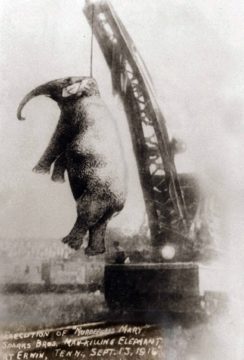 The core moral thread that holds the modern criminal law doctrine together is that only morally culpable humans should be convicted of a stigmatic criminal offense. A pig cannot be a sensible target of blame. Neither can a child, nor a mentally ill person, nor an offender who lacked the necessary « guilty mind » (that is, she did not act with intention, recklessness or criminal negligence), nor an offender who acted in self-defense or in a state of necessity. The culpability principle that stands as the moral foundation of twentieth-century criminal law doctrine is a victory of rationality. The loser, here, is the human id that cannot let go — that asks: « Am I supposed to forgo blame because the conduct of the perpetrator of the crime did not match the legal test of recklessness? »
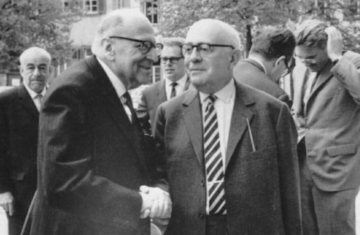 If all that is not enough, the critical theorists also have to reckon with the strange allure the Frankfurt School and French theory have in certain corners of the right. Michel Foucault, never a reliable ally of the left, was taken up anew by conservatives during the COVID pandemic, when the concept of biopower seemed eerily apt. Giorgio Agamben, an heir to Foucault’s account of biopower, has alienated large parts of the left and won new friends on the right through his power analysis of the global pandemic response. The critical theory journal Telos, along with some of its regular contributors, was never averse to thought from outside the left but is now seen in some quarters as positively right-wing. One of the intellectual godfathers of the latest incarnation of the New Right is Nick Land, who was once a leading figure in a cutting-edge school of digital media studies influenced by the French theory luminaries Georges Bataille and Jean Baudrillard.
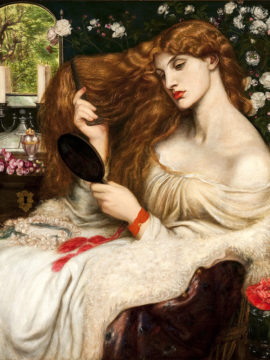 In 1849 Dante Gabriel Rossetti, the 21-year-old poet-artist and founder member of the Pre-Raphaelite Brotherhood, met a milliner’s assistant named Elizabeth Siddal. She was the daughter of a cutlery maker and had artistic aspirations. He was from a highly cultured Anglo-Italian family – his father was a Dante scholar, one of his mother’s brothers was John William Polidori, Lord Byron’s doctor and author of the first vampire story. By 1852 Siddal had become Rossetti’s pupil, lover and primary model and he was possessive enough to stop her sitting for other painters in the Pre-Raphaelite circle. There was a degree of transmutation in the relationship, too: at times Lizzie was more than flesh and blood, personifying his idea of perfect womanhood that justified a love that transgressed social station.
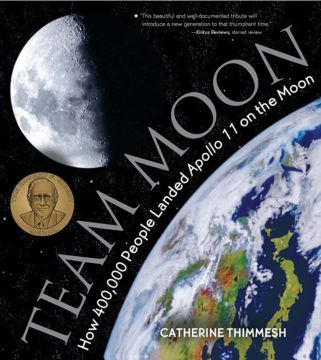 With alarms sounding and fuel running out, Neil Armstrong came within seconds of crashing the Apollo 11 landing module: “BAM! Suddenly, the master alarm in the lunar module rang out for attention with all the racket of a fire bell going off in a broom closet. ‘Program alarm,’ astronaut Neil Armstrong called out from the LM (‘LEM’) in a clipped but calm voice. ‘It’s a “twelve-oh-two.”‘ “‘1202,’ repeated astronaut Buzz Aldrin. They were 33,500 feet from the moon.
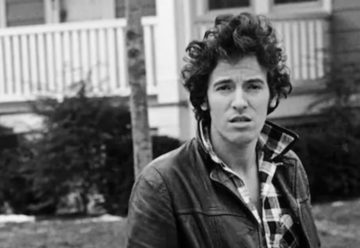 Shortly after the birth of his sister Virginia in 1951, Springsteen’s family moved in with his paternal grandparents. They would stay there through 1956, but the years spent in that house would remain with Springsteen, a thing to untangle. It was a period of his childhood that, in his telling, would come to the fore in Nebraska.
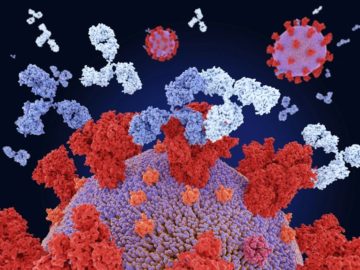 At the height of the pandemic, researchers raced to develop some of the first effective treatments against COVID-19: antibody molecules isolated from the blood of people who had recovered from the disease.
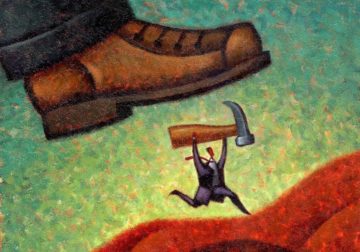 One of the staples of my teaching of comparative politics over the years was to point out the differences between European and American conservatives. The former were generally comfortable with the exercise of state power, and indeed sought to use power to enforce religious or cultural values (the old unity of “throne and altar.”) American conservatives, on the other hand, were different in their emphasis on individual liberty, a small state, property rights, and a vigorous private sector. In Seymour Martin Lipset’s
 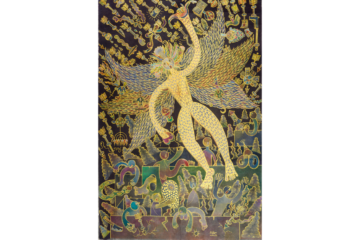 Living trapped by viruses, surrounded by culturenature, and exposed to all kinds of media—writers, self-help books, chefs, singers, filmmakers, even comedians—I don’t want to be comforted, yet they pounce on me, to comfort me, to empathize. Startled, I get frightened. And, conversely, I become even more frightened when I’m asked who my poetry comforts. Therefore, when someone even utters the word comfort, I want to run and hide. I don’t think I’ve ever comforted anyone with my writing. Moreover, I think literature betrays the readers’ desire to be consoled. Perhaps literature crosses into a zone where consolation can’t intervene, evaporating any possibility of comfort. Just as there is no geometric or genetic consolation, literary work merely constructs an afterimage or alternative symmetrical pattern of the event that occurs. The ventriloquist lives inside literature. Ventriloquy is a deception. The writer first deceives herself. And she deceives the reader. Both are aware of the deception. The persona crosses into a zone of literature, the symmetrical world of existence. Thus literature is a lie. Fiction set as reality is a lie; poetry set as language is a lie. The ventriloquy of literature moves, riding the spiral of lies. And so there can be no consolation at the end of the lies. There is only failure, grief, and self-erasure.
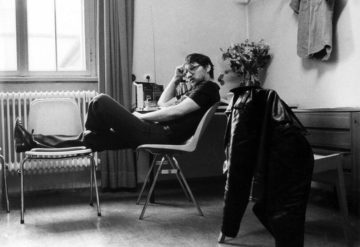 Boredom: “If I ever bore you, it’ll be with a knife,” Louise Brooks once said, a line that sums up almost about every Fassbinder movie. RWF constantly employed Brechtian distancing devices to put the strange in estrangement, piercing our defenses of “relating to” and “identifying with” characters, situations. It is the feeling that the world’s a film stage and everyone on it is standing on a trapdoor. Fassbinder’s hand is on the lever and Death is in the wings, waiting for a cue.
  IN A CAVERNOUS
 A
A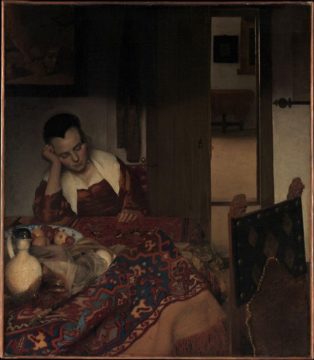 Sometime probably in 1656 or 1657, Johannes Vermeer painted a painting that we now know as A Maid Asleep. I reference this painting because it hangs at the Metropolitan Museum in New York City. I’ve looked at it many times. I have a relationship with this painting. I’ve loved it for years and for that same amount of time I’ve been trying to figure out why.