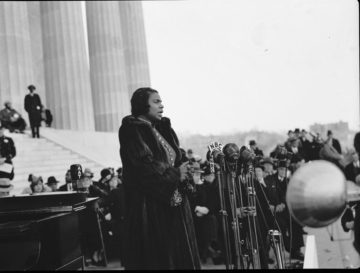
 Kent Puckett in Public Books:
Does anyone read Robert’s Rules of Order? We often threaten to consult it, but it’s hard to imagine someone really reading any of the many versions of Henry Robert’s 1876 text. Even in Robert’s own early editions, the guidance on secondary, subsidiary, incidental, privileged, unclassified, and other motions was presented in a pointedly systematic form that invited not slow perusal but rather tactical, and sometimes supercilious, consultation. “If only you had looked at page 47 of Robert’s Rules,” we can hear someone saying, “you would have known that a Motion to Suppress the Question requires a two-thirds vote. You moron.”
Its talismanic power is such that an effective use of the book might not even require consultation. Sitting down at a committee table and placing an unopened, unread copy where others could see it is a power move all its own: an index of the paradoxically occult sway of ostensibly transparent procedure, a threat and a promise. Its potential as both an effective tool and a bespoke weapon has long been a part of the book’s appeal. Arthur T. David, in his 1937 Robert’s Rules Simplified, acknowledges that for some, Robert’s rules look like “a ‘bag of tricks’ with which a few members can run things to suit themselves.” In his Notes and Comments on Robert’s Rules, Jon Ericson acknowledges that, for many, “parliamentary procedure is that tricky, pedantic, officious, dull, boring, unfair system that tyrants use to suppress the rights of all us good folk.” “Meetings,” says Mary A. De Vries in The New Robert’s Rules of Order, “are one of the few things in life that are pursued relentlessly even though they provoke endless complaints of frustration, stress, wasted hours, and dissatisfaction with the outcome.” And Doris P. Zimmerman dedicates her Robert’s Rules in Plain English “to everyone who has served as a member or leader of a group, and who has, at one time or another, felt ignorant, ineffectual, helpless, frustrated, repressed, or just plain bored.”
More here.

 How will voters know whether a video of a political candidate saying something offensive was real or generated by AI? Will people be willing to pay artists for their work when AI can create something visually stunning? Why follow certain authors when stories in their writing style will be freely circulating on the internet?
 In a recent Wall Street Journal
  For the past two weeks, in a courtroom in lower Manhattan, the journalist E. Jean Carroll has made a straightforward case: a quarter century ago, she says, Donald Trump raped her. The account she gave in the courtroom was the same as it has been since she first revealed this story, in an excerpt of
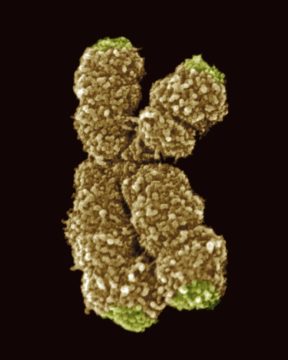 The story, as often happens in science, sounded so appealing. Cells have a molecular clock that determines how long they live. If you can just stop the clock, cells can live indefinitely. And the same should go for people, who are, after all, made from cells. Stop the cell clocks and you can remain youthful.
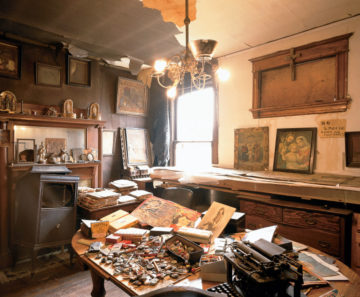 From December 31, 1957 until December 31, 1967, the artist and writer Henry Darger (1892–1973) kept a series of six ring-binder notebooks with almost daily entries on the weather in his native Chicago. On the outside cover of the first book, Darger describes the project, with encyclopedic enthusiasm, as a “book of weather reports on temperatures, fair cloudy to clear skies, snow, rain, or summer storms, and winter snows and big blizzards—also the low temperatures of severe cold waves and hot spells of summer.”
 For the first six weeks I can’t walk further than a few hundred metres. I feel like I’m practicing a walking meditation without experiencing the mental effects of this exercise – to focus on one activity, to centre myself. I’ve just had a baby; I am profoundly de-centred. In my current state, I can’t push the pram, or wear my new baby on my body, or drive a car. When I lie down at night, it feels like all my organs will spill onto the bed. Other fluids seep out – milk, tears. My body produces these things, and I cannot control them. I had not planned for the baby to exit my body in the way that she did, and for some reason this causes me more pain than the scar that now bisects my abdomen.
 In 1991 an academic debate spilled out of ivory towers and into the popular imagination. That year, Serge Renaud, a celebrated and charismatic alcohol researcher at the French National Institute for Health and Medical Research—who also hailed from a
 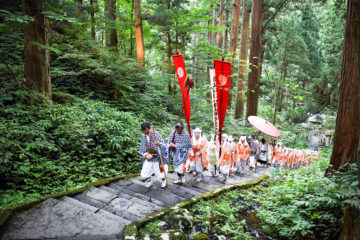 Wearing the white robes that are used to dress the dead in Japan, I bow my head deeply as drums are beaten and conch shells are blown – reminders that the first rite of my yamabushi ascetic training is beginning. My funeral is starting. Along with a small group of uninitiated who are also preparing to ‘die’, I start a symbolic pilgrimage into the afterlife, descending the slopes of Mount Haguro, a cedar-covered mountain in Japan’s northern Yamagata Prefecture.
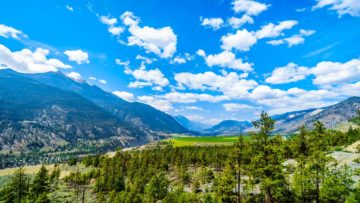 In the summer of 2021, Canada’s all-time temperature record was smashed by almost 5℃. Its new record of 49.6℃ is hotter than anything ever recorded in Spain, Turkey or indeed anywhere in Europe.
 IT WAS HIGH TIME