
 Tim Sahay and Kate Mackenzie in Polycrisis:
Watch the Korean Peninsula. It is in South Korea that the New Cold War has most visibly upset the delicate balance between industry, security, and domestic politics.
South Korea’s growth miracle has been based on deterrence and detente between China, its main trading partner; the United States, its ally and security guarantor; and North Korea, its neighbor with newly developed intercontinental ballistic missiles. The country has been on hair-trigger alert since last October, when North Korea stepped up its barrage of ballistic missile tests, including launching one over Japan. In a show of strength, South Korea launched its own ballistic missile, but the weapon malfunctioned, crashing in the coastal city of Gangneung, where the resulting fire raised panic of a North Korean attack.
Now that North Korea has demonstrated the ability to strike the US homeland, South Koreans worry that Washington might abandon them in a conflict to protect US cities instead. Today, 71 percent favor developing their own nuclear weapons. “New York for Berlin” was the central extended deterrence dilemma of the old cold war. The new question is: Would the Americans really trade “Seattle for Seoul?”
Last week, while the national security advisor Jake Sullivan was unrolling the “new Washington consensus” (the subject of our next dispatch), Presidents Biden and Yoon were holding security and trade negotiations in DC that resulted in a Washington Declaration. “Our mutual defense treaty is ironclad, and that includes our commitment to extended deterrence,” Biden said, referring to the treaty signed to end the Korean War seventy years ago. For his part, Yoon referred to the “unprecedented expansion and strengthening” of the US nuclear umbrella. The upshot was that South Korea agreed not to pursue its own nuclear weapons program in return for a greater decision-making role in US military planning should North Korea launch a nuclear attack.
More here.
 Yakov Feygin in Building a Ruin:
 A member of the pea family, M. pudica is a small plant with tiny leaflets paired along the length of each stem and pretty lavender-pink globular flowers. The leaves give it a fernlike, feminine look, although it is also armed with thorns to ward off attacks. It’s native to Central and South America but has spread throughout the tropics partly because of its popularity as a novel ornamental that exhibits a fascinating behavior: if you touch a single leaf, the plant will swiftly fold up all its leaves before your eyes. Only a soft touch is required to bring on this collapse; after a while, you can also watch as the wilted-appearing mimosa sets about righting itself and reopening its leaves. You may have discovered the mimosa’s animal-like trick in an arboretum or store where the plants are sometimes displayed or sold. The rapid response to being touched is another defensive tactic—it startles most insects, as it does naive humans.
 Fatimah Asghar is the first recipient of the Carol Shields prize for fiction for their debut novel When We Were Sisters. The award was announced Thursday evening at Parnassus Books in Nashville, Tenn. They will receive $150,000 as well as a writing residency at Fogo Island Inn in Newfoundland and Labrador.
 A
A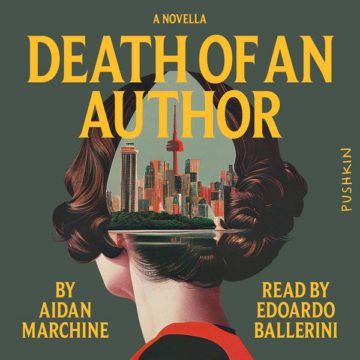 Now comes a new novella, “Death of an Author,” a murder mystery published under the pseudonym Aidan Marchine. It’s the work of the novelist and journalist Stephen Marche, who coaxed the story from three programs,
  During his response, Snoop described how conversing with a large language model (such as
 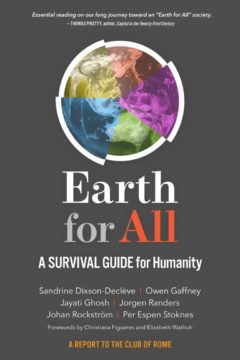 The phrase « it’s not too late », for me, brings an artificial smile. I stumble onto it as I walk into a bookstore and see the flashy Carbon Almanac (2022) promoted at the entrance, one of many such books to appear in the last, late year. It shouts from the cover: « It’s not too late. » The foreword was written by Seth Godin, a marketing guru out of the dot-com avantgarde. What will save us is « the hope that comes from realizing that it’s not too late. » The refrain is a staple of the genre. Another entry, a new report from the Club of Rome entitled Earth for All: A Survival Guide for Humanity, offers a kindred burst of optimism about the future against the backdrop of a bleak present. Greater planetary health and social well-being are within reach. The authors will « show you that this is indeed fully possible ». Meanwhile the heavy-weight United Nations Intergovernmental Panel on Climate Change (IPCC), released two punchy reports of its own in 2022. They hammered the message that countries’ pledges to cut emissions fall far below climate change targets, and that the impact of climate change is already devastating for many parts of humanity, the ecosystem, and for the biodiversity that now suffers a mass extinction.
 The International Monetary Fund approved a
  A little history never hurt anybody. We can start the clock in 1920. In February of that year, the journal Nature reported the
 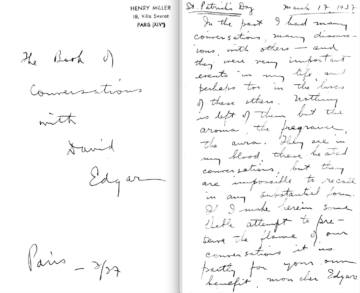 So many times, in listening to you, I have had the feeling that the word neurosis is a very inadequate one to describe the struggle which you are waging with yourself. “With yourself”—there perhaps is the only link with the process which has been conveniently dubbed a malady. This same malady, looked at in another way, might also be considered a preparatory stage to a “higher” way of life. That is, as the very chemistry of the evolutionary process. In the course of this most interesting disease the conflict of “opposites” is played out to the last ditch. Everything presents itself to the mind in the form of dichotomy. This is not at all strange when one reflects that the awareness of “opposites” is but a means of bringing to consciousness the need for tension, polarity. “God
 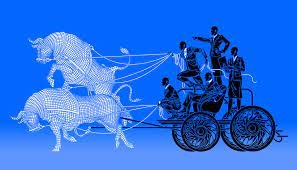 When we talk about artificial intelligence, we rely on metaphor, as we always do when dealing with something new and unfamiliar. Metaphors are, by their nature, imperfect, but we still need to choose them carefully, because bad ones can lead us astray. For example, it’s become very common to compare powerful A.I.s to genies in fairy tales. The metaphor is meant to highlight the difficulty of making powerful entities obey your commands; the computer scientist Stuart Russell has cited the parable of King Midas, who demanded that everything he touched turn into gold, to illustrate the dangers of an A.I. doing what you tell it to do instead of what you want it to do. There are multiple problems with this metaphor, but one of them is that it derives the wrong lessons from the tale to which it refers. The point of the Midas parable is that greed will destroy you, and that the pursuit of wealth will cost you everything that is truly important. If your reading of the parable is that, when you are granted a wish by the gods, you should phrase your wish very, very carefully, then you have missed the point.
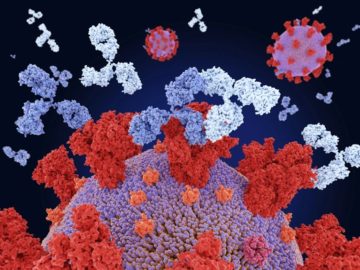 Antibodies are among the immune system’s key weapons against infection. The proteins have become a darling of the biotechnology industry, in part because they can be engineered to attach to almost any protein imaginable to manipulate its activity. But generating antibodies with useful properties and improving on these involves “a lot of brute-force screening”, says Brian Hie, a computational biologist at Stanford who also co-led the study.
 In a lab mouse version of
  D
D