
Steven Johnson in The New York Times:
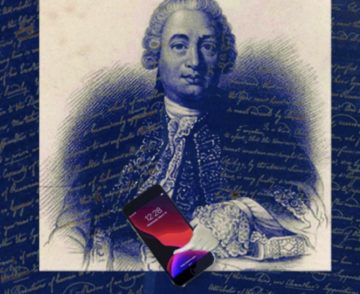
 It was said that Thomas Midgley Jr. had the finest lawn in America. Golf-club chairmen from across the Midwest would visit his estate on the outskirts of Columbus, Ohio, purely to admire the grounds; the Scott Seed Company eventually put an image of Midgley’s lawn on its letterhead. Midgley cultivated his acres of grass with the same compulsive innovation that characterized his entire career. He installed a wind gauge on the roof that would sound an alarm in his bedroom, alerting him whenever the lawn risked being desiccated by a breeze. Fifty years before the arrival of smart-home devices, Midgley wired up the rotary telephone in his bedroom so that a few spins of the dial would operate the sprinklers.
In the fall of 1940, at age 51, Midgley contracted polio, and the dashing, charismatic inventor soon found himself in a wheelchair, paralyzed from the waist down. At first he took on his disability with the same ingenuity that he applied to maintaining his legendary lawn, analyzing the problem and devising a novel solution to it — in this case, a mechanized harness with pulleys attached to his bed, allowing him to clamber into his wheelchair each morning without assistance. At the time, the contraption seemed emblematic of everything Midgley had stood for in his career as an inventor: determined, innovative thinking that took on a seemingly intractable challenge and somehow found a way around it.
Or at least it seemed like that until the morning of Nov. 2, 1944, when Midgley was found dead in his bedroom. The public was told he had been accidentally strangled to death by his own invention. Privately, his death was ruled a suicide. Either way, the machine he designed had become the instrument of his death.
More here.
 English may have become universal, but not everyone believes it is a gift. In fact, many hold diametrically opposite views. In an article in The Guardian in 2018, the journalist Jacob Mikanowski described English as a ‘behemoth, bully, loudmouth, thief’, highlighting that the dominance of English threatens local cultures and languages. Due to the ways in which English continues to gain ground worldwide, many languages are becoming
  Recent investigations like the one Dyer worked on have revealed that LLMs can produce hundreds of “emergent” abilities — tasks that big models can complete that smaller models can’t, many of which seem to have little to do with analyzing text. They range from multiplication to generating executable computer code to, apparently, decoding movies based on emojis. New analyses suggest that for some tasks and some models, there’s a threshold of complexity beyond which the functionality of the model skyrockets. (They also suggest a dark flip side: As they increase in complexity, some models reveal new biases and inaccuracies in their responses.)
 In a recent Substack post, free-range social critic Freddie deBoer
  The first precept of survivors’ justice is the desire for community acknowledgment that a wrong has been done. This makes intuitive sense. If secrecy and denial are the tyrant’s first line of defense, then public truth telling must be the first act of a survivor’s resistance, and recognizing the survivor’s claim to justice must be the moral community’s first act of solidarity.
 A
A This week the conservative writer Bethany Mandel had the kind of moment that can happen to anyone who talks in public for a living: While promoting a new book critiquing progressivism, she was asked to define the term “woke” by an interviewer — a reasonable question, but one that made her brain freeze and her words stumble. The viral
  Gardiner Means in Phenomenal World:
 Pranab Bardhan in Boston Review:
 Susan Neiman in Unherd:
 Malcom Kyeyune in Compact Magazine:
 O
O “
“